
Species
Southern red-backed salamander
Plethodon serratus
A slim woodland salamander with a saw-edged red stripe down its back, or none at all.
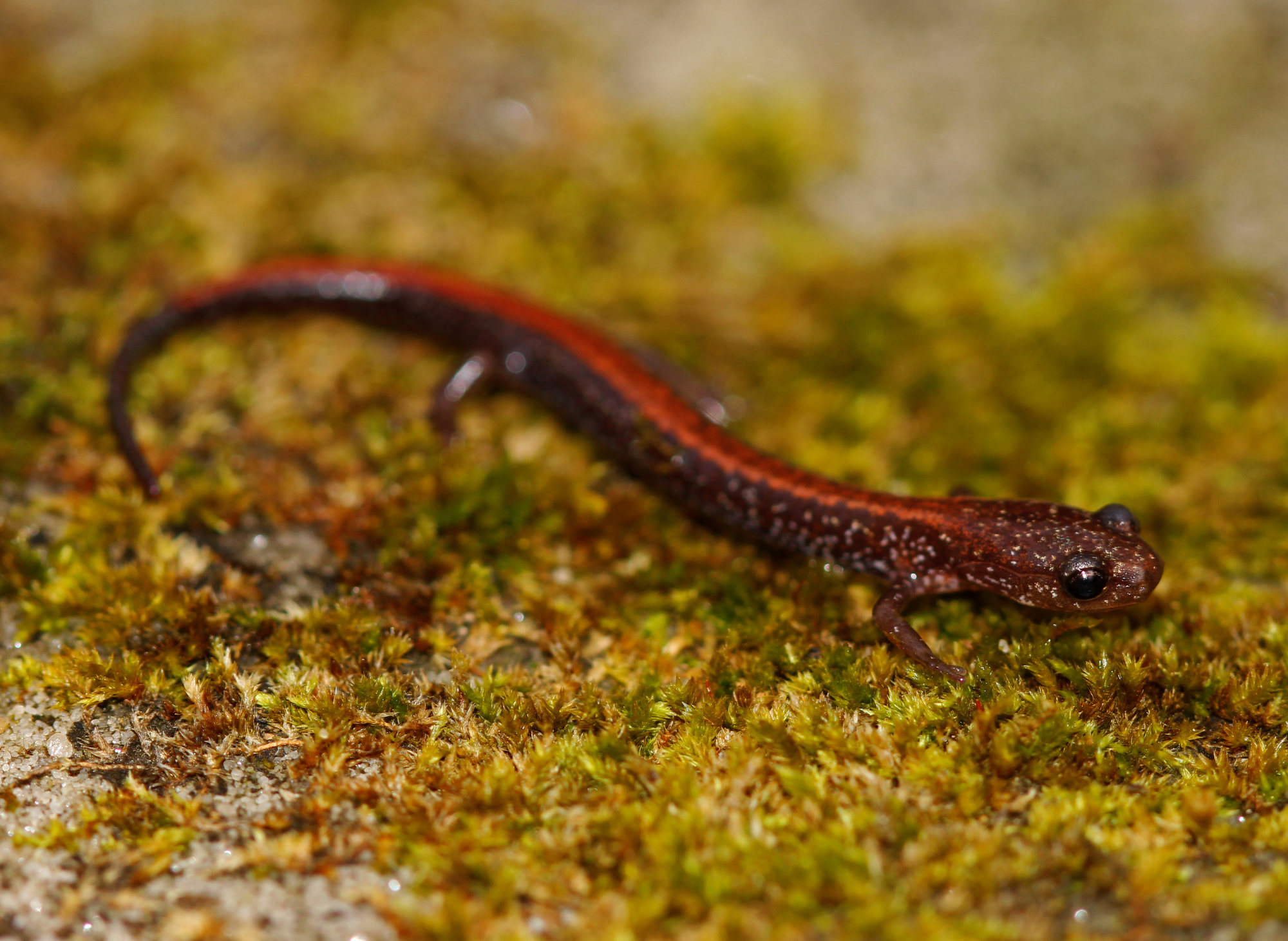
Photo Peter Paplanus from St. Louis, Missouri (opens in a new tab) / Wikimedia Commons, CC BY 2.0 (opens in a new tab)
At a glance
- Size
- Usually 7 to 10 cm long
- Habitat
- Moist forests with leaf litter and logs
- Diet
- Mites, springtails, ants and other tiny invertebrates
- In Georgia
- The mountains and Ridge and Valley of north Georgia
- Rabies vector
- No
Identification
- Key marks
- Slim, with a narrow, saw-edged red or orange stripe down the back; some are all dark grey
- Told apart from
- Southern zigzag salamander, which has a wavier stripe and a mottled orange belly
- Where to look
- Under logs, rocks and bark in the woods
Behaviour
It lives in the leaf litter and under logs, and comes to the surface in cool, wet weather. It retreats underground in summer heat.
Why they matter
Red-backed salamanders eat the tiny animals that break down leaves, and so affect how fast forest litter decays and how much carbon the soil holds.
Reproduction and lifecycle
Eggs — A small cluster hung inside a rotting log or crevice, guarded by the female
Hatching — As tiny copies of the adults
Young — No aquatic stage
Maturity — At about two years
Lifespan — Over 10 years
Breathing — Through the skin; no lungs
Living around people
- Fallen logs and leaf litter left in the woods are where it lives.
Misconceptions
- Salamanders that look different are different species. Some red-backs have a stripe and some do not.
Related species
Seasonal activity
When this species is breeding, and when there are nests on the ground. Mowing during the shaded months is how most nests are found.
| Jan | Feb | Mar | Apr | May | Jun | Jul | Aug | Sep | Oct | Nov | Dec | |
|---|---|---|---|---|---|---|---|---|---|---|---|---|
| Breeding | Jan: no | Feb: no | Mar: no | Apr: no | May: no | Jun: no | Jul: no | Aug: no | Sep: no | Oct: no | Nov: no | Dec: no |
| Active nests | Jan: no | Feb: no | Mar: no | Apr: no | May: no | Jun: no | Jul: no | Aug: no | Sep: no | Oct: no | Nov: no | Dec: no |
| Notes | Underground in cold weather | Active on mild wet days | Active | Active | Laying eggs | Underground in heat | Underground in heat | Young hatching | Active on wet nights | Active | Active | Active on mild days |
Where it lives
Recorded in 8 states and provinces. Each one links to the other animals there, and to the rehabilitators licensed for them.
If you found one
Answer a few questions and you will get a specific answer for what you are looking at.
I found an animal