
Species
Webster's salamander
Plethodon websteri
A tiny woodland salamander of rocky Piedmont slopes, one of Georgia's smallest.
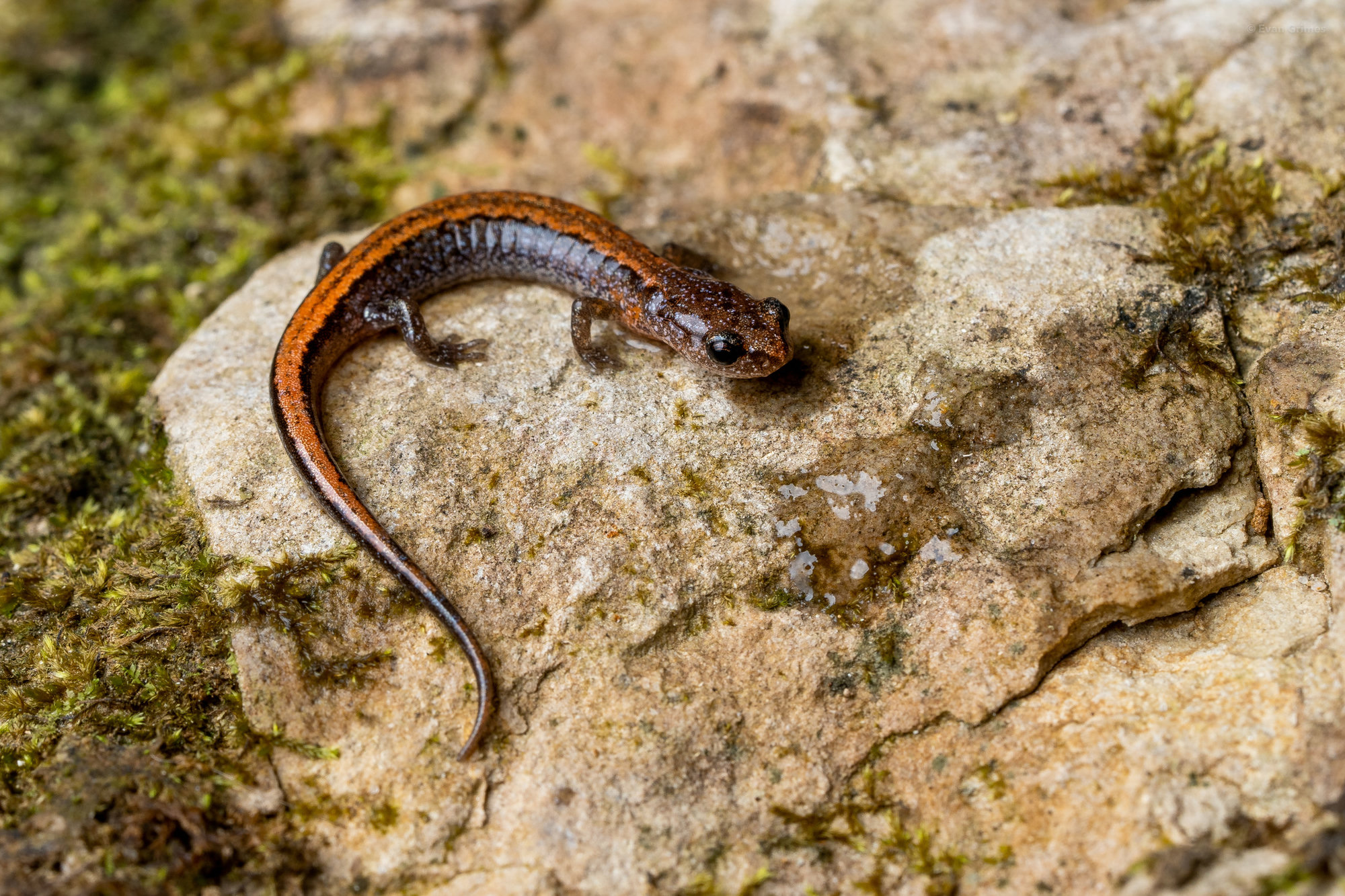
Photo evangrimes (opens in a new tab) / Wikimedia Commons, CC BY 4.0 (opens in a new tab)
At a glance
- Size
- Usually 6 to 8 cm long
- Habitat
- Moist, rocky hardwood slopes, often near streams
- Diet
- Tiny invertebrates
- In Georgia
- Scattered through the Piedmont
- Rabies vector
- No
Identification
- Key marks
- Very small and slim; dark with a paler, often orange or brown, stripe down the back; some plain dark
- Told apart from
- Southern zigzag salamander, which lives farther north-west and has a bolder stripe
- Where to look
- Under rocks on wooded slopes in cool, wet weather
Behaviour
It is active at the surface mostly from late autumn to spring and spends the hot months underground.
Why they matter
It lives in scattered pockets of rocky forest, each one a small, isolated population.
Reproduction and lifecycle
Eggs — Laid underground
Hatching — As tiny copies of the adults
Young — No aquatic stage
Maturity — At about two years
Lifespan — Several years
Breathing — Through the skin; no lungs
Living around people
- Rocky, shaded slopes kept wooded are its home.
Misconceptions
- Salamanders are only active in summer. This one is most active in winter.
Related species
Seasonal activity
When this species is breeding, and when there are nests on the ground. Mowing during the shaded months is how most nests are found.
| Jan | Feb | Mar | Apr | May | Jun | Jul | Aug | Sep | Oct | Nov | Dec | |
|---|---|---|---|---|---|---|---|---|---|---|---|---|
| Breeding | Jan: no | Feb: no | Mar: no | Apr: no | May: no | Jun: no | Jul: no | Aug: no | Sep: no | Oct: no | Nov: no | Dec: no |
| Active nests | Jan: no | Feb: no | Mar: no | Apr: no | May: no | Jun: no | Jul: no | Aug: no | Sep: no | Oct: no | Nov: no | Dec: no |
| Notes | Active on wet days | Active | Active | Active | Laying eggs | Underground | Underground | Underground | Young hatching | Returning to the surface | Active | Active |
Where it lives
Recorded in 4 states and provinces. Each one links to the other animals there, and to the rehabilitators licensed for them.
United States
If you found one
Answer a few questions and you will get a specific answer for what you are looking at.
I found an animal