
Species
Neotropic cormorant
Nannopterum brasilianum
A slim, long-tailed cormorant of the tropics that is spreading into Georgia.
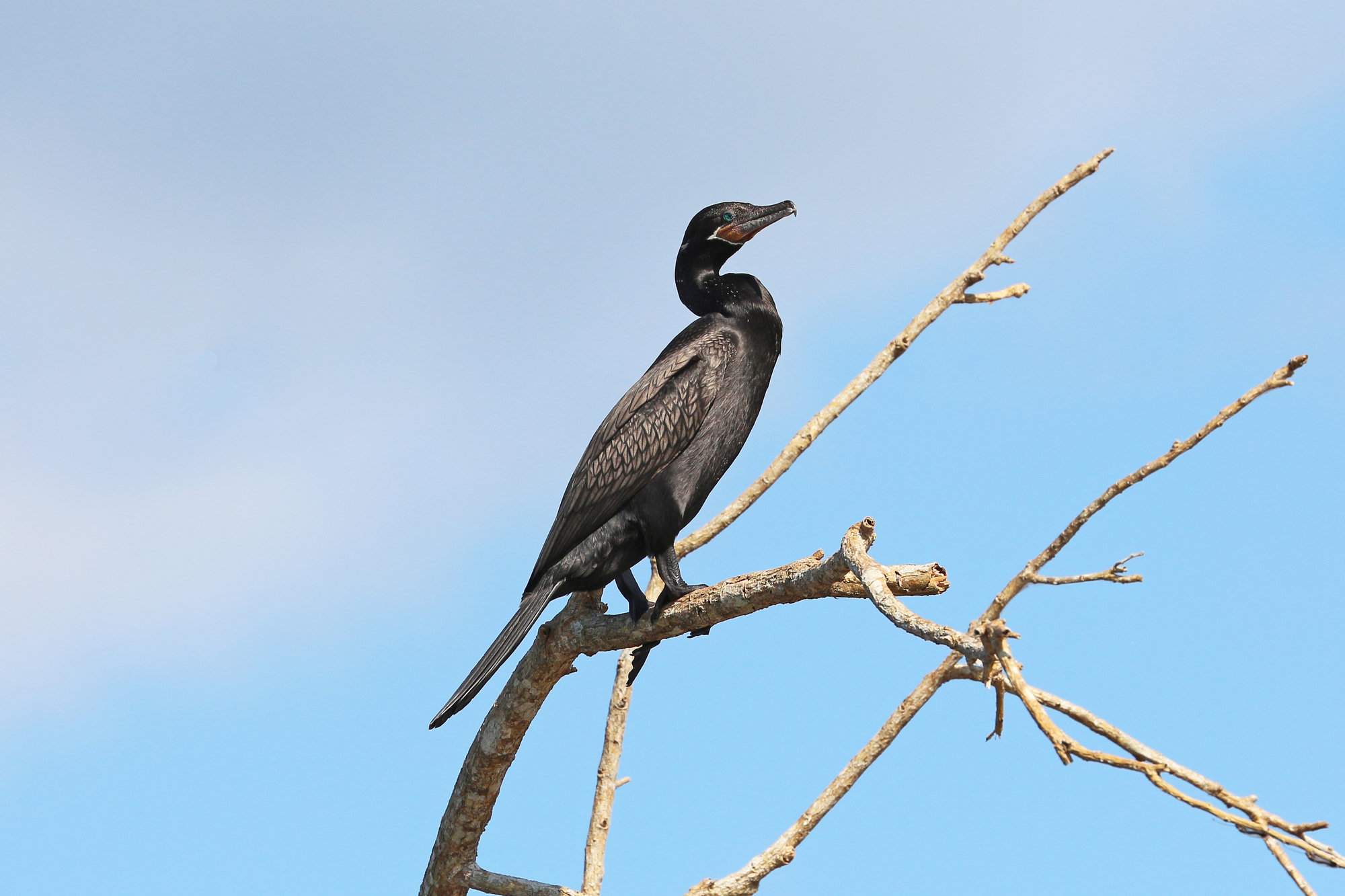
Photo Bernard Gagnon (opens in a new tab) / Wikimedia Commons, CC0 (opens in a new tab)
At a glance
- Size
- About 58 to 73 cm long
- Weight
- About 1 to 1.5 kg
- Habitat
- Lakes, ponds, rivers and coastal waters
- Diet
- Small fish
- In Georgia
- An uncommon but increasing visitor
- Voice
- Soft, pig-like grunts
- Rabies vector
- No
Identification
- Key marks
- Smaller and slimmer than a double-crested cormorant; longer tail; small throat patch edged with white, forming a point behind the bill
- Told apart from
- Double-crested cormorant, which is larger with a rounded orange throat patch
- Where to look
- With double-crested cormorants on ponds and lakes
Behaviour
Neotropic cormorants dive for small fish and sometimes fish cooperatively, beating the water with their wings to drive fish into shallows.
Why they matter
This is the most widespread cormorant in the Americas, from Mexico to Tierra del Fuego. Its spread north and east in recent decades shows how warming and changing habitats are reshaping bird ranges.
Reproduction and lifecycle
Nest — A platform of sticks in trees over water
Eggs — Usually three or four
Incubation — About 25 to 30 days
Chicks — Fed by both parents
Lifespan — Several years
Living around people
- Like other cormorants, it is harmed by fishing line and hooks.
Misconceptions
- All cormorants in Georgia are the same species. A smaller, longer-tailed cormorant is now appearing more often.
Related species
Seasonal activity
When this species is breeding, and when there are nests on the ground. Mowing during the shaded months is how most nests are found.
| Jan | Feb | Mar | Apr | May | Jun | Jul | Aug | Sep | Oct | Nov | Dec | |
|---|---|---|---|---|---|---|---|---|---|---|---|---|
| Breeding | Jan: no | Feb: no | Mar: no | Apr: no | May: no | Jun: no | Jul: no | Aug: no | Sep: no | Oct: no | Nov: no | Dec: no |
| Active nests | Jan: no | Feb: no | Mar: no | Apr: no | May: no | Jun: no | Jul: no | Aug: no | Sep: no | Oct: no | Nov: no | Dec: no |
| Notes | Present in small numbers | Present | Present | Present; some pairs nest in the region | Present | Present | Present | Present | Present | Present | Present | Present |
Where it lives
Recorded in 47 states and provinces. Each one links to the other animals there, and to the rehabilitators licensed for them.
United States
Mexico
- Aguascalientes
- Baja California
- Baja California Sur
- Campeche
- Chiapas
- Chihuahua
- Coahuilain winter
- Colima
- Durango
- Guanajuato
- Guerrero
- Hidalgoin winter
- Jalisco
- Mexico City
- Michoacanin winter
- Nayarit
- Nuevo Leon
- Oaxaca
- Pueblabreeding
- Queretaro
- Quintana Roo
- San Luis Potosi
- Sinaloa
- Sonora
- State of Mexico
- Tabasco
- Tamaulipas
- Tlaxcalapassing through
- Veracruz
- Yucatan
- Zacatecaspassing through
If you found one
Answer a few questions and you will get a specific answer for what you are looking at.
I found an animal