
Species
Mottled duck
Anas fulvigula
A buff-faced, mallard-like duck that stays year-round in the coastal marshes of the Gulf and southern Atlantic.
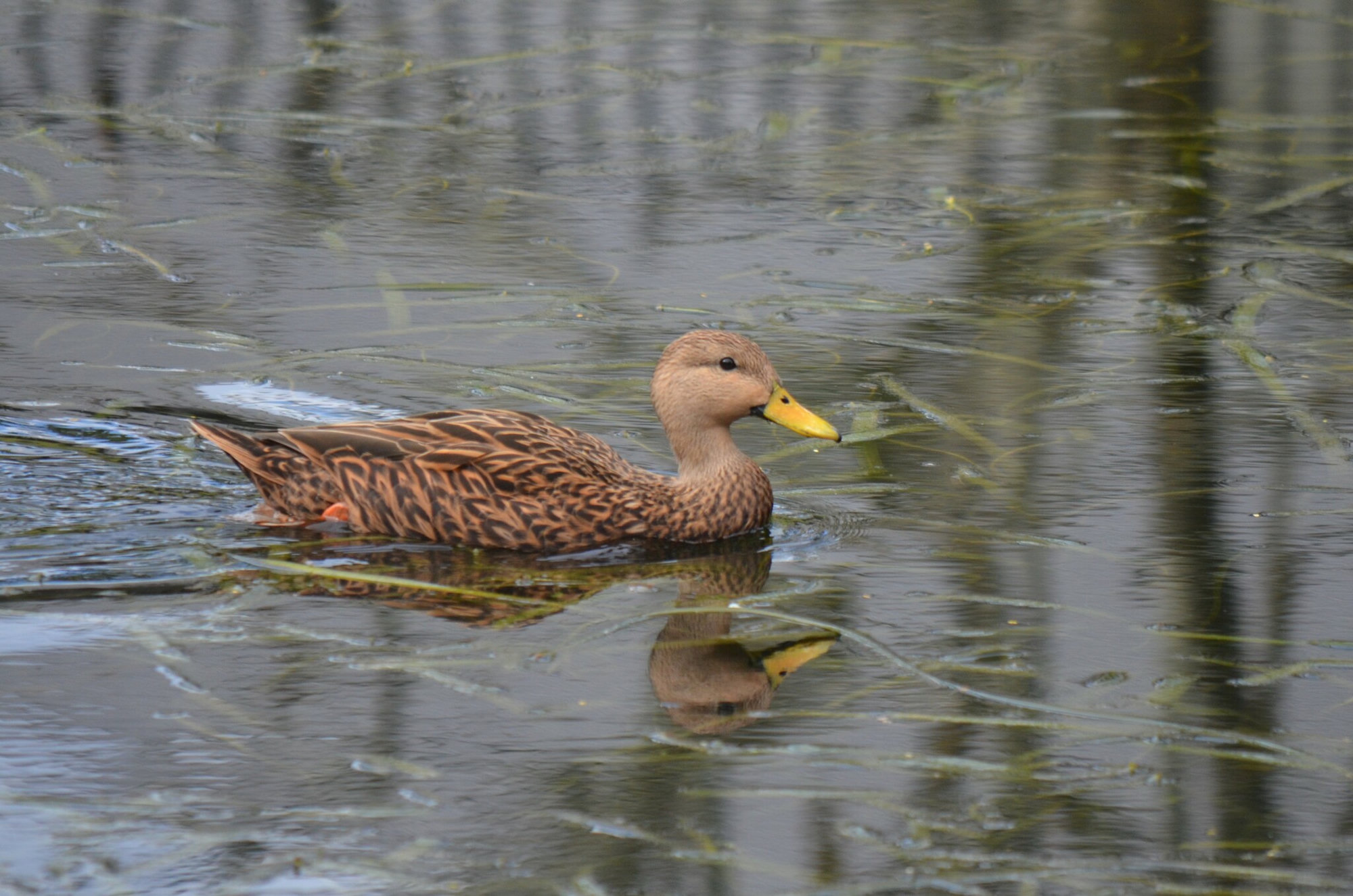
Photo Josiah Londerée (opens in a new tab) / iNaturalist, CC BY 4.0 (opens in a new tab)
At a glance
- Size
- About 44 to 61 cm long
- Weight
- About 850 to 1,200 g
- Habitat
- Coastal marshes, impoundments, ponds and wet pastures
- Diet
- Seeds, aquatic plants, snails, insects and small fish
- In Georgia
- Resident on the coast in small but growing numbers
- Voice
- A mallard-like quack
- Rabies vector
- No
Identification
- Key marks
- Warm brown body with buff edges to the feathers; plain buff face and throat; yellow or orange bill; dark spot at the gape; blue-green wing patch with little or no white border
- Told apart from
- Female mallard, which is paler and has broad white borders to the wing patch
- Told apart from
- American black duck, which is much darker with a streaked, greyish head
- Where to look
- Coastal impoundments and freshwater marshes near the coast
Behaviour
Mottled ducks live in pairs much of the year and do not migrate. They feed by dabbling in shallow water and nest on the ground among grasses near water.
Why they matter
The mottled duck is one of the few ducks that lives year-round in the Deep South, so it depends entirely on southern coastal marshes. Birds from Gulf Coast populations were released on the South Carolina coast in the 1970s and 1980s, and the species is now established along the Georgia coast.
Reproduction and lifecycle
Nest — A down-lined bowl hidden in grass near water
Eggs — Usually 8 to 12
Incubation — About 24 to 28 days
Ducklings — Leave the nest within a day
Flight — At about nine weeks
Lifespan — Usually a few years
Living around people
- Released domestic mallards interbreed with mottled ducks, threatening their distinctness.
- Coastal marshes that are drained or developed are lost to them for good, as they do not migrate elsewhere.
Misconceptions
- A brown duck on a coastal pond in summer is a female mallard. On the Georgia coast it may well be a mottled duck.
Related species
Seasonal activity
When this species is breeding, and when there are nests on the ground. Mowing during the shaded months is how most nests are found.
| Jan | Feb | Mar | Apr | May | Jun | Jul | Aug | Sep | Oct | Nov | Dec | |
|---|---|---|---|---|---|---|---|---|---|---|---|---|
| Breeding | Jan: no | Feb: no | Mar: no | Apr: no | May: no | Jun: no | Jul: no | Aug: no | Sep: no | Oct: no | Nov: no | Dec: no |
| Active nests | Jan: no | Feb: no | Mar: no | Apr: no | May: no | Jun: no | Jul: no | Aug: no | Sep: no | Oct: no | Nov: no | Dec: no |
| Notes | Pairs forming | Pairs on territories | Nesting begins | Nesting | Broods on the water | Broods | Adults moulting | Young flying | Pairs and small groups in marshes | Present in marshes | Present | Pairs forming |
Where it lives
Recorded in 10 states and provinces. Each one links to the other animals there, and to the rehabilitators licensed for them.
If you found one
Answer a few questions and you will get a specific answer for what you are looking at.
I found an animal