
Species
American black duck
Anas rubripes
A dark, mallard-like duck of eastern wetlands, found in Georgia mostly in winter.
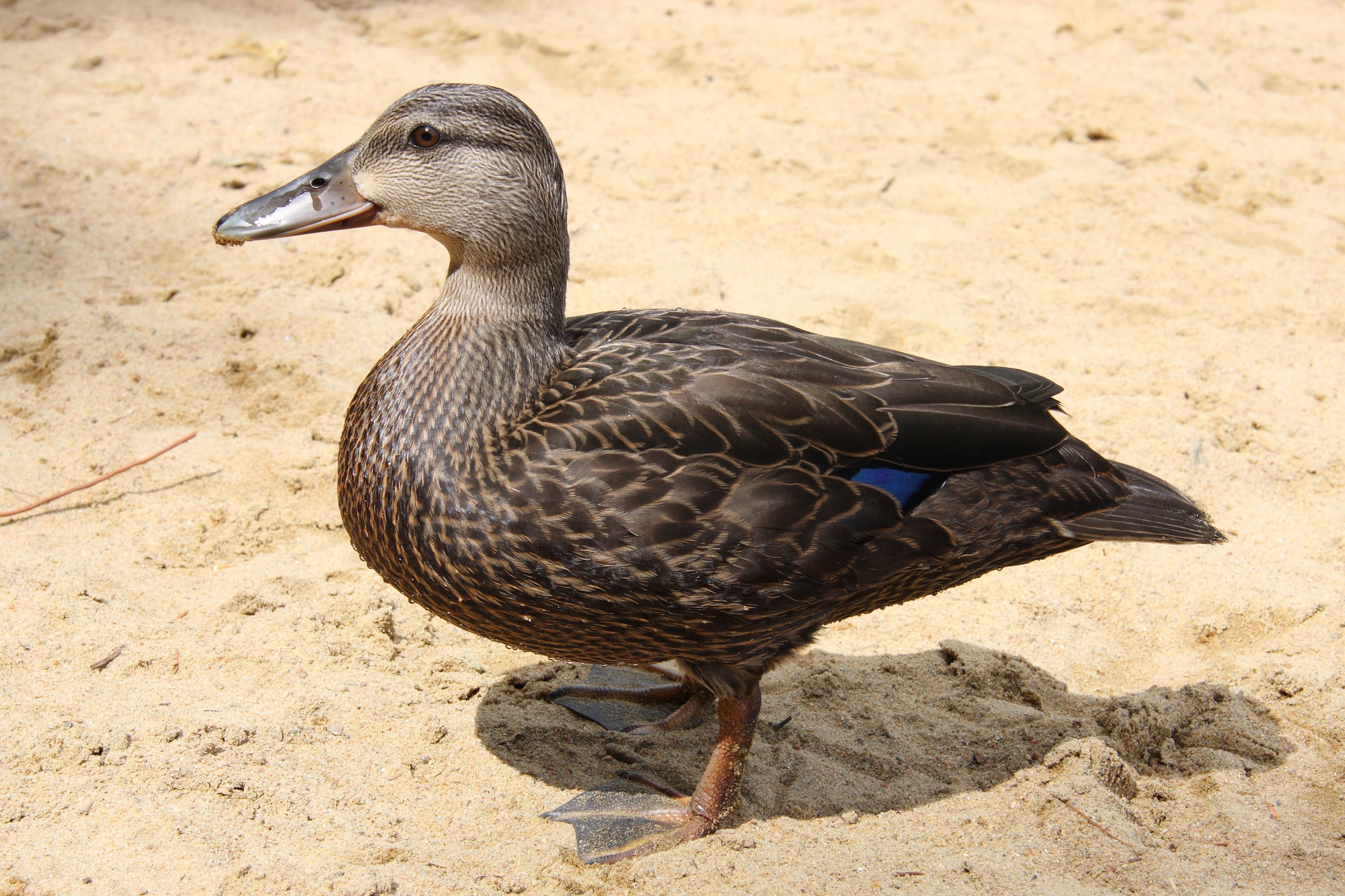
Photo Cephas (opens in a new tab) / Wikimedia Commons, CC BY-SA 3.0 (opens in a new tab)
At a glance
- Size
- About 54 to 59 cm long
- Weight
- About 1 to 1.6 kg
- Habitat
- Salt marshes, tidal creeks, beaver ponds and wooded swamps
- Diet
- Aquatic plants, seeds, snails, mussels and insects
- In Georgia
- An uncommon winter visitor; a few breed in the north
- Voice
- A loud quack like a mallard's
- Rabies vector
- No
Identification
- Key marks
- Very dark brown body; paler, finely streaked head; yellow-green bill in males; violet-blue wing patch without white borders; white underwings flash in flight
- Told apart from
- Female mallard, which is paler with white borders to the wing patch
- Told apart from
- Mottled duck, which is paler brown with a buff, unstreaked face
- Where to look
- Coastal marshes and wooded ponds in winter
Behaviour
Black ducks are wary birds that feed by dabbling in shallow water and on mudflats. In winter many move to salt marshes, where they eat snails and other small animals as well as plants.
Why they matter
The American black duck declined sharply in the twentieth century as forests were cleared and mallards spread east and interbred with it. It has recovered somewhat as wetlands have been protected, and it remains one of the ducks most closely tied to the forested wetlands and salt marshes of the eastern seaboard.
Reproduction and lifecycle
Nest — A down-lined bowl hidden on the ground near water
Eggs — Usually 6 to 12
Incubation — About 25 to 29 days
Ducklings — Leave the nest within a day
Flight — At about seven to eight weeks
Lifespan — Usually a few years; some over twenty
Living around people
- Black ducks avoid disturbed water and suffer where marshes are drained or crowded.
- Feeding ducks at ponds favours mallards, which crowd out and interbreed with black ducks.
Misconceptions
- A black duck is just a dark mallard. It is a separate species, though the two can interbreed.
Related species
Seasonal activity
When this species is breeding, and when there are nests on the ground. Mowing during the shaded months is how most nests are found.
| Jan | Feb | Mar | Apr | May | Jun | Jul | Aug | Sep | Oct | Nov | Dec | |
|---|---|---|---|---|---|---|---|---|---|---|---|---|
| Breeding | Jan: no | Feb: no | Mar: no | Apr: no | May: no | Jun: no | Jul: no | Aug: no | Sep: no | Oct: no | Nov: no | Dec: no |
| Active nests | Jan: no | Feb: no | Mar: no | Apr: no | May: no | Jun: no | Jul: no | Aug: no | Sep: no | Oct: no | Nov: no | Dec: no |
| Notes | Wintering in marshes | Pairs forming | Migrating north | Nesting farther north | Broods hatching in the north | Ducklings growing | Adults moulting | Young flying | Migration begins | Moving south | Arriving in Georgia | Wintering |
Where it lives
Recorded in 34 states and provinces. Each one links to the other animals there, and to the rehabilitators licensed for them.
United States
- Alabamain winter
- Connecticutin winter
- Delawarein winter
- District of Columbiain winter
- Georgiain winter
- Illinoisin winter
- Indianain winter
- Kentuckyin winter
- Maine
- Marylandin winter
- Massachusettsin winter
- Michiganin winter
- Minnesotain winter
- New Hampshirein winter
- New Jerseyin winter
- New Yorkin winter
- North Carolinain winter
- Ohioin winter
- Pennsylvaniain winter
- Rhode Islandin winter
- South Carolinain winter
- Tennesseein winter
- Vermontin winter
- Virginiain winter
- West Virginiain winter
- Wisconsinin winter
If you found one
Answer a few questions and you will get a specific answer for what you are looking at.
I found an animal