
Species
Mediterranean house gecko
Hemidactylus turcicus
A small, pale gecko from overseas that hunts insects around lit windows on warm Georgia nights.
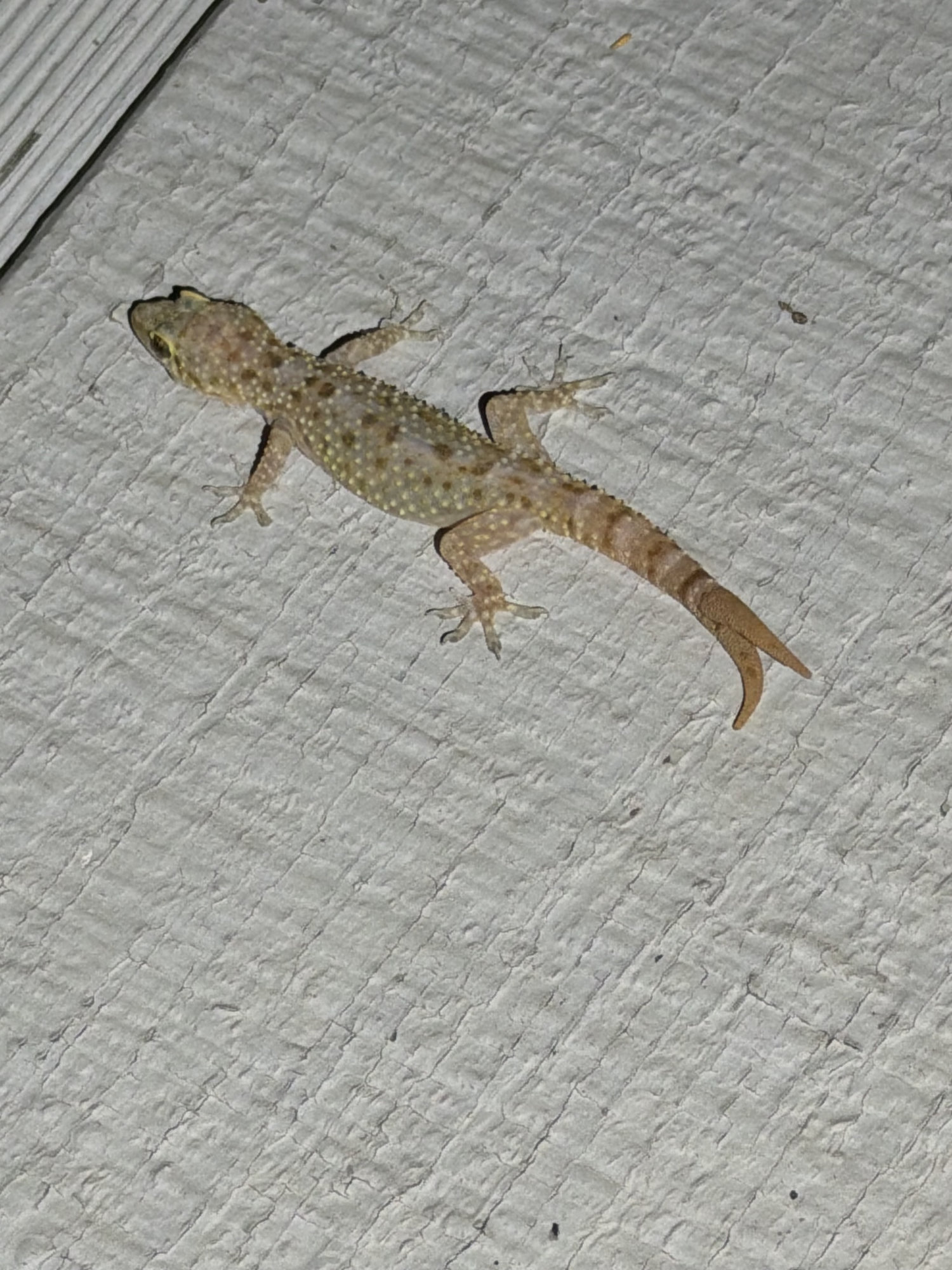
Photo Djibo Zanzot (opens in a new tab) / iNaturalist, CC BY-SA 4.0 (opens in a new tab)
At a glance
- Size
- About 10 to 13 cm long including the tail
- Habitat
- Buildings, walls and outdoor lights in towns
- Diet
- Moths, flies and other insects drawn to lights
- In Georgia
- Established in towns, mainly in the south and on the coast; introduced
- Voice
- Squeaks and clicks
- Rabies vector
- No
Identification
- Key marks
- Pale pink to grey, nearly translucent; bumpy skin; large eyes with vertical pupils; wide toe pads
- Told apart from
- Tropical house gecko, which is larger and darker with a pattern of chevrons
- Where to look
- On walls near porch lights at night
Behaviour
Mediterranean geckos hide in cracks by day and come out at night to hunt insects drawn to lights. They are among the few lizards that make sounds, chirping and clicking at each other.
Why they matter
They arrived from the Mediterranean with shipping and have spread through much of the southern United States. They eat night-flying insects around buildings and live mostly alongside people, with little effect on native lizards.
Reproduction and lifecycle
Eggs — Usually 2, several clutches a year
Nest — Laid in cracks and crevices, sometimes shared
Incubation — About 6 to 8 weeks
Hatchlings — About 5 cm long
Maturity — Within a year
Lifespan — A few years
Living around people
- House geckos are harmless and eat insects around lights.
- A gecko indoors can be guided into a cup and set outside by a wall.
- Never release pet geckos or other lizards outdoors.
Misconceptions
- Geckos are poisonous. They are harmless to people and pets.
Related species
Seasonal activity
When this species is breeding, and when there are nests on the ground. Mowing during the shaded months is how most nests are found.
| Jan | Feb | Mar | Apr | May | Jun | Jul | Aug | Sep | Oct | Nov | Dec | |
|---|---|---|---|---|---|---|---|---|---|---|---|---|
| Breeding | Jan: no | Feb: no | Mar: no | Apr: no | May: no | Jun: no | Jul: no | Aug: no | Sep: no | Oct: no | Nov: no | Dec: no |
| Active nests | Jan: no | Feb: no | Mar: no | Apr: no | May: no | Jun: no | Jul: no | Aug: no | Sep: no | Oct: no | Nov: no | Dec: no |
| Notes | Sheltering in walls | Sheltering | Out on warm nights | Active | Breeding | Laying | Laying | Hatchlings | Active | Active on warm nights | Sheltering | Sheltering |
Where it lives
Recorded in 31 states and provinces. Each one links to the other animals there, and to the rehabilitators licensed for them.
United States
- Alabamaintroduced
- Arizonaintroduced
- Arkansasintroduced
- Californiaintroduced
- Floridaintroduced
- Georgiaintroduced
- Kentuckyintroduced
- Louisianaintroduced
- Mississippiintroduced
- Nevadaintroduced
- New Mexicointroduced
- North Carolinaintroduced
- Oklahomaintroduced
- South Carolinaintroduced
- Tennesseeintroduced
- Texasintroduced
- Virginiaintroduced
If you found one
Answer a few questions and you will get a specific answer for what you are looking at.
I found an animal