
Species
Tropical house gecko
Hemidactylus mabouia
A large African gecko, established in a few Georgia towns, that hunts insects on warm walls at night.
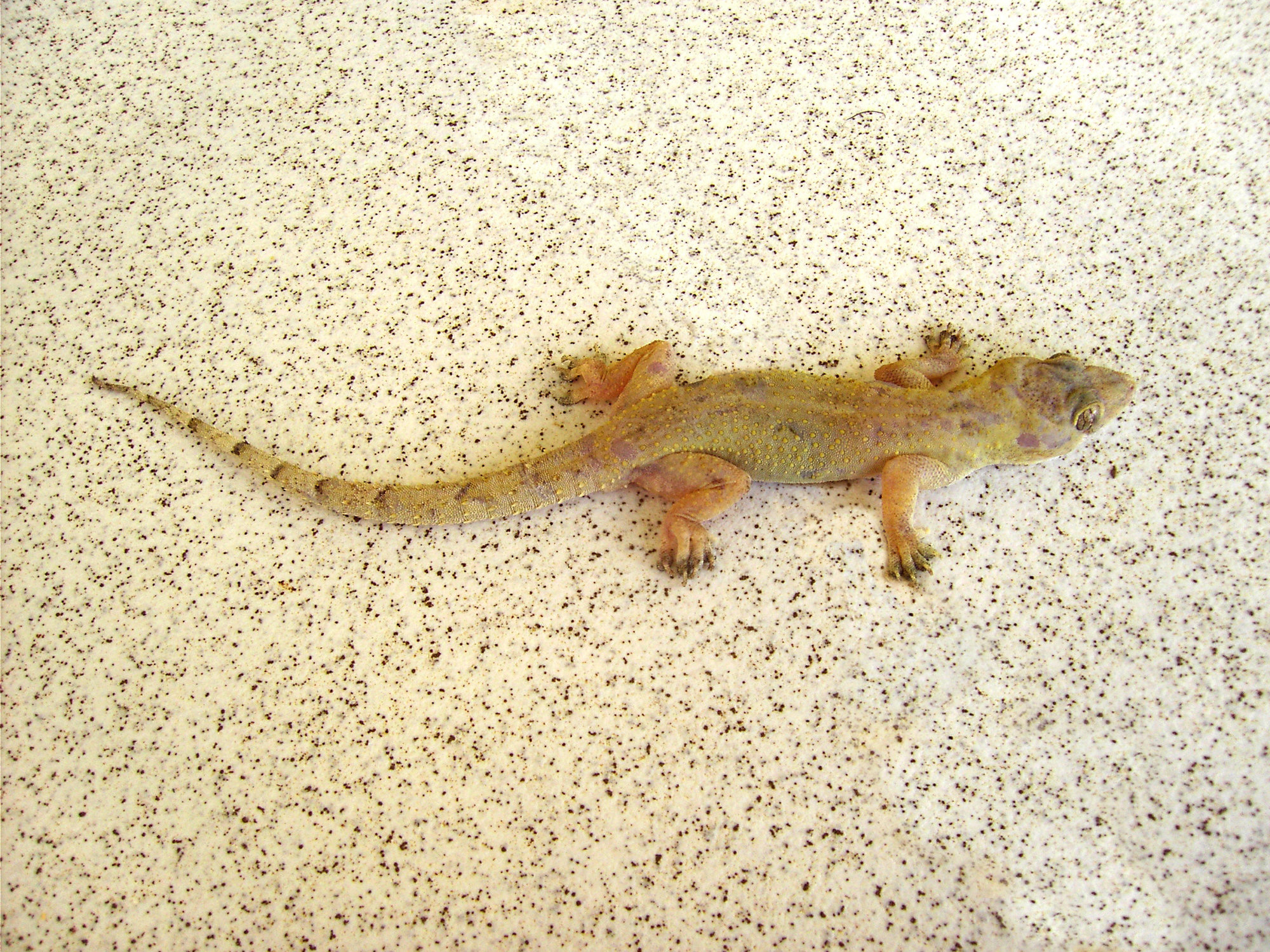
Photo Hans Hillewaert (opens in a new tab) / Wikimedia Commons, CC BY-SA 4.0 (opens in a new tab)
At a glance
- Size
- About 10 to 13 cm long including the tail
- Habitat
- Buildings and walls, mostly in towns
- Diet
- Insects and spiders, and smaller geckos
- In Georgia
- Established in a few towns in the south and on the coast; introduced
- Voice
- Clicks and chirps
- Rabies vector
- No
Identification
- Key marks
- Grey to brown with dark, wavy chevrons across the back; wide toe pads; can change shade from pale to dark
- Told apart from
- Mediterranean house gecko, which is smaller, paler and bumpier
- Where to look
- On walls near lights at night
Behaviour
It hunts at night around lights, and in places where it has arrived it can crowd out the smaller Mediterranean house gecko. It came to the Americas from Africa, probably with ships centuries ago.
Why they matter
Like other house geckos it lives mostly alongside people and eats insects around buildings.
Reproduction and lifecycle
Eggs — Usually 2, several clutches a year
Nest — In cracks and crevices
Incubation — About 6 to 9 weeks
Hatchlings — Small, patterned
Maturity — Within a year
Lifespan — A few years
Living around people
- House geckos are harmless.
- Never release pet geckos.
Misconceptions
- Geckos in the house mean an infestation. They are there for the insects.
Related species
Seasonal activity
When this species is breeding, and when there are nests on the ground. Mowing during the shaded months is how most nests are found.
| Jan | Feb | Mar | Apr | May | Jun | Jul | Aug | Sep | Oct | Nov | Dec | |
|---|---|---|---|---|---|---|---|---|---|---|---|---|
| Breeding | Jan: no | Feb: no | Mar: no | Apr: no | May: no | Jun: no | Jul: no | Aug: no | Sep: no | Oct: no | Nov: no | Dec: no |
| Active nests | Jan: no | Feb: no | Mar: no | Apr: no | May: no | Jun: no | Jul: no | Aug: no | Sep: no | Oct: no | Nov: no | Dec: no |
| Notes | Sheltering | Sheltering | Out on warm nights | Active | Breeding | Laying | Laying | Hatchlings | Active | Active on warm nights | Sheltering | Sheltering |
Where it lives
Recorded in 4 states and provinces. Each one links to the other animals there, and to the rehabilitators licensed for them.
United States
Mexico
If you found one
Answer a few questions and you will get a specific answer for what you are looking at.
I found an animal