
Species
Limpkin
Aramus guarauna
A wailing, long-billed wading bird that eats apple snails, spreading into Georgia as the snails do.
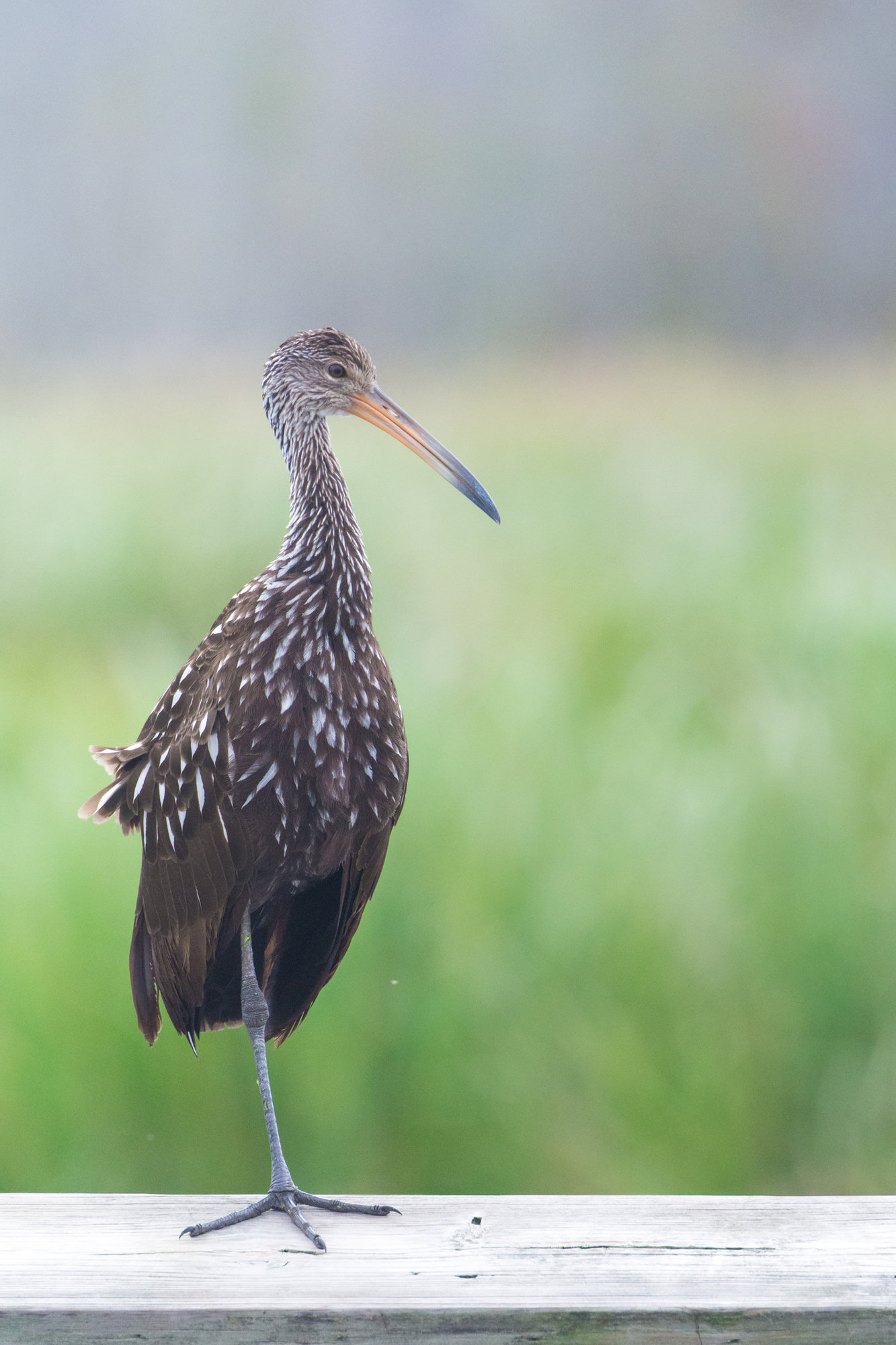
Photo Dr. Andrew G. Cannizzaro (opens in a new tab) / iNaturalist, CC BY 4.0 (opens in a new tab)
At a glance
- Size
- About 64 to 73 cm long
- Weight
- About 1 to 1.3 kg
- Habitat
- Freshwater marshes, swamps, spring runs and lake edges
- Diet
- Mainly large apple snails; also mussels, frogs and insects
- In Georgia
- An uncommon but increasing resident in the south of the state
- Voice
- A loud, eerie, wailing "kree-ow"
- Rabies vector
- No
Identification
- Key marks
- Brown with white spots and streaks; long, slightly curved bill; long legs
- Told apart from
- Juvenile white ibis, which has a strongly curved pink bill
- Told apart from
- Juvenile night-herons, which are stockier with short, thick bills
- Where to look
- Southern lakes and marshes where apple snails live
Behaviour
Limpkins wade and probe for apple snails, then carry them to shore, where they use their bill, which has a slight twist at the tip, to cut the snail from its shell. Piles of empty shells mark their feeding spots.
Why they matter
The limpkin is the only living member of its family. Its range in Georgia has grown with the spread of non-native apple snails, which it eats readily — a native bird taking advantage of an introduced pest.
Reproduction and lifecycle
Nest — A platform of plants in marsh vegetation or low shrubs
Eggs — Usually four to eight
Incubation — About 27 days
Chicks — Downy, leave the nest within a day
Flight — At about eight weeks
Lifespan — Several years
Living around people
- The limpkin's night-time wailing can alarm people; it is only a bird calling.
Misconceptions
- The wailing at night is someone in distress. It is almost certainly a limpkin.
Related species
Seasonal activity
When this species is breeding, and when there are nests on the ground. Mowing during the shaded months is how most nests are found.
| Jan | Feb | Mar | Apr | May | Jun | Jul | Aug | Sep | Oct | Nov | Dec | |
|---|---|---|---|---|---|---|---|---|---|---|---|---|
| Breeding | Jan: no | Feb: no | Mar: no | Apr: no | May: no | Jun: no | Jul: no | Aug: no | Sep: no | Oct: no | Nov: no | Dec: no |
| Active nests | Jan: no | Feb: no | Mar: no | Apr: no | May: no | Jun: no | Jul: no | Aug: no | Sep: no | Oct: no | Nov: no | Dec: no |
| Notes | Resident | Calling | Nesting begins | Nesting | Chicks | Chicks | Young independent | Present | Present | Present | Present | Present |
Where it lives
Recorded in 29 states and provinces. Each one links to the other animals there, and to the rehabilitators licensed for them.
United States
If you found one
Answer a few questions and you will get a specific answer for what you are looking at.
I found an animal