
Species
Least bittern
Botaurus exilis
A tiny, secretive heron that clings to reed stems, often straddling two at once.
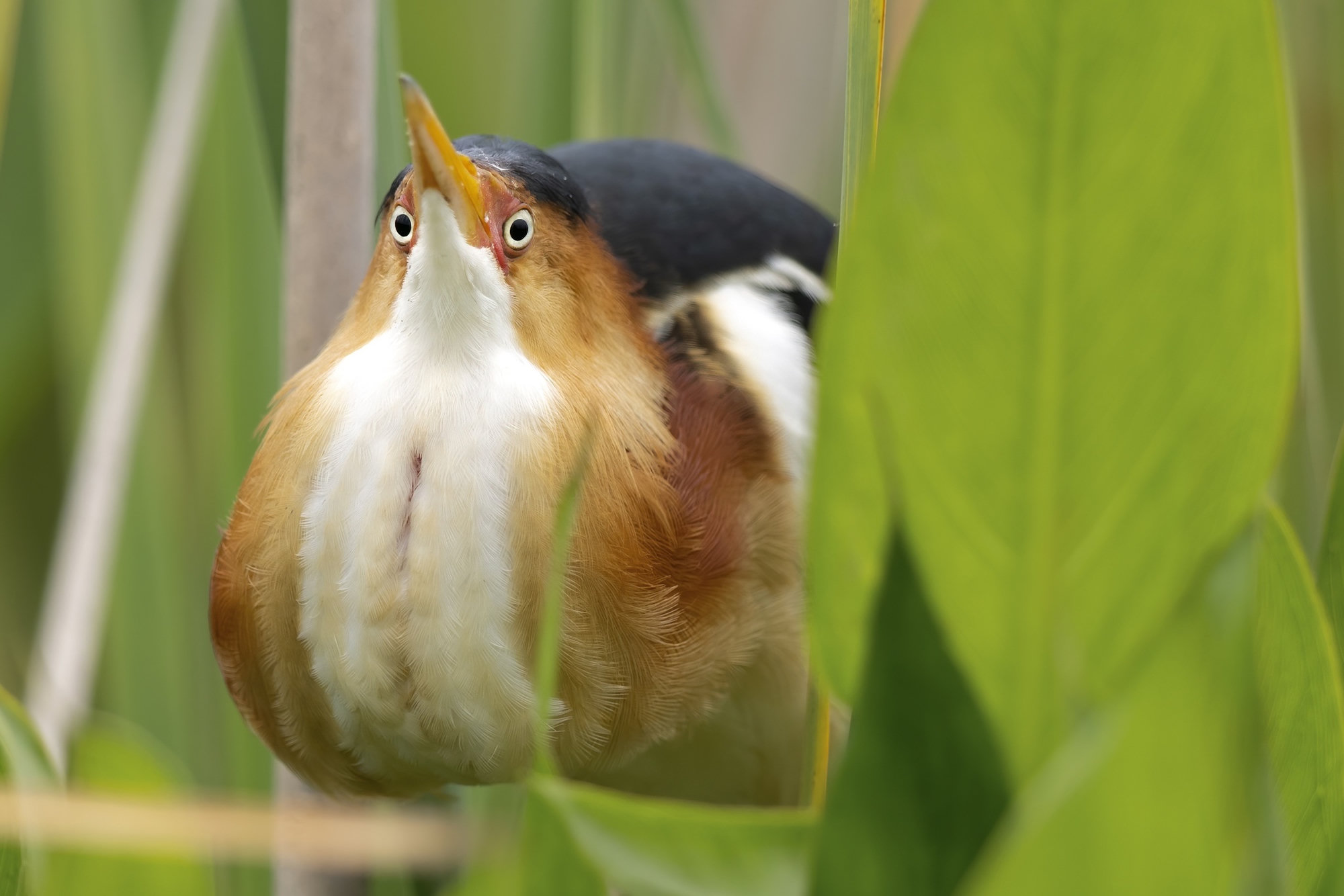
Photo Matt Felperin (opens in a new tab) / iNaturalist, CC BY 4.0 (opens in a new tab)
At a glance
- Size
- About 28 to 36 cm long
- Weight
- About 50 to 100 g
- Habitat
- Freshwater and brackish marshes with dense cattails and reeds
- Diet
- Small fish, insects, tadpoles and crayfish
- In Georgia
- A summer resident; a few winter in the south
- Voice
- A soft, cooing "coo-coo-coo"
- Rabies vector
- No
Identification
- Key marks
- Tiny heron; dark cap and back; buff wing patches, obvious in flight; buff neck
- Told apart from
- Green heron, which is larger with no buff wing patches
- Told apart from
- American bittern, which is much larger and streaked
- Where to look
- Cattail marshes, clinging to stems over water
Behaviour
Least bitterns climb through reeds, grasping stems with their long toes, and hunt from just above the water. They freeze with bill pointing up when alarmed.
Why they matter
The smallest heron in North America, the least bittern lives in dense marshes that few people enter. It feeds on small fish and insects and shows how much life a healthy cattail marsh holds.
Reproduction and lifecycle
Nest — A platform of bent stems above water
Eggs — Usually four or five
Incubation — About 17 to 20 days
Chicks — Leave the nest at about two weeks, clambering in reeds
Lifespan — Several years
Living around people
- Draining or mowing cattail marshes removes their habitat.
Misconceptions
- Tiny herons are chicks. Least bitterns are adults at this size.
Related species
Seasonal activity
When this species is breeding, and when there are nests on the ground. Mowing during the shaded months is how most nests are found.
| Jan | Feb | Mar | Apr | May | Jun | Jul | Aug | Sep | Oct | Nov | Dec | |
|---|---|---|---|---|---|---|---|---|---|---|---|---|
| Breeding | Jan: no | Feb: no | Mar: no | Apr: no | May: no | Jun: no | Jul: no | Aug: no | Sep: no | Oct: no | Nov: no | Dec: no |
| Active nests | Jan: no | Feb: no | Mar: no | Apr: no | May: no | Jun: no | Jul: no | Aug: no | Sep: no | Oct: no | Nov: no | Dec: no |
| Notes | A few in the far south | Few present | Arriving | Arriving | Nesting | Nesting | Chicks | Young flying | Leaving | Last birds | Few present | Few present |
Where it lives
Recorded in 66 states and provinces. Each one links to the other animals there, and to the rehabilitators licensed for them.
United States
- Alabamabreeding
- Arizona
- Arkansasbreeding
- California
- Connecticutbreeding
- Delawarebreeding
- District of Columbiabreeding
- Florida
- Georgiabreeding
- Illinoisbreeding
- Indianabreeding
- Iowabreeding
- Kansasbreeding
- Kentuckybreeding
- Louisianabreeding
- Mainebreeding
- Marylandbreeding
- Massachusettsbreeding
- Michiganbreeding
- Minnesotabreeding
- Mississippibreeding
- Missouribreeding
- Nebraskabreeding
- Nevada
- New Hampshirebreeding
- New Jerseybreeding
- New Mexicobreeding
- New Yorkbreeding
- North Carolinabreeding
- North Dakotabreeding
- Ohiobreeding
- Oklahomabreeding
- Pennsylvaniabreeding
- Rhode Islandbreeding
- South Carolinabreeding
- South Dakotabreeding
- Tennesseebreeding
- Texasbreeding
- Vermontbreeding
- Virginiabreeding
- West Virginiabreeding
- Wisconsinbreeding
Canada
Mexico
- Baja Californiabreeding
- Baja California Surbreeding
- Campechebreeding
- Chiapaspassing through
- Chihuahuabreeding
- Colimain winter
- Jalisco
- Michoacanin winter
- Morelosin winter
- Nayaritin winter
- Nuevo Leonbreeding
- Quintana Roo
- Sinaloapassing through
- Sonorabreeding
- State of Mexicobreeding
- Tabascopassing through
- Tamaulipaspassing through
- Veracruz
- Yucatanin winter
If you found one
Answer a few questions and you will get a specific answer for what you are looking at.
I found an animal