
Species
Green heron
Butorides virescens
A small, dark heron that uses bait — a feather, an insect, a crumb — to lure fish within reach.
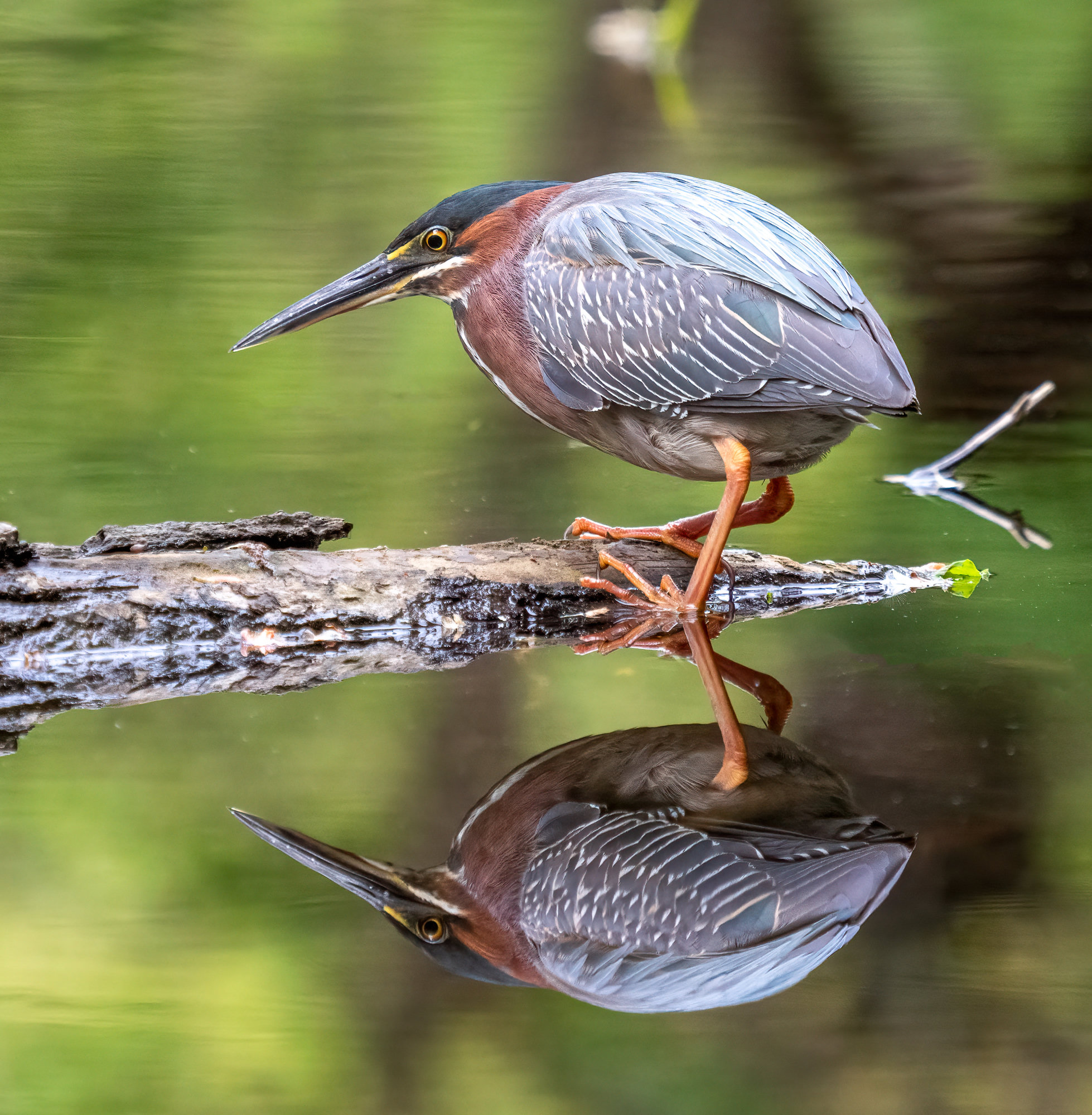
Photo Rhododendrites (opens in a new tab) / Wikimedia Commons, CC BY-SA 4.0 (opens in a new tab)
At a glance
- Size
- About 41 to 46 cm long
- Weight
- About 200 to 250 g
- Habitat
- Ponds, creeks, marsh edges and wooded swamps
- Diet
- Small fish, frogs, crayfish and insects
- In Georgia
- Common in summer statewide; a few winter on the coast
- Voice
- A sharp "skeow"
- Rabies vector
- No
Identification
- Key marks
- Small, stocky heron; dark green-grey back; chestnut neck; dark cap; yellow-orange legs
- Told apart from
- Least bittern, which is smaller with buff wing patches
- Told apart from
- Young night-herons, which are browner and spotted
- Where to look
- Crouched on branches or banks over water
Behaviour
Green herons crouch still on branches over water, then lunge at fish. Some drop bait such as insects, feathers or bread onto the water to attract fish, one of the few documented uses of tools in birds.
Why they matter
The green heron's bait-fishing places it among the few birds known to use tools. It lives on small ponds and creeks close to people, making it one of the easiest herons to watch.
Reproduction and lifecycle
Nest — A platform of sticks in a tree or shrub near water
Eggs — Usually three to five
Incubation — About 19 to 21 days
Chicks — Fed by both parents; climb out of the nest at about two weeks
Flight — At about three weeks
Lifespan — Several years
Living around people
- Garden ponds attract green herons; netting protects fish without harming the bird.
Misconceptions
- Birds cannot use tools. Green herons use bait to fish.
Related species
Seasonal activity
When this species is breeding, and when there are nests on the ground. Mowing during the shaded months is how most nests are found.
| Jan | Feb | Mar | Apr | May | Jun | Jul | Aug | Sep | Oct | Nov | Dec | |
|---|---|---|---|---|---|---|---|---|---|---|---|---|
| Breeding | Jan: no | Feb: no | Mar: no | Apr: no | May: no | Jun: no | Jul: no | Aug: no | Sep: no | Oct: no | Nov: no | Dec: no |
| Active nests | Jan: no | Feb: no | Mar: no | Apr: no | May: no | Jun: no | Jul: no | Aug: no | Sep: no | Oct: no | Nov: no | Dec: no |
| Notes | A few on the coast | Few present | Arriving | Nesting | Nesting | Chicks | Young fledging | Present | Leaving | Last birds | Few present | Few present |
Where it lives
Recorded in 82 states and provinces. Each one links to the other animals there, and to the rehabilitators licensed for them.
United States
- Alabamabreeding
- Arizona
- Arkansasbreeding
- California
- Coloradobreeding
- Connecticutbreeding
- Delawarebreeding
- District of Columbiabreeding
- Florida
- Georgiabreeding
- Illinoisbreeding
- Indianabreeding
- Iowabreeding
- Kansasbreeding
- Kentuckybreeding
- Louisianabreeding
- Mainebreeding
- Marylandbreeding
- Massachusettsbreeding
- Michiganbreeding
- Minnesotabreeding
- Mississippibreeding
- Missouribreeding
- Nebraskabreeding
- Nevada
- New Hampshirebreeding
- New Jerseybreeding
- New Mexicobreeding
- New Yorkbreeding
- North Carolinabreeding
- North Dakotabreeding
- Ohiobreeding
- Oklahomabreeding
- Oregonbreeding
- Pennsylvaniabreeding
- Rhode Islandbreeding
- South Carolinabreeding
- South Dakotabreeding
- Tennesseebreeding
- Texasbreeding
- Utah
- Vermontbreeding
- Virginiabreeding
- Washingtonbreeding
- West Virginiabreeding
- Wisconsinbreeding
Mexico
- Aguascalientesin winter
- Baja California
- Baja California Surin winter
- Campeche
- Chiapas
- Chihuahua
- Coahuila
- Colima
- Durango
- Guanajuato
- Guerrero
- Hidalgoin winter
- Jalisco
- Mexico City
- Michoacan
- Morelos
- Nayarit
- Nuevo Leon
- Oaxaca
- Pueblain winter
- Queretaroin winter
- Quintana Roo
- San Luis Potosi
- Sinaloa
- Sonora
- State of Mexico
- Tabasco
- Tamaulipas
- Tlaxcalain winter
- Veracruz
- Yucatan
- Zacatecaspassing through
If you found one
Answer a few questions and you will get a specific answer for what you are looking at.
I found an animal