
Species
Black-crowned night-heron
Nycticorax nycticorax
A stocky, black-capped heron that hunts at night and roosts by day in dense trees near water.
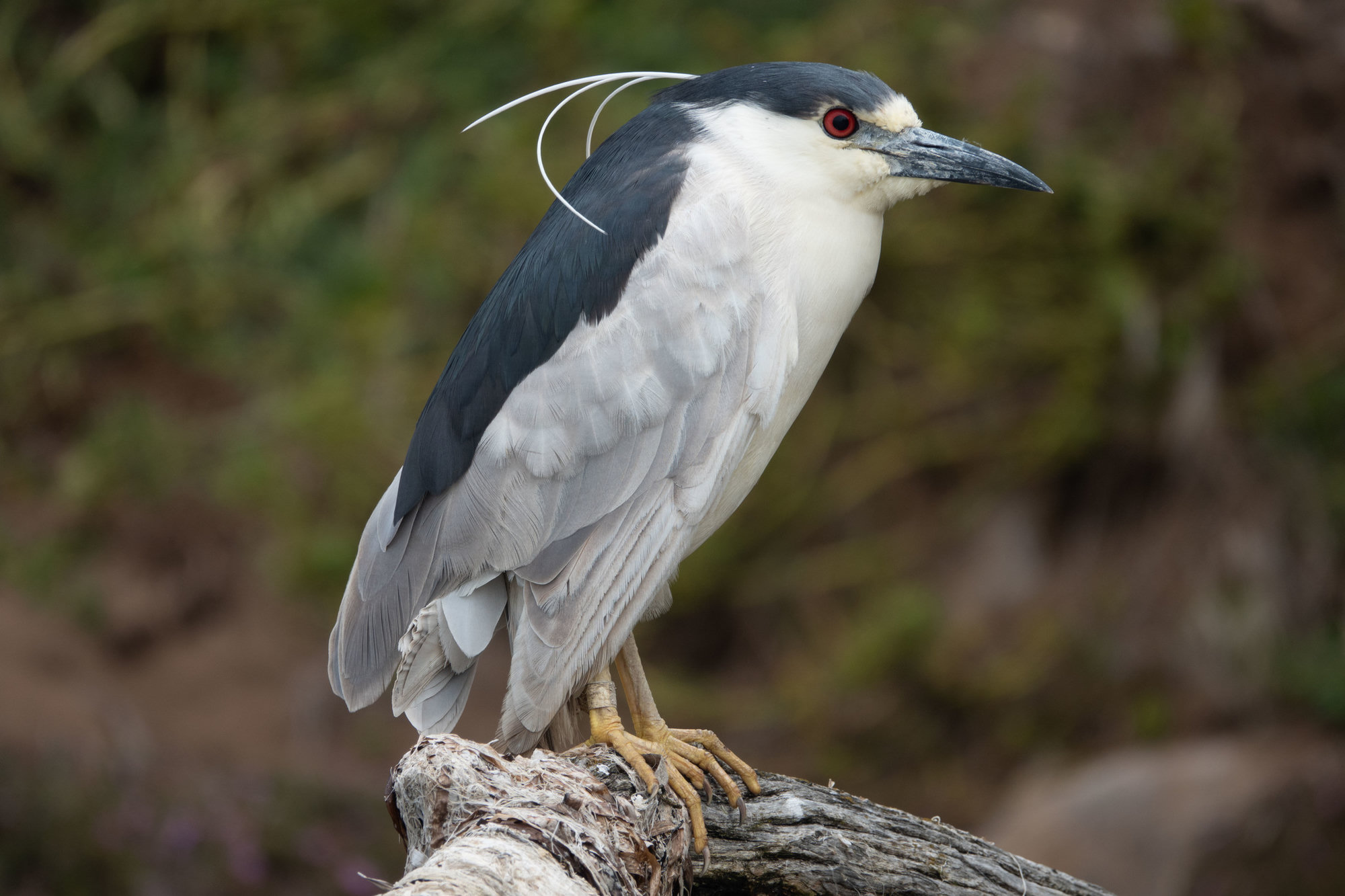
Photo Unknown photographer (opens in a new tab) / iNaturalist, CC0 1.0 (opens in a new tab)
At a glance
- Size
- About 58 to 66 cm long
- Weight
- About 700 to 1,000 g
- Habitat
- Marshes, swamps, lakes and harbours
- Diet
- Fish, frogs, crayfish, insects, eggs and chicks
- In Georgia
- Present all year, more common on the coast
- Voice
- A loud, flat "quok"
- Rabies vector
- No
Identification
- Adult
- Black cap and back; grey wings; white underparts; red eye; short, thick bill; short yellow legs
- Young
- Brown with white spots on the back and streaked below
- Told apart from
- Yellow-crowned night-heron, which is greyer with a black-and-white face
- Told apart from
- American bittern, which is streaked, not spotted, as a young bird
- Where to look
- Roosting in trees over water by day; hunting at dusk
Behaviour
Black-crowned night-herons hunt from dusk to dawn, standing still at the water's edge. They roost in groups by day and nest in colonies.
Why they matter
This is one of the most widespread herons in the world, found on every continent except Australia and Antarctica. It is an opportunistic predator that also takes eggs and chicks in other birds' colonies.
Reproduction and lifecycle
Nest — A platform of sticks in trees, in colonies
Eggs — Usually three to five
Incubation — About 24 to 26 days
Chicks — Fed by both parents
Flight — At about six weeks
Lifespan — Wild birds over twenty years are recorded
Living around people
- A young night-heron on the ground below a colony may have fallen and cannot climb back; it needs a rehabilitator.
Misconceptions
- Night-herons are owls. They are herons that hunt at night.
Related species
Seasonal activity
When this species is breeding, and when there are nests on the ground. Mowing during the shaded months is how most nests are found.
| Jan | Feb | Mar | Apr | May | Jun | Jul | Aug | Sep | Oct | Nov | Dec | |
|---|---|---|---|---|---|---|---|---|---|---|---|---|
| Breeding | Jan: no | Feb: no | Mar: no | Apr: no | May: no | Jun: no | Jul: no | Aug: no | Sep: no | Oct: no | Nov: no | Dec: no |
| Active nests | Jan: no | Feb: no | Mar: no | Apr: no | May: no | Jun: no | Jul: no | Aug: no | Sep: no | Oct: no | Nov: no | Dec: no |
| Notes | Present | Present | Colonies forming | Nesting | Nesting | Chicks | Young fledging | Young dispersing | Present | Present | Present | Present |
Where it lives
Recorded in 88 states and provinces. Each one links to the other animals there, and to the rehabilitators licensed for them.
United States
- Alabama
- Arizona
- Arkansasbreeding
- California
- Coloradobreeding
- Connecticutbreeding
- Delaware
- District of Columbia
- Florida
- Georgia
- Hawaii
- Idaho
- Illinoisbreeding
- Indianabreeding
- Iowabreeding
- Kansasbreeding
- Kentuckybreeding
- Louisiana
- Mainebreeding
- Marylandbreeding
- Massachusettsbreeding
- Michiganbreeding
- Minnesotabreeding
- Mississippi
- Missouribreeding
- Montanabreeding
- Nebraskabreeding
- Nevada
- New Hampshirebreeding
- New Jerseybreeding
- New Mexico
- New Yorkbreeding
- North Carolina
- North Dakotabreeding
- Ohio
- Oklahomabreeding
- Oregon
- Pennsylvaniabreeding
- Rhode Islandbreeding
- South Carolina
- South Dakotabreeding
- Tennessee
- Texas
- Utah
- Vermontbreeding
- Virginia
- Washington
- Wisconsinbreeding
- Wyomingbreeding
Canada
Mexico
- Aguascalientes
- Baja California
- Baja California Sur
- Campeche
- Chiapas
- Chihuahua
- Coahuilain winter
- Colima
- Durango
- Guanajuato
- Guerrero
- Hidalgo
- Jalisco
- Mexico City
- Michoacan
- Morelos
- Nayarit
- Nuevo Leon
- Oaxaca
- Puebla
- Queretaro
- Quintana Rooin winter
- San Luis Potosi
- Sinaloa
- Sonora
- State of Mexico
- Tabasco
- Tamaulipasin winter
- Tlaxcalain winter
- Veracruz
- Yucatan
- Zacatecasbreeding
If you found one
Answer a few questions and you will get a specific answer for what you are looking at.
I found an animal