
Species
Yellow-crowned night-heron
Nyctanassa violacea
A grey night-heron with a bold black-and-white face that specialises in crabs, including in Georgia's coastal towns.
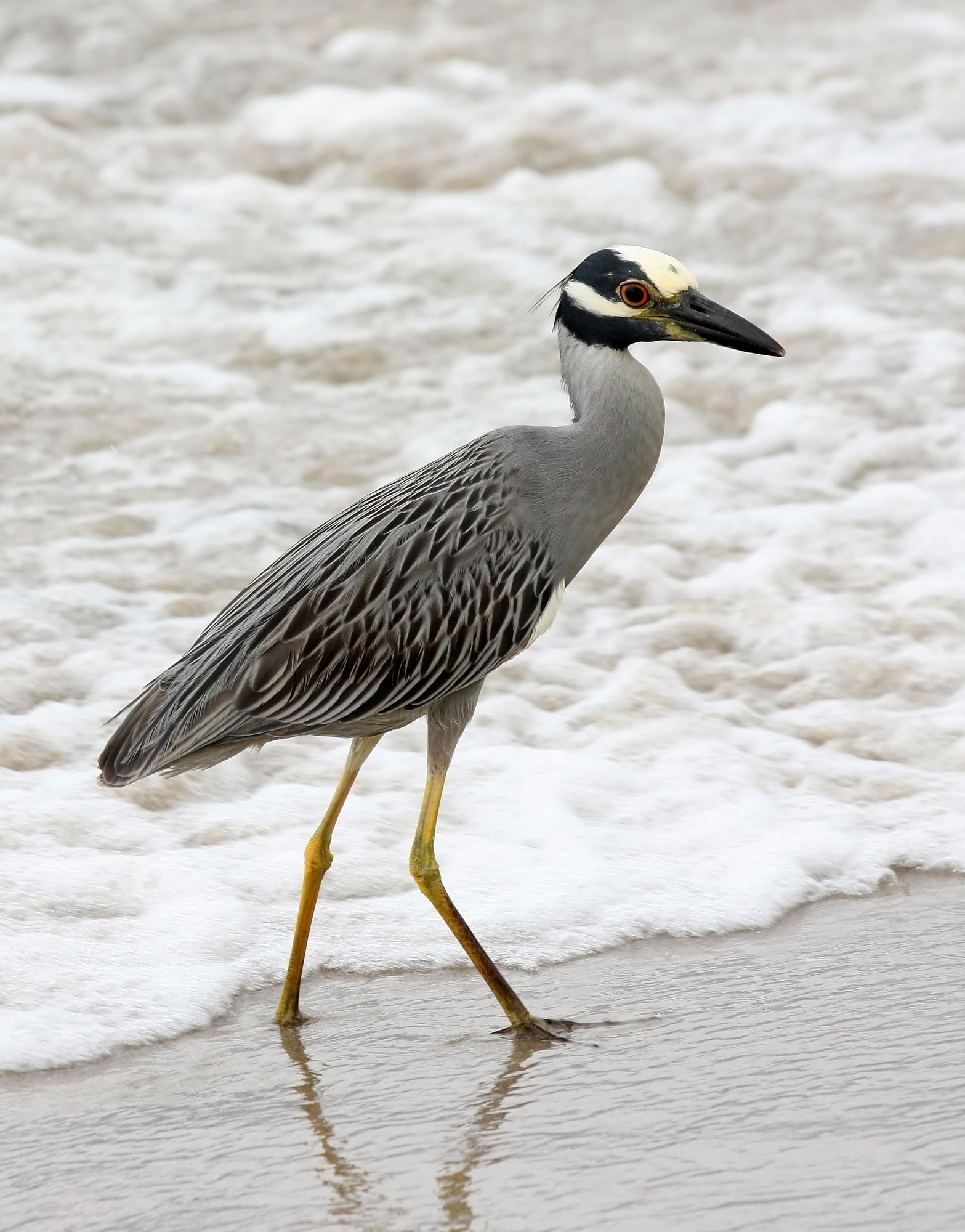
Photo Ianaré Sévi (opens in a new tab) / Wikimedia Commons, CC BY 3.0 (opens in a new tab)
At a glance
- Size
- About 54 to 70 cm long
- Weight
- About 650 to 850 g
- Habitat
- Salt marshes, swamps, tidal creeks and wooded neighbourhoods near water
- Diet
- Mainly crabs and crayfish
- In Georgia
- A summer resident; present all year on the coast
- Voice
- A short "quak"
- Rabies vector
- No
Identification
- Adult
- Grey body; black face with a white cheek patch and a pale crown; thick black bill; long yellow legs
- Young
- Grey-brown with small white spots
- Told apart from
- Black-crowned night-heron, which has a black back and white underparts
- Where to look
- Tidal creeks and marsh edges at dusk; nesting in trees in coastal towns
Behaviour
Yellow-crowned night-herons stalk crabs slowly and swallow them whole. They often nest in live oaks in coastal neighbourhoods.
Why they matter
These herons eat large numbers of fiddler crabs and crayfish and are part of the marsh food web. Their nests in trees in towns like Savannah and Brunswick make them familiar neighbours for coastal residents.
Reproduction and lifecycle
Nest — A platform of sticks in a tree, often near water
Eggs — Usually three to five
Incubation — About 21 to 25 days
Chicks — Fed by both parents
Flight — At about six weeks
Lifespan — Several years
Living around people
- Young night-herons that fall from nests in neighbourhoods cannot climb back; they need a rehabilitator.
- Nesting trees in yards are used year after year.
Misconceptions
- A heron in a suburban oak is lost. Yellow-crowned night-herons nest in towns near the coast.
Related species
Seasonal activity
When this species is breeding, and when there are nests on the ground. Mowing during the shaded months is how most nests are found.
| Jan | Feb | Mar | Apr | May | Jun | Jul | Aug | Sep | Oct | Nov | Dec | |
|---|---|---|---|---|---|---|---|---|---|---|---|---|
| Breeding | Jan: no | Feb: no | Mar: no | Apr: no | May: no | Jun: no | Jul: no | Aug: no | Sep: no | Oct: no | Nov: no | Dec: no |
| Active nests | Jan: no | Feb: no | Mar: no | Apr: no | May: no | Jun: no | Jul: no | Aug: no | Sep: no | Oct: no | Nov: no | Dec: no |
| Notes | Present on the coast | Present | Arriving inland | Nesting | Nesting | Chicks | Young fledging | Young dispersing | Present | Inland birds leave | Present on the coast | Present on the coast |
Where it lives
Recorded in 58 states and provinces. Each one links to the other animals there, and to the rehabilitators licensed for them.
United States
- Alabamabreeding
- Arkansasbreeding
- California
- Connecticutbreeding
- Delawarebreeding
- District of Columbiabreeding
- Florida
- Georgia
- Illinoisbreeding
- Indianabreeding
- Iowabreeding
- Kansasbreeding
- Kentuckybreeding
- Louisianabreeding
- Mainebreeding
- Marylandbreeding
- Massachusettsbreeding
- Michiganbreeding
- Mississippibreeding
- Missouribreeding
- New Jerseybreeding
- New Yorkbreeding
- North Carolinabreeding
- Ohiobreeding
- Oklahomabreeding
- Pennsylvaniabreeding
- Rhode Islandbreeding
- South Carolinabreeding
- Tennesseebreeding
- Texas
- Virginiabreeding
Mexico
- Baja California
- Baja California Sur
- Campechein winter
- Chiapasin winter
- Chihuahuain winter
- Coahuilabreeding
- Colima
- Durangobreeding
- Guerrero
- Jalisco
- Mexico Cityin winter
- Michoacanin winter
- Morelosin winter
- Nayarit
- Nuevo Leon
- Oaxacain winter
- Pueblapassing through
- Quintana Roo
- San Luis Potosiin winter
- Sinaloa
- Sonora
- Tabascoin winter
- Tamaulipas
- Veracruz
- Yucatan
If you found one
Answer a few questions and you will get a specific answer for what you are looking at.
I found an animal