
Species
Horned grebe
Podiceps auritus
A neat black-and-white diving bird in winter, wearing golden 'horns' of feathers in spring.
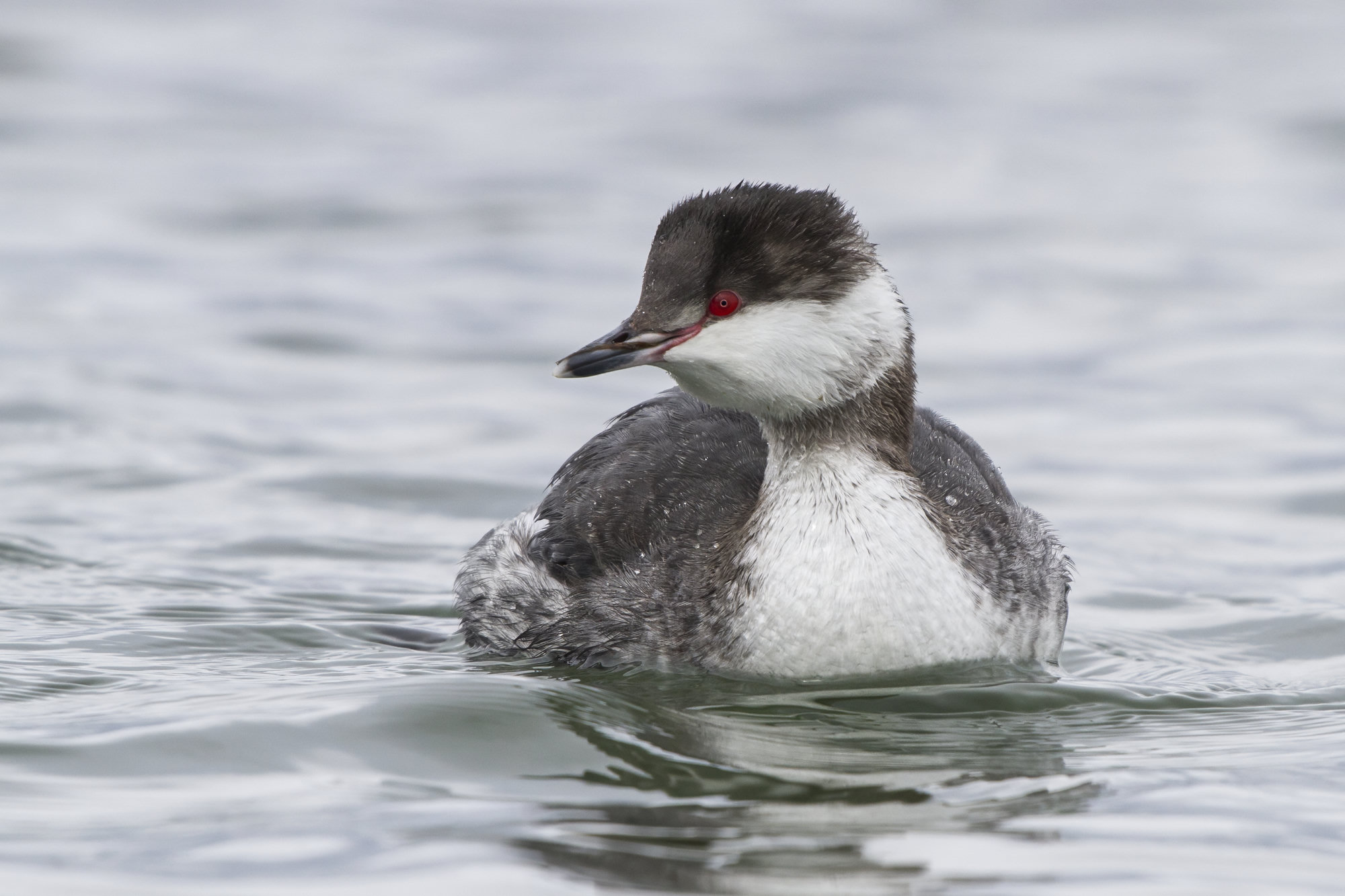
Photo Chuck Homler, Focus On Wildlife (opens in a new tab) / Wikimedia Commons, CC BY-SA 4.0 (opens in a new tab)
At a glance
- Size
- About 31 to 38 cm long
- Weight
- About 300 to 570 g
- Habitat
- Coastal waters, sounds and large lakes in winter
- Diet
- Fish, crustaceans and insects
- In Georgia
- A fairly common winter visitor
- Voice
- Mostly silent in winter
- Rabies vector
- No
Identification
- Key marks
- In winter, crisp black cap and back with white cheeks and throat; red eye; short, straight bill
- In spring
- Rufous neck and golden feather tufts behind the eye
- Told apart from
- Eared grebe, which has a dusky face and thin, upturned bill
- Told apart from
- Pied-billed grebe, which is brown with a thick bill
- Where to look
- Coastal waters and large reservoirs, November to March
Behaviour
Horned grebes dive for fish and invertebrates. Like other grebes, they eat their own feathers, which may help protect the stomach from fish bones.
Why they matter
Horned grebes have declined across North America, and their winter counts on reservoirs and coasts help show how they are faring. They breed on small prairie and northern ponds that are easily lost to drainage.
Reproduction and lifecycle
Nest — A floating platform of plants
Eggs — Usually four to seven
Incubation — About 22 to 25 days
Chicks — Ride on their parents' backs
Flight — At about seven weeks
Lifespan — A few years
Living around people
- Grebes that land on wet roads or car parks cannot take off and need help.
Misconceptions
- Grebes eat feathers by mistake. They do it deliberately, possibly to protect the gut.
Related species
Seasonal activity
When this species is breeding, and when there are nests on the ground. Mowing during the shaded months is how most nests are found.
| Jan | Feb | Mar | Apr | May | Jun | Jul | Aug | Sep | Oct | Nov | Dec | |
|---|---|---|---|---|---|---|---|---|---|---|---|---|
| Breeding | Jan: no | Feb: no | Mar: no | Apr: no | May: no | Jun: no | Jul: no | Aug: no | Sep: no | Oct: no | Nov: no | Dec: no |
| Active nests | Jan: no | Feb: no | Mar: no | Apr: no | May: no | Jun: no | Jul: no | Aug: no | Sep: no | Oct: no | Nov: no | Dec: no |
| Notes | Wintering | Wintering | Moulting into breeding plumage | Migrating north | Nesting in the north | Nesting | Chicks | Young independent | Migration begins | Moving south | Arriving in Georgia | Wintering |
Where it lives
Recorded in 63 states and provinces. Each one links to the other animals there, and to the rehabilitators licensed for them.
United States
- Alabamain winter
- Alaska
- Arkansasin winter
- Californiain winter
- Coloradoin winter
- Connecticutin winter
- Delawarein winter
- District of Columbiain winter
- Floridain winter
- Georgiain winter
- Idahoin winter
- Illinoisin winter
- Indianain winter
- Iowapassing through
- Kansasin winter
- Kentuckyin winter
- Louisianain winter
- Mainein winter
- Marylandin winter
- Massachusettsin winter
- Michiganin winter
- Minnesotapassing through
- Mississippiin winter
- Missouriin winter
- Montanain winter
- Nebraskapassing through
- Nevadain winter
- New Hampshirein winter
- New Jerseyin winter
- New Mexicoin winter
- New Yorkin winter
- North Carolinain winter
- North Dakotabreeding
- Ohioin winter
- Oklahomain winter
- Oregonin winter
- Pennsylvaniain winter
- Rhode Islandin winter
- South Carolinain winter
- South Dakotapassing through
- Tennesseein winter
- Texasin winter
- Utahin winter
- Vermontin winter
- Virginiain winter
- Washingtonin winter
- West Virginiain winter
- Wisconsinin winter
- Wyomingpassing through
Canada
If you found one
Answer a few questions and you will get a specific answer for what you are looking at.
I found an animal