
Species
Eared grebe
Podiceps nigricollis
A small, dusky-faced grebe with a thin, upturned bill, rare but regular in Georgia in winter.
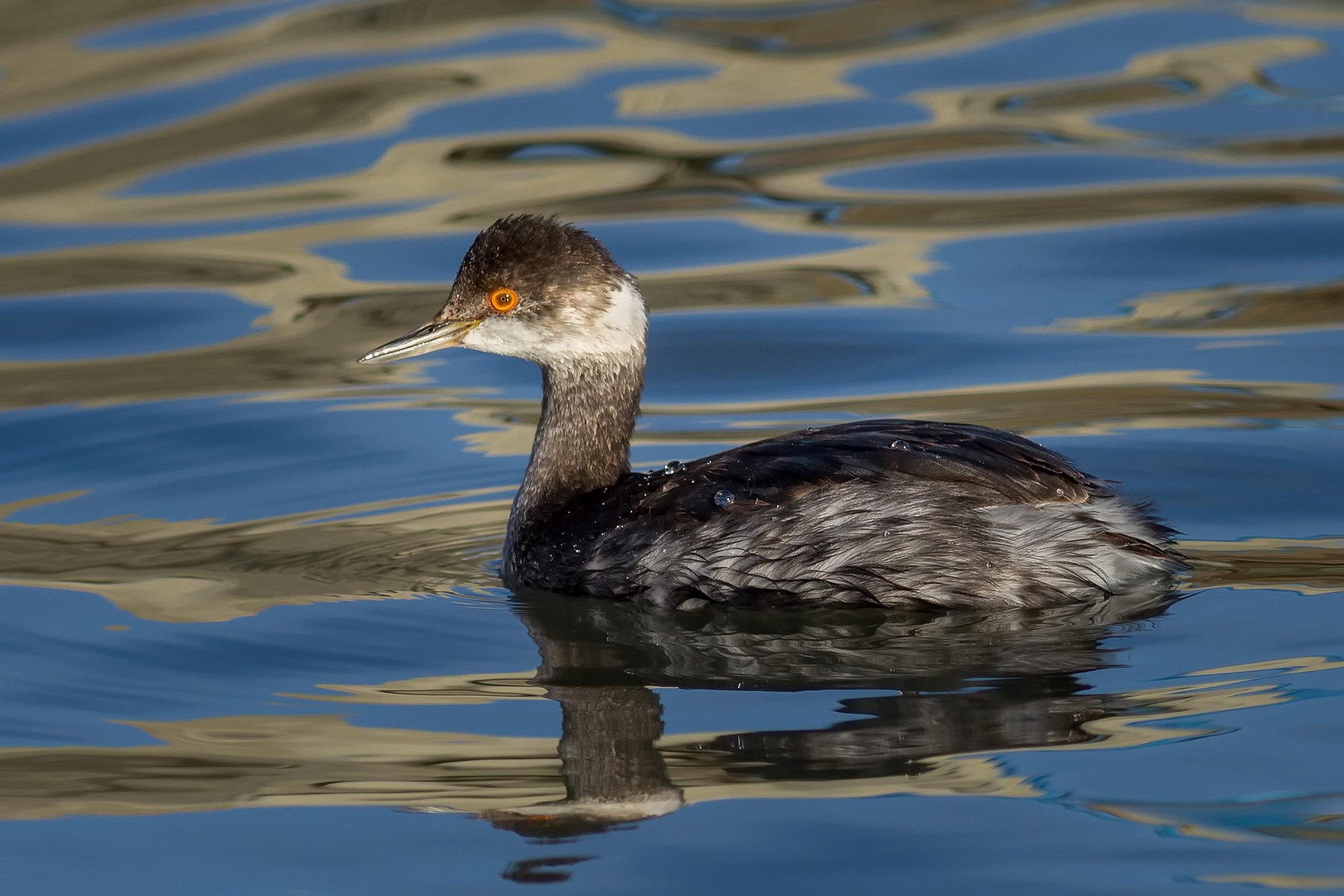
Photo Frank Schulenburg (opens in a new tab) / Wikimedia Commons, CC BY-SA 3.0 (opens in a new tab)
At a glance
- Size
- About 30 to 35 cm long
- Weight
- About 250 to 700 g
- Habitat
- Lakes, ponds and treatment ponds in winter
- Diet
- Aquatic insects and small crustaceans
- In Georgia
- A rare winter visitor
- Voice
- Mostly silent in winter
- Rabies vector
- No
Identification
- Key marks
- Small grebe with a thin, slightly upturned bill; peaked head; dusky cheeks in winter; red eye
- Told apart from
- Horned grebe, which has a flat crown and crisp white cheeks
- Where to look
- Treatment ponds and small lakes, November to March
Behaviour
Eared grebes feed on small invertebrates. In the West, millions gather on salty lakes to feed on brine shrimp before migrating, and they can double their weight while there.
Why they matter
The eared grebe is probably the most numerous grebe in the world. It spends more of its life flightless than almost any other flying bird, because it moults its flight feathers and later shrinks its flight muscles at its autumn feeding lakes. The few reaching Georgia are at the eastern edge of their range.
Reproduction and lifecycle
Nest — A floating platform in colonies on western lakes
Eggs — Usually three or four
Incubation — About 21 days
Chicks — Ride on their parents' backs
Lifespan — Several years
Living around people
- A grebe stranded on land cannot take off.
Misconceptions
- The "ears" are ears. They are golden feather tufts shown only in breeding plumage.
Related species
Seasonal activity
When this species is breeding, and when there are nests on the ground. Mowing during the shaded months is how most nests are found.
| Jan | Feb | Mar | Apr | May | Jun | Jul | Aug | Sep | Oct | Nov | Dec | |
|---|---|---|---|---|---|---|---|---|---|---|---|---|
| Breeding | Jan: no | Feb: no | Mar: no | Apr: no | May: no | Jun: no | Jul: no | Aug: no | Sep: no | Oct: no | Nov: no | Dec: no |
| Active nests | Jan: no | Feb: no | Mar: no | Apr: no | May: no | Jun: no | Jul: no | Aug: no | Sep: no | Oct: no | Nov: no | Dec: no |
| Notes | Rare visitor | Rare visitor | Leaving | Migrating north | Nesting in the West | Nesting | Chicks | Gathering on salt lakes | Gathering on salt lakes | Moving south | Rare visitor arrives | Rare visitor |
Where it lives
Recorded in 51 states and provinces. Each one links to the other animals there, and to the rehabilitators licensed for them.
United States
- Arizonain winter
- Californiain winter
- Colorado
- Georgiain winter
- Idaho
- Kansasbreeding
- Michigan
- Minnesotabreeding
- Mississippiin winter
- Montanabreeding
- Nebraskabreeding
- Nevada
- New Mexico
- North Carolinain winter
- North Dakotabreeding
- Oklahomain winter
- Oregon
- South Carolinain winter
- South Dakotabreeding
- Tennesseein winter
- Texasin winter
- Utah
- Washington
- Wyomingbreeding
Canada
Mexico
- Aguascalientesin winter
- Baja Californiain winter
- Baja California Surin winter
- Chihuahuain winter
- Coahuilain winter
- Durangoin winter
- Guanajuatoin winter
- Hidalgoin winter
- Jaliscoin winter
- Mexico City
- Nayaritin winter
- Nuevo Leonin winter
- Pueblain winter
- Queretaroin winter
- San Luis Potosiin winter
- Sinaloain winter
- Sonorain winter
- State of Mexico
- Tamaulipasin winter
- Tlaxcalain winter
- Zacatecasin winter
If you found one
Answer a few questions and you will get a specific answer for what you are looking at.
I found an animal