
Species
Red-necked grebe
Podiceps grisegena
A large grebe of northern lakes that reaches Georgia only in some winters.
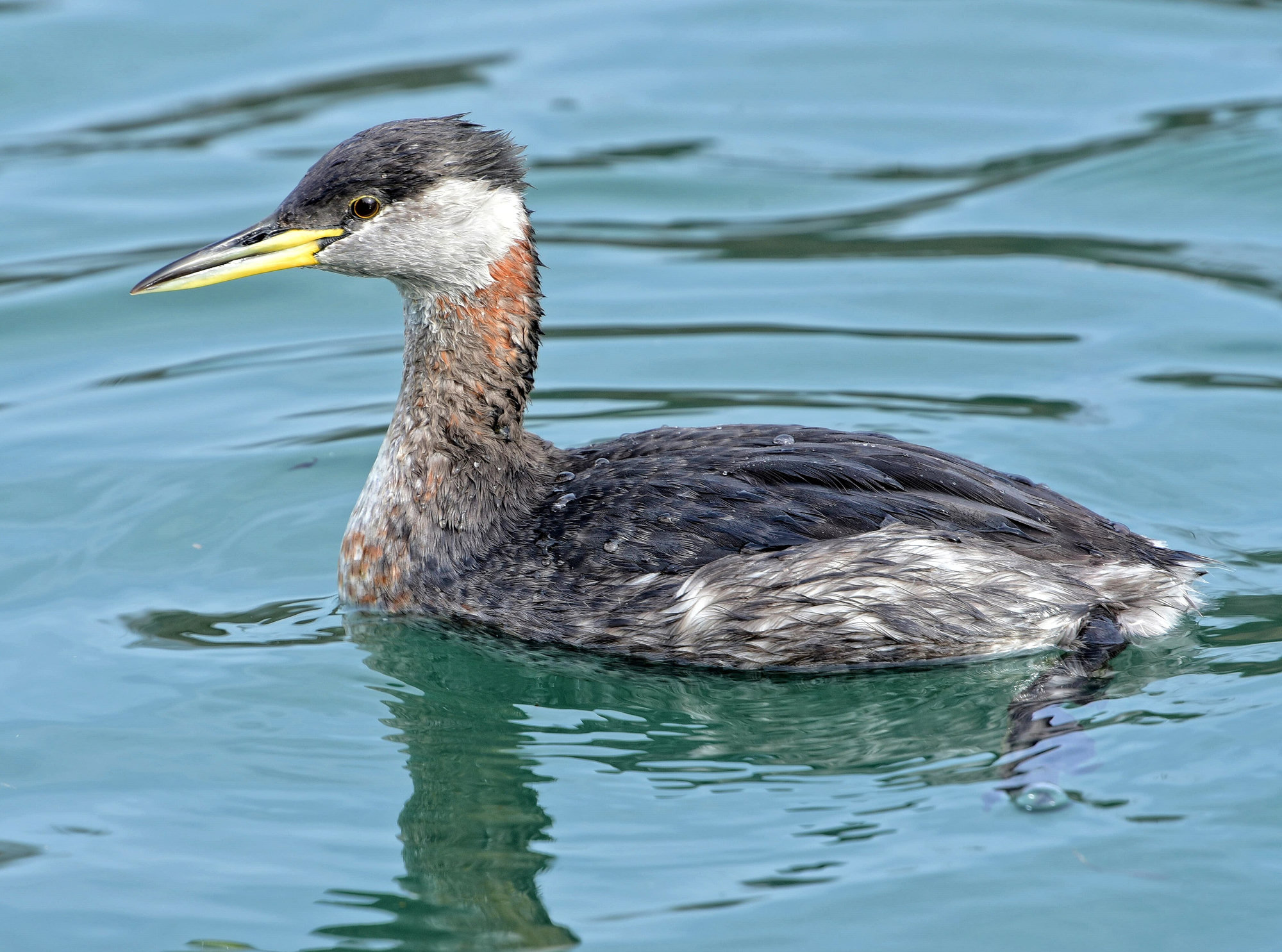
Photo Mykola Swarnyk (opens in a new tab) / Wikimedia Commons, CC BY-SA 3.0 (opens in a new tab)
At a glance
- Size
- About 40 to 50 cm long
- Weight
- About 800 to 1,600 g
- Habitat
- Large lakes and coastal waters in winter
- Diet
- Fish and crustaceans
- In Georgia
- A rare winter visitor, more often after hard freezes to the north
- Voice
- Mostly silent in winter
- Rabies vector
- No
Identification
- Key marks
- Large grebe with a long, yellow-based bill; in winter greyish with a pale crescent on the cheek
- Told apart from
- Horned grebe, which is smaller with a short bill and crisp white cheeks
- Told apart from
- Common loon, which is larger with a heavier bill
- Where to look
- Large reservoirs and coastal waters, especially after cold snaps up north
Behaviour
Red-necked grebes dive for fish. When the Great Lakes freeze, many move south, and some reach Georgia's lakes.
Why they matter
This grebe breeds on northern lakes and winters mostly on the sea. Its occasional appearances in Georgia follow hard winters farther north, showing how weather far away shapes which birds reach the state.
Reproduction and lifecycle
Nest — A floating mound of plants
Eggs — Usually four or five
Incubation — About 20 to 23 days
Chicks — Ride on their parents' backs
Flight — At about eight to ten weeks
Lifespan — Several years
Living around people
- A grebe on land cannot take off and needs a rehabilitator.
Misconceptions
- A grebe in Georgia in winter is lost. Red-necked grebes arrive when northern waters freeze.
Related species
Seasonal activity
When this species is breeding, and when there are nests on the ground. Mowing during the shaded months is how most nests are found.
| Jan | Feb | Mar | Apr | May | Jun | Jul | Aug | Sep | Oct | Nov | Dec | |
|---|---|---|---|---|---|---|---|---|---|---|---|---|
| Breeding | Jan: no | Feb: no | Mar: no | Apr: no | May: no | Jun: no | Jul: no | Aug: no | Sep: no | Oct: no | Nov: no | Dec: no |
| Active nests | Jan: no | Feb: no | Mar: no | Apr: no | May: no | Jun: no | Jul: no | Aug: no | Sep: no | Oct: no | Nov: no | Dec: no |
| Notes | Rare visitor | Rare visitor, especially after freezes to the north | Leaving | Migrating north | Nesting in the north | Nesting | Chicks | Young growing | Migration begins | Moving to the coasts | Wintering farther north | Wintering |
Where it lives
Recorded in 35 states and provinces. Each one links to the other animals there, and to the rehabilitators licensed for them.
United States
- Alaska
- Californiain winter
- District of Columbiain winter
- Georgiain winter
- Idaho
- Mainein winter
- Marylandin winter
- Massachusettsin winter
- Michiganin winter
- Minnesotabreeding
- Montanabreeding
- New Hampshirein winter
- New Jerseyin winter
- New Yorkin winter
- North Carolinain winter
- North Dakotabreeding
- Oregonin winter
- Rhode Islandin winter
- South Dakotapassing through
- Tennesseein winter
- Vermontin winter
- Washingtonin winter
- Wisconsin
If you found one
Answer a few questions and you will get a specific answer for what you are looking at.
I found an animal