
Species
Hooded merganser
Lophodytes cucullatus
A small, crested fish-eating duck that raises its fan-shaped crest like a sail, and nests in tree holes in Georgia's swamps.
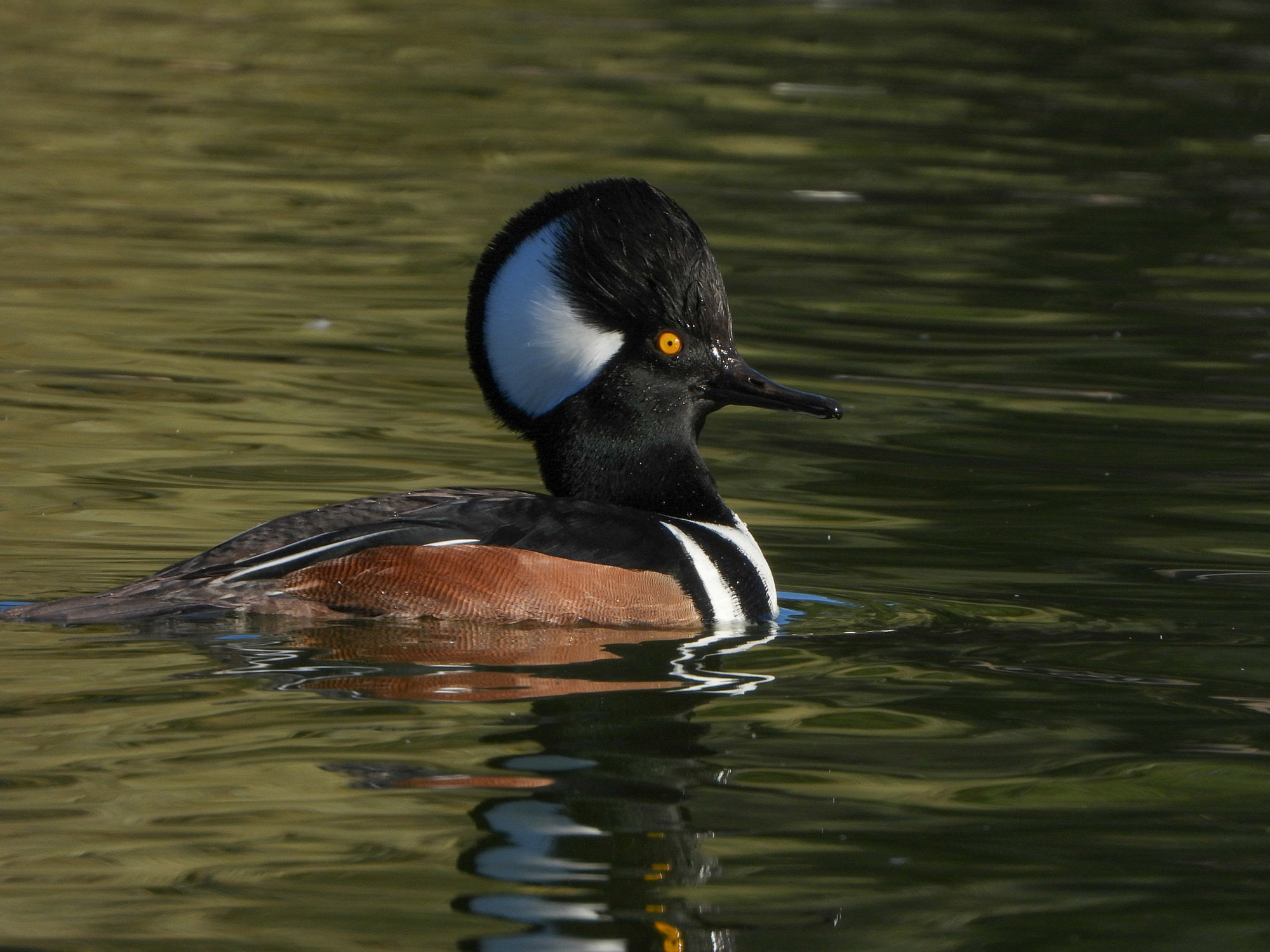
Photo Justin Flint (opens in a new tab) / iNaturalist, CC BY 4.0 (opens in a new tab)
At a glance
- Size
- About 40 to 49 cm long
- Weight
- About 450 to 900 g
- Habitat
- Wooded ponds, beaver ponds, swamps, creeks and lakes
- Diet
- Small fish, crayfish, aquatic insects and tadpoles
- In Georgia
- A common winter visitor; also breeds in small numbers
- Voice
- Mostly quiet; males give a low, froglike call in courtship
- Rabies vector
- No
Identification
- Male
- Black head with a white fan-shaped crest; black back; chestnut sides; white breast with black bars
- Female
- Grey-brown with a bushy, cinnamon crest and a thin bill
- Told apart from
- Bufflehead, which has a round head patch and a short bill
- Told apart from
- Wood duck, which has a short bill and a green head
- Where to look
- Quiet, wooded ponds and backwaters
Behaviour
Hooded mergansers hunt underwater by sight, using thin, serrated bills to grip fish and crayfish. Males raise and lower their crests in display, snapping them open like fans.
Why they matter
Hooded mergansers eat many crayfish and small fish and are an important predator in small wooded wetlands. Like wood ducks, they nest in tree hollows and boxes, so they depend on old trees near water, and they have increased where beaver ponds and nest boxes are plentiful.
Reproduction and lifecycle
Nest — A tree cavity or nest box lined with down
Eggs — Usually 7 to 13
Incubation — About 32 to 33 days
Leaving the nest — Ducklings jump from the cavity the day after hatching
Flight — At about ten weeks
Lifespan — Usually a few years; some over ten
Living around people
- Nest boxes built for wood ducks are also used by hooded mergansers.
- Crayfish-rich ponds and creeks with wooded edges support them; they need no feeding.
Misconceptions
- Mergansers empty ponds of fish. They eat small fish and crayfish and do not deplete healthy ponds.
Related species
Seasonal activity
When this species is breeding, and when there are nests on the ground. Mowing during the shaded months is how most nests are found.
| Jan | Feb | Mar | Apr | May | Jun | Jul | Aug | Sep | Oct | Nov | Dec | |
|---|---|---|---|---|---|---|---|---|---|---|---|---|
| Breeding | Jan: no | Feb: no | Mar: no | Apr: no | May: no | Jun: no | Jul: no | Aug: no | Sep: no | Oct: no | Nov: no | Dec: no |
| Active nests | Jan: no | Feb: no | Mar: no | Apr: no | May: no | Jun: no | Jul: no | Aug: no | Sep: no | Oct: no | Nov: no | Dec: no |
| Notes | Wintering; courtship displays | Pairs forming; nesting begins in the South | Incubation | Ducklings leave the nest | Broods on the water | Young growing | Adults moulting | Young flying | Present in small numbers | Northern birds arriving | Wintering | Wintering; courtship |
Where it lives
Recorded in 67 states and provinces. Each one links to the other animals there, and to the rehabilitators licensed for them.
United States
- Alabamain winter
- Alaskain winter
- Arizonain winter
- Arkansasin winter
- Californiain winter
- Coloradoin winter
- Connecticutin winter
- Delawarein winter
- District of Columbiain winter
- Floridain winter
- Georgia
- Idahoin winter
- Illinoisin winter
- Indianain winter
- Iowa
- Kansasin winter
- Kentuckyin winter
- Louisianain winter
- Maine
- Marylandin winter
- Massachusettsin winter
- Michiganin winter
- Minnesota
- Mississippiin winter
- Missouriin winter
- Montana
- Nebraska
- Nevadain winter
- New Hampshire
- New Jerseyin winter
- New Mexicoin winter
- New Yorkin winter
- North Carolinain winter
- North Dakota
- Ohioin winter
- Oklahomain winter
- Oregonin winter
- Pennsylvaniain winter
- Rhode Islandin winter
- South Carolinain winter
- South Dakota
- Tennesseein winter
- Texasin winter
- Utahin winter
- Vermont
- Virginiain winter
- Washingtonin winter
- West Virginiain winter
- Wisconsin
- Wyomingin winter
Canada
If you found one
Answer a few questions and you will get a specific answer for what you are looking at.
I found an animal