
Species
Hairy woodpecker
Dryobates villosus
A larger, longer-billed version of the downy woodpecker, found in Georgia's mature woods.
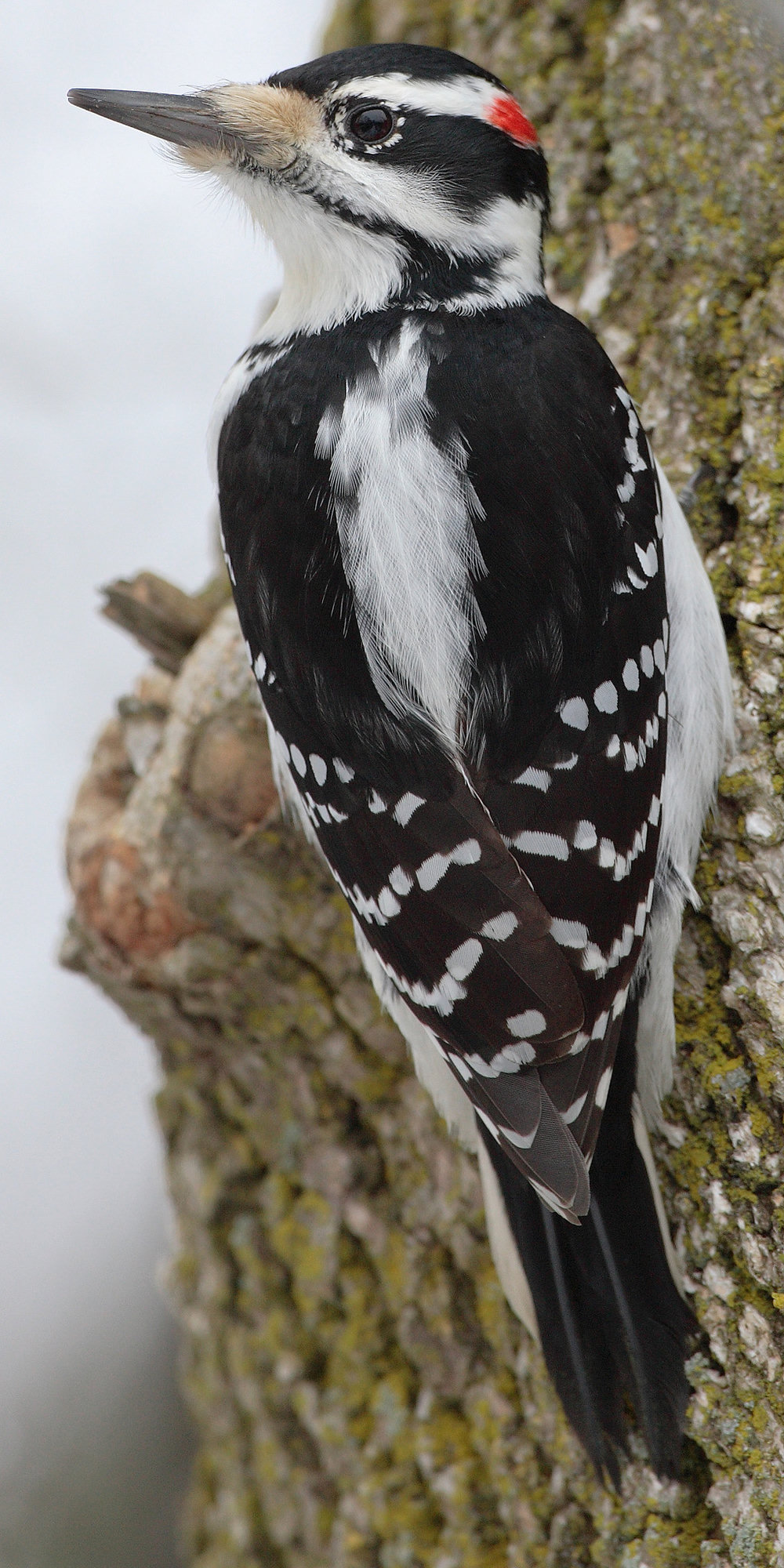
Photo User:Mdf (opens in a new tab) / Wikimedia Commons, CC BY-SA 3.0 (opens in a new tab)
At a glance
- Size
- About 18 to 26 cm long
- Weight
- About 40 to 95 g
- Habitat
- Mature woods and wooded suburbs
- Diet
- Insects, especially beetle larvae; seeds and fruit
- In Georgia
- An uncommon resident statewide
- Voice
- A sharp "peek" and a rattle
- Rabies vector
- No
Identification
- Key marks
- White back; black-and-white checked wings; long, chisel-like bill about as long as the head; males with a red patch on the back of the head
- Told apart from
- Downy woodpecker, which is smaller with a much shorter bill
- Where to look
- Tree trunks in mature woods; sometimes at feeders
Behaviour
Hairy woodpeckers dig for beetle larvae in dead wood and follow pileated woodpeckers to feed on insects exposed by their larger excavations.
Why they matter
Hairy woodpeckers are important predators of wood-boring beetles, including those that attack trees after fires. Their cavities later house many other animals.
Reproduction and lifecycle
Nest — A cavity dug in a dead tree or dead part of a live tree
Eggs — Usually three to six
Incubation — About 14 days
Chicks — Fed by both parents
Flight — At about four weeks
Lifespan — Several years
Living around people
- Dead trees left standing where safe are nest and feeding sites.
Misconceptions
- Downy and hairy woodpeckers are males and females of the same bird. They are separate species.
Related species
Seasonal activity
When this species is breeding, and when there are nests on the ground. Mowing during the shaded months is how most nests are found.
| Jan | Feb | Mar | Apr | May | Jun | Jul | Aug | Sep | Oct | Nov | Dec | |
|---|---|---|---|---|---|---|---|---|---|---|---|---|
| Breeding | Jan: no | Feb: no | Mar: no | Apr: no | May: no | Jun: no | Jul: no | Aug: no | Sep: no | Oct: no | Nov: no | Dec: no |
| Active nests | Jan: no | Feb: no | Mar: no | Apr: no | May: no | Jun: no | Jul: no | Aug: no | Sep: no | Oct: no | Nov: no | Dec: no |
| Notes | Pairs drumming | Pairs forming | Nesting | Nesting | Chicks | Young fledging | Present | Present | Present | Present | Present | Present |
Where it lives
Recorded in 79 states and provinces. Each one links to the other animals there, and to the rehabilitators licensed for them.
United States
- Alabama
- Alaska
- Arizona
- Arkansas
- California
- Colorado
- Connecticut
- Delaware
- District of Columbia
- Florida
- Georgia
- Idaho
- Illinois
- Indiana
- Iowa
- Kansasin winter
- Kentucky
- Louisiana
- Maine
- Maryland
- Massachusetts
- Michigan
- Minnesota
- Mississippi
- Missouri
- Montana
- Nebraska
- Nevadabreeding
- New Hampshire
- New Jersey
- New Mexico
- New York
- North Carolina
- North Dakota
- Ohio
- Oklahoma
- Oregon
- Pennsylvania
- Rhode Island
- South Carolina
- South Dakota
- Tennessee
- Texas
- Utah
- Vermont
- Virginia
- Washington
- West Virginia
- Wisconsin
- Wyoming
Canada
If you found one
Answer a few questions and you will get a specific answer for what you are looking at.
I found an animal