
Species
Downy woodpecker
Dryobates pubescens
The smallest North American woodpecker, a black-and-white regular at feeders and on garden stems.
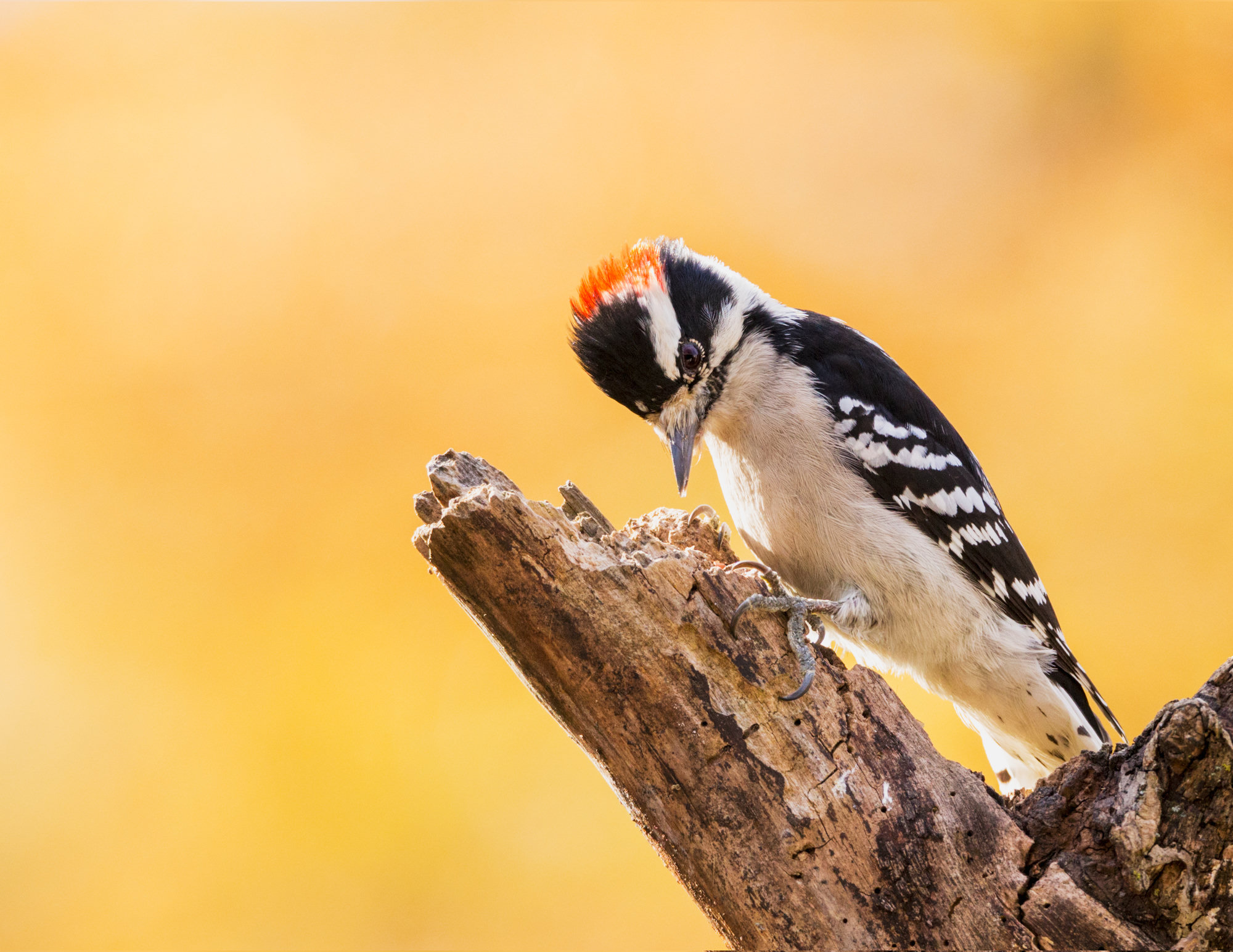
Photo ShenandoahNPS (opens in a new tab) / Wikimedia Commons, Public domain (opens in a new tab)
At a glance
- Size
- About 14 to 18 cm long
- Weight
- About 20 to 33 g
- Habitat
- Woodland, parks, yards and orchards
- Diet
- Insects, including larvae inside stems and galls; seeds and berries
- In Georgia
- Common resident statewide
- Voice
- A sharp "pik" and a descending whinny
- Rabies vector
- No
Identification
- Key marks
- Small; white back; black-and-white checked wings; short bill; males with a small red patch on the back of the head
- Told apart from
- Hairy woodpecker, which is larger with a much longer bill
- Where to look
- Feeders, small branches and even weed stems
Behaviour
Downy woodpeckers feed on thin branches and stems, including goldenrod galls, where they dig out insect larvae. They often join mixed winter flocks of chickadees and titmice.
Why they matter
Downy woodpeckers eat many insect pests, including beetle larvae that bore into trees. Their small size lets them feed on thin twigs larger woodpeckers cannot reach.
Reproduction and lifecycle
Nest — A cavity dug in a dead branch
Eggs — Usually four or five
Incubation — About 12 days
Chicks — Fed by both parents
Flight — At about 18 to 21 days
Lifespan — Several years
Living around people
- Dead branches and old stems left in gardens provide food and nest sites.
- Window strikes kill many woodpeckers; decals help.
Misconceptions
- Woodpeckers damage healthy trees. Downy woodpeckers mostly work on dead wood and insect-infested stems.
Related species
Seasonal activity
When this species is breeding, and when there are nests on the ground. Mowing during the shaded months is how most nests are found.
| Jan | Feb | Mar | Apr | May | Jun | Jul | Aug | Sep | Oct | Nov | Dec | |
|---|---|---|---|---|---|---|---|---|---|---|---|---|
| Breeding | Jan: no | Feb: no | Mar: no | Apr: no | May: no | Jun: no | Jul: no | Aug: no | Sep: no | Oct: no | Nov: no | Dec: no |
| Active nests | Jan: no | Feb: no | Mar: no | Apr: no | May: no | Jun: no | Jul: no | Aug: no | Sep: no | Oct: no | Nov: no | Dec: no |
| Notes | With mixed flocks | Drumming | Pairs forming | Nesting | Chicks | Young fledging | Present | Present | Present | With mixed flocks | With mixed flocks | With mixed flocks |
Where it lives
Recorded in 62 states and provinces. Each one links to the other animals there, and to the rehabilitators licensed for them.
United States
- Alabama
- Alaska
- Arizona
- Arkansas
- California
- Colorado
- Connecticut
- Delaware
- District of Columbia
- Florida
- Georgia
- Idaho
- Illinois
- Indiana
- Iowa
- Kansas
- Kentucky
- Louisiana
- Maine
- Maryland
- Massachusetts
- Michigan
- Minnesota
- Mississippi
- Missouri
- Montana
- Nebraska
- Nevada
- New Hampshire
- New Jersey
- New Mexico
- New York
- North Carolina
- North Dakota
- Ohio
- Oklahoma
- Oregon
- Pennsylvania
- Rhode Island
- South Carolina
- South Dakota
- Tennessee
- Texas
- Utah
- Vermont
- Virginia
- Washington
- West Virginia
- Wisconsin
- Wyoming
If you found one
Answer a few questions and you will get a specific answer for what you are looking at.
I found an animal