
Species
Green-winged teal
Anas crecca
North America's smallest dabbling duck, which gathers in tight, fast-flying flocks on winter mudflats and marshes.
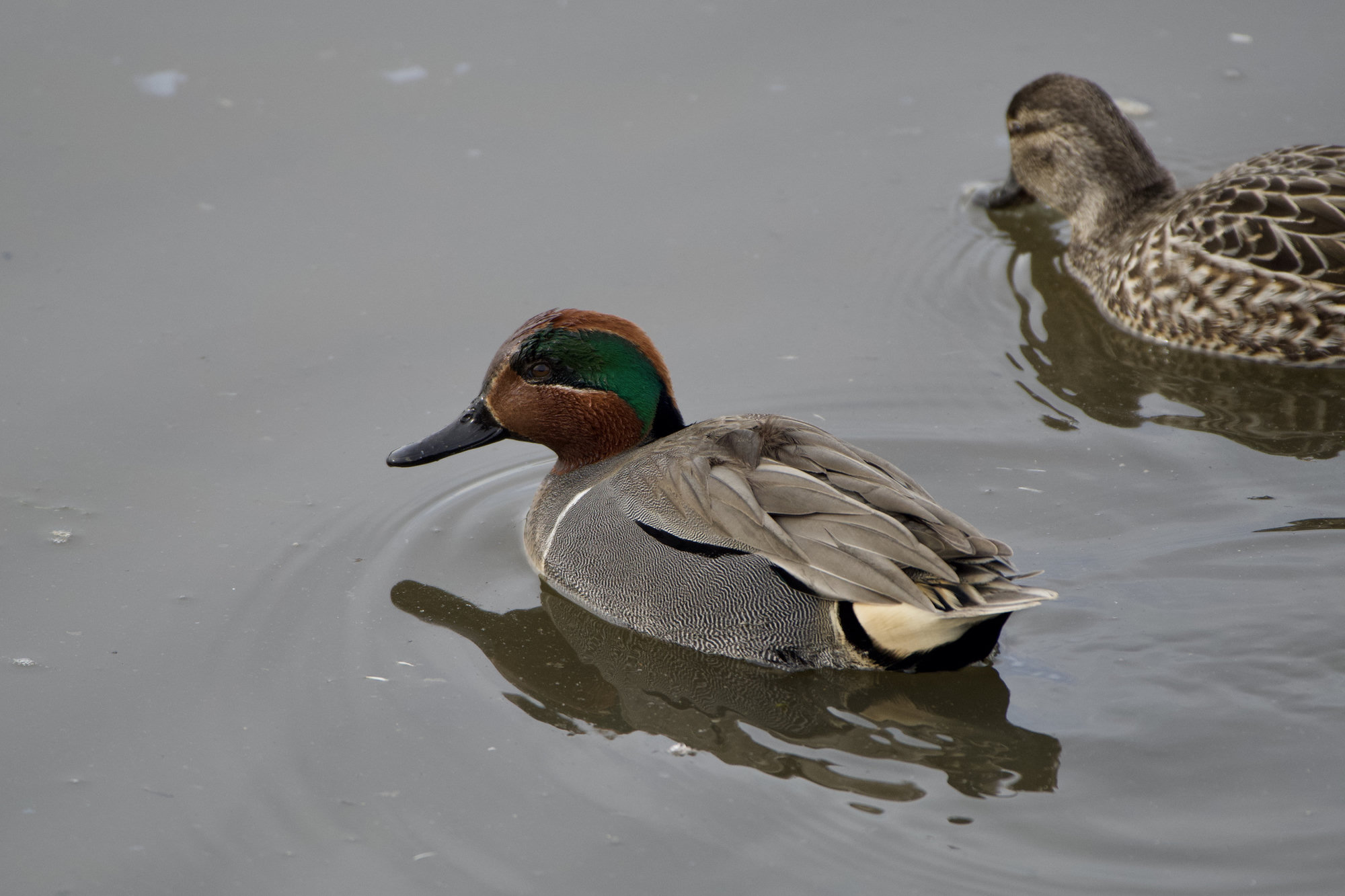
Photo Unknown photographer (opens in a new tab) / iNaturalist, CC0 1.0 (opens in a new tab)
At a glance
- Size
- About 31 to 39 cm long
- Weight
- About 180 to 450 g
- Habitat
- Shallow marshes, mudflats, flooded fields and pond edges
- Diet
- Seeds, small snails, insects and aquatic plants
- In Georgia
- A common winter visitor, October to April
- Voice
- Males give a clear, high "preep"
- Rabies vector
- No
Identification
- Male
- Chestnut head with a green band behind the eye; grey body; a vertical white bar on the side of the breast
- Female
- Small, mottled brown, with a green wing patch
- Told apart from
- Blue-winged teal, which has a blue forewing patch and, in males, a white crescent on the face
- Where to look
- Mudflats and shallow edges of marshes and ponds
Behaviour
Green-winged teal feed in very shallow water and on bare mud, where they sift for seeds and small animals. Flocks fly fast and low, twisting together like shorebirds.
Why they matter
These small ducks use shallow, muddy places that larger ducks cannot, which is why draining or deepening wetlands affects them so much. They are among the most numerous wintering ducks in the Southeast and feed many predators, from peregrine falcons to foxes.
Reproduction and lifecycle
Nest — A down-lined bowl hidden in grass or brush near water
Eggs — Usually 6 to 9
Incubation — About 21 to 23 days
Ducklings — Leave the nest within a day
Flight — At about five weeks
Lifespan — Usually a few years
Living around people
- Muddy edges of ponds and drawn-down impoundments are where these birds feed; they need no tidying.
- Lead shot and fishing weights on the bottom of shallow water poison ducks that sift the mud.
Misconceptions
- Such a small duck must be a duckling. Green-winged teal are adults the size of a large pigeon.
Related species
Seasonal activity
When this species is breeding, and when there are nests on the ground. Mowing during the shaded months is how most nests are found.
| Jan | Feb | Mar | Apr | May | Jun | Jul | Aug | Sep | Oct | Nov | Dec | |
|---|---|---|---|---|---|---|---|---|---|---|---|---|
| Breeding | Jan: no | Feb: no | Mar: no | Apr: no | May: no | Jun: no | Jul: no | Aug: no | Sep: no | Oct: no | Nov: no | Dec: no |
| Active nests | Jan: no | Feb: no | Mar: no | Apr: no | May: no | Jun: no | Jul: no | Aug: no | Sep: no | Oct: no | Nov: no | Dec: no |
| Notes | Wintering | Pairs forming | Migrating north | Last birds leaving | Nesting in the north | Ducklings hatching | Adults moulting | Young flying | Migration begins | Arriving in Georgia | Wintering flocks | Wintering |
Where it lives
Recorded in 89 states and provinces. Each one links to the other animals there, and to the rehabilitators licensed for them.
United States
- Alabamain winter
- Alaska
- Arizonain winter
- Arkansasin winter
- Californiain winter
- Coloradoin winter
- Connecticutin winter
- Delawarein winter
- District of Columbiain winter
- Floridain winter
- Georgiain winter
- Idaho
- Illinoisin winter
- Indianain winter
- Iowapassing through
- Kansasin winter
- Kentuckyin winter
- Louisianain winter
- Mainein winter
- Marylandin winter
- Massachusetts
- Michigan
- Minnesotabreeding
- Mississippiin winter
- Missouriin winter
- Montana
- Nebraskain winter
- Nevadain winter
- New Hampshirein winter
- New Jerseyin winter
- New Mexicoin winter
- New Yorkin winter
- North Carolinain winter
- North Dakotabreeding
- Ohioin winter
- Oklahomain winter
- Oregonin winter
- Pennsylvaniain winter
- Rhode Islandin winter
- South Carolinain winter
- South Dakota
- Tennesseein winter
- Texasin winter
- Utahin winter
- Vermontpassing through
- Virginiain winter
- Washingtonin winter
- West Virginiain winter
- Wisconsinpassing through
- Wyoming
Canada
Mexico
- Aguascalientesin winter
- Baja Californiain winter
- Baja California Surin winter
- Chihuahuain winter
- Coahuilain winter
- Colimain winter
- Durangoin winter
- Guanajuatoin winter
- Hidalgoin winter
- Jaliscoin winter
- Mexico Cityin winter
- Michoacanin winter
- Morelosin winter
- Nayaritin winter
- Nuevo Leonin winter
- Oaxacain winter
- Pueblain winter
- Queretaroin winter
- San Luis Potosiin winter
- Sinaloain winter
- Sonorain winter
- State of Mexicoin winter
- Tamaulipasin winter
- Tlaxcalain winter
- Veracruzin winter
- Zacatecasin winter
If you found one
Answer a few questions and you will get a specific answer for what you are looking at.
I found an animal