
Species
Northern pintail
Anas acuta
A slender, long-necked duck with a needle-pointed tail, one of the most elegant of wintering ducks.
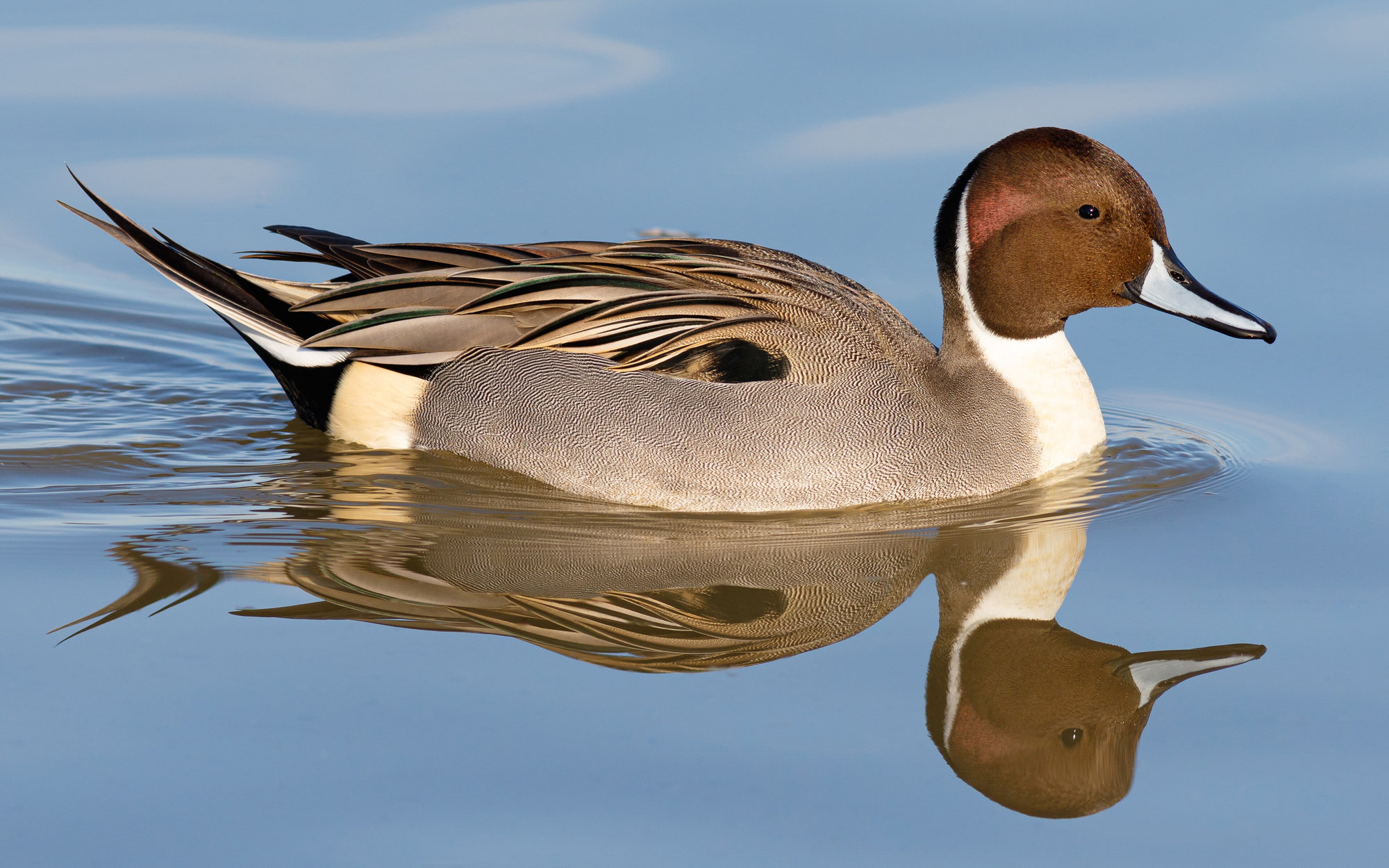
Photo Frank Schulenburg (opens in a new tab) / Wikimedia Commons, CC BY-SA 4.0 (opens in a new tab)
At a glance
- Size
- About 51 to 76 cm long, including the male's long tail
- Weight
- About 500 to 1,300 g
- Habitat
- Marshes, flooded fields, coastal impoundments and shallow lakes
- Diet
- Seeds, grain, aquatic plants, snails and insects
- In Georgia
- An uncommon to fairly common winter visitor
- Voice
- Males give a soft, fluty whistle; females quack
- Rabies vector
- No
Identification
- Male
- Chocolate-brown head; white neck and breast with a white stripe running up the side of the head; grey body; long, pointed black tail
- Female
- Slim, mottled brown, with a plain face, grey bill and long neck
- Told apart from
- Female mallard, which is stockier with an orange-and-black bill
- Where to look
- Shallow water in coastal impoundments and flooded fields in winter
Behaviour
Pintails feed by dabbling and upending, using their long necks to reach food in deeper water than other dabbling ducks. They are strong, fast fliers and among the most widespread ducks in the world.
Why they matter
Northern pintails were once among the most numerous ducks in North America. They have declined as prairie wetlands dried and were ploughed, because they nest early in open fields where farm machinery destroys nests. They show how the fate of a winter visitor to Georgia is decided on the breeding grounds far to the north.
Reproduction and lifecycle
Nest — A shallow scrape lined with down, often in open fields some way from water
Eggs — Usually 6 to 10
Incubation — About 22 to 24 days
Ducklings — Leave the nest within a day
Flight — At about six to seven weeks
Lifespan — Usually a few years; some over twenty
Living around people
- Managed shallow impoundments on the coast are important winter habitat.
- Lost fishing weights and lead shot in shallow water poison dabbling ducks.
Misconceptions
- Ducks with long tails are escaped ornamental birds. Northern pintails are wild and winter across the South.
Related species
Seasonal activity
When this species is breeding, and when there are nests on the ground. Mowing during the shaded months is how most nests are found.
| Jan | Feb | Mar | Apr | May | Jun | Jul | Aug | Sep | Oct | Nov | Dec | |
|---|---|---|---|---|---|---|---|---|---|---|---|---|
| Breeding | Jan: no | Feb: no | Mar: no | Apr: no | May: no | Jun: no | Jul: no | Aug: no | Sep: no | Oct: no | Nov: no | Dec: no |
| Active nests | Jan: no | Feb: no | Mar: no | Apr: no | May: no | Jun: no | Jul: no | Aug: no | Sep: no | Oct: no | Nov: no | Dec: no |
| Notes | Wintering | Pairs forming; early migrants leave | Migrating north | Nesting in the north begins | Nesting | Ducklings hatching | Adults moulting | Young flying | Migration begins | Moving south | Arriving in Georgia | Wintering |
Where it lives
Recorded in 85 states and provinces. Each one links to the other animals there, and to the rehabilitators licensed for them.
United States
- Alabamain winter
- Alaskabreeding
- Arizonain winter
- Arkansasin winter
- Californiain winter
- Coloradoin winter
- Connecticutin winter
- Delawarein winter
- Floridain winter
- Georgiain winter
- Hawaiiin winter
- Idaho
- Illinoisin winter
- Indianain winter
- Iowain winter
- Kansasin winter
- Kentuckyin winter
- Louisianain winter
- Mainein winter
- Marylandin winter
- Massachusettsin winter
- Michiganin winter
- Minnesotain winter
- Mississippiin winter
- Missouriin winter
- Montana
- Nebraska
- Nevadain winter
- New Hampshirein winter
- New Jerseyin winter
- New Mexicoin winter
- New Yorkin winter
- North Carolinain winter
- North Dakotabreeding
- Ohioin winter
- Oklahomain winter
- Oregonin winter
- Pennsylvaniain winter
- Rhode Islandin winter
- South Carolinain winter
- South Dakotabreeding
- Tennesseein winter
- Texasin winter
- Utahin winter
- Vermontin winter
- Virginiain winter
- Washingtonin winter
- Wisconsinin winter
- Wyoming
Canada
Mexico
- Aguascalientesin winter
- Baja Californiain winter
- Baja California Sur
- Chihuahuain winter
- Coahuilain winter
- Durangoin winter
- Guanajuatoin winter
- Hidalgoin winter
- Jaliscoin winter
- Mexico Cityin winter
- Michoacanin winter
- Nayaritin winter
- Nuevo Leonin winter
- Oaxacain winter
- Pueblain winter
- Queretaroin winter
- San Luis Potosiin winter
- Sinaloain winter
- Sonorain winter
- State of Mexicoin winter
- Tamaulipasin winter
- Tlaxcalain winter
- Zacatecasin winter
If you found one
Answer a few questions and you will get a specific answer for what you are looking at.
I found an animal