
Species
Green treefrog
Dryophytes cinereus
Georgia's state amphibian: a bright green treefrog that clings to windows on summer nights and calls like a bell.
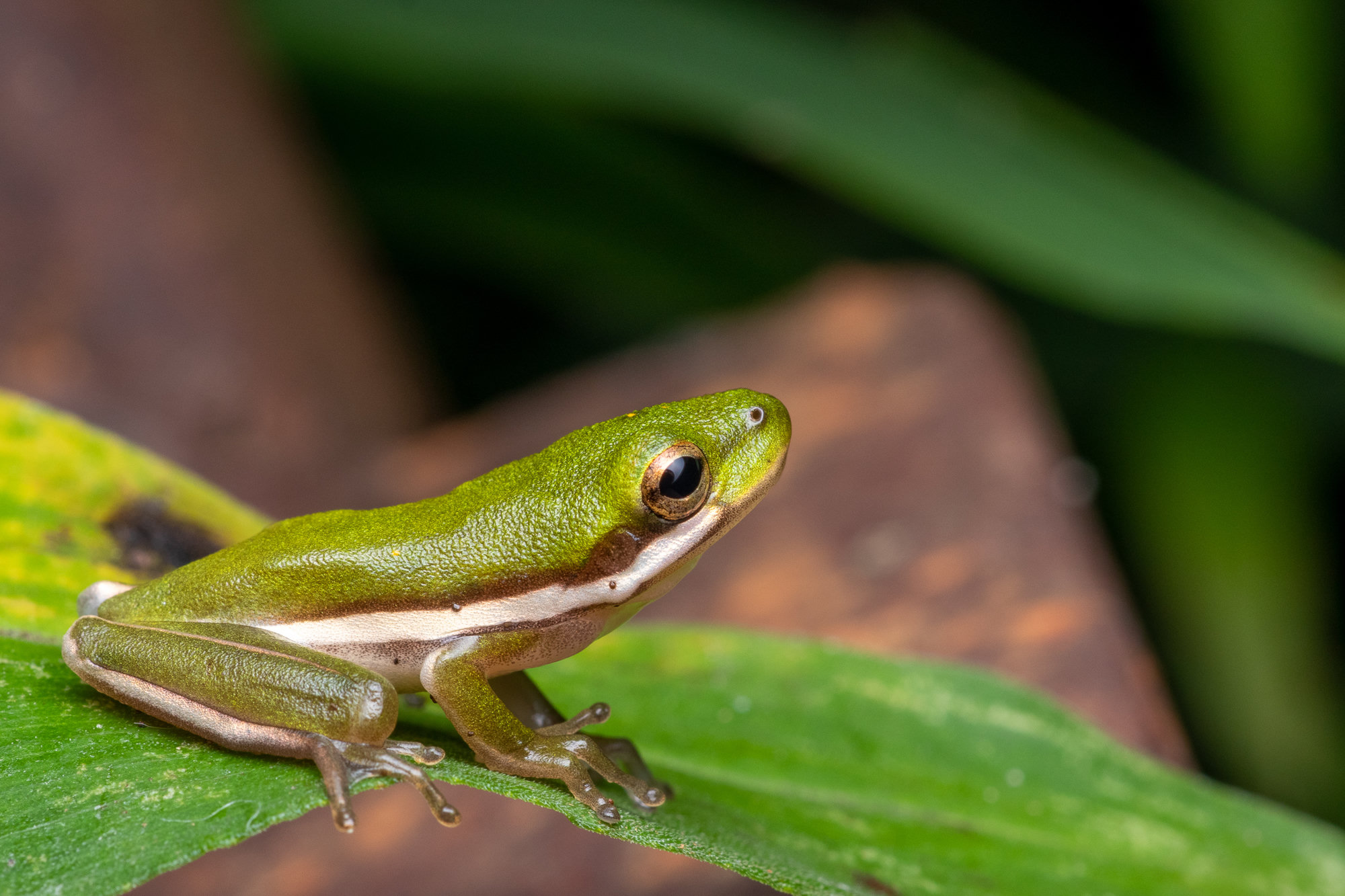
Photo Diego Huet (opens in a new tab) / Wikimedia Commons, CC BY 4.0 (opens in a new tab)
At a glance
- Size
- About 3 to 6 cm long
- Habitat
- Wet places with vegetation: marshes, pond edges, swamps, gardens and house walls
- Diet
- Insects, especially those drawn to lights
- In Georgia
- Common statewide below the mountains; Georgia's state amphibian
- Voice
- A nasal, bell-like "quonk, quonk" repeated in chorus
- Rabies vector
- No
Identification
- Key marks
- Smooth, bright green, sometimes yellowish; a white or cream stripe along the side; large toe pads
- Told apart from
- Squirrel treefrog, which is smaller, often brown and lacks the clean side stripe
- Told apart from
- Barking treefrog, which is larger and spotted
- Where to look
- On windows, walls and plants near water on warm nights
Behaviour
Green treefrogs spend the day hidden in vegetation and come out at night to hunt insects, often around porch lights. Males call in loud choruses from plants at the water's edge on warm, humid nights.
Why they matter
They eat mosquitoes and other insects in great numbers and are food for snakes, birds and fish. Their thin skin makes them sensitive to pollution, so a chorus of green treefrogs is a sign of healthy wetlands nearby.
Reproduction and lifecycle
Eggs — Several hundred, laid in small clusters on floating plants
Hatching — In a few days
Tadpoles — Change into frogs in about 5 to 8 weeks
Maturity — In their first year
Lifespan — A few years
Calling — Males call through the warm months
Living around people
- A treefrog on a window is hunting insects; it is harmless.
- Pesticides and lawn chemicals harm frogs; a garden pond without fish helps them breed.
Misconceptions
- Treefrogs cause warts. No frog or toad causes warts.
- Frogs calling means rain is coming. They call in humid weather, which often comes before rain, but they call for mates.
Related species
Seasonal activity
When this species is breeding, and when there are nests on the ground. Mowing during the shaded months is how most nests are found.
| Jan | Feb | Mar | Apr | May | Jun | Jul | Aug | Sep | Oct | Nov | Dec | |
|---|---|---|---|---|---|---|---|---|---|---|---|---|
| Breeding | Jan: no | Feb: no | Mar: no | Apr: no | May: no | Jun: no | Jul: no | Aug: no | Sep: no | Oct: no | Nov: no | Dec: no |
| Active nests | Jan: no | Feb: no | Mar: no | Apr: no | May: no | Jun: no | Jul: no | Aug: no | Sep: no | Oct: no | Nov: no | Dec: no |
| Notes | Sheltering | Sheltering | Emerging | Calling begins | Breeding choruses | Breeding | Breeding | Young frogs leaving the water | Feeding | Active on warm nights | Sheltering | Sheltering |
Where it lives
Recorded in 20 states and provinces. Each one links to the other animals there, and to the rehabilitators licensed for them.
If you found one
Answer a few questions and you will get a specific answer for what you are looking at.
I found an animal