
Species
Barking treefrog
Dryophytes gratiosus
North America's largest native treefrog, spotted and plump, whose call sounds like a distant dog.
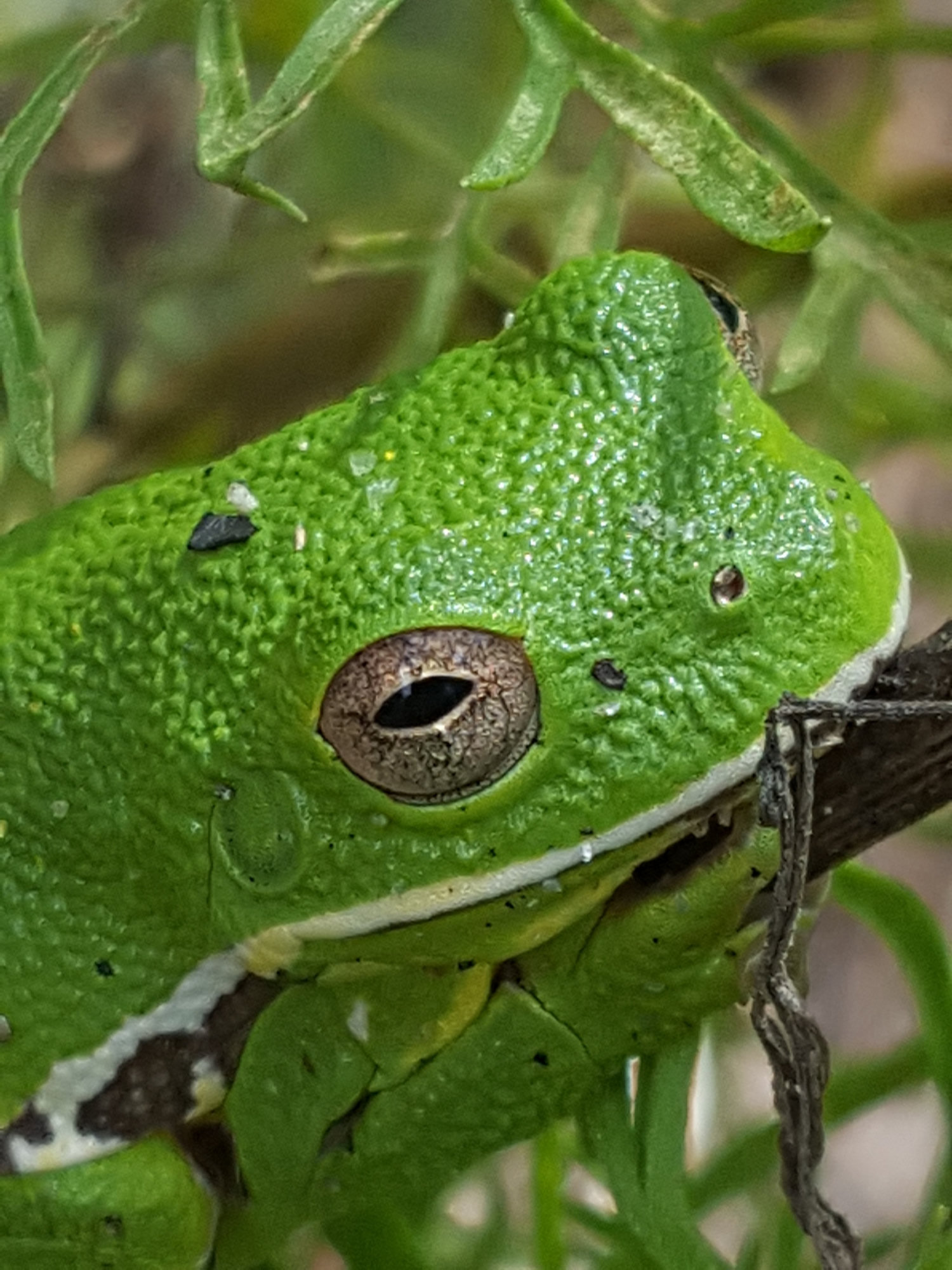
Photo Alex Abair (opens in a new tab) / iNaturalist, CC BY 4.0 (opens in a new tab)
At a glance
- Size
- About 5 to 7 cm long
- Habitat
- Pine woods and sandhills near shallow, fish-free ponds
- Diet
- Insects and spiders
- In Georgia
- The Coastal Plain and lower Piedmont
- Voice
- A loud, hollow "doonk" from the water; a dog-like bark from trees
- Rabies vector
- No
Identification
- Key marks
- Large and plump; green with round dark spots; granular skin
- Told apart from
- Green treefrog, which is smaller and smooth without spots
- Where to look
- In pine woods near seasonal ponds on summer nights
Behaviour
Barking treefrogs spend much of their time high in trees and burrow into sand in dry weather. They gather to breed in fish-free ponds after heavy summer rain.
Why they matter
They depend on seasonal ponds that dry out and hold no fish, a habitat easily lost when low ground is drained or filled.
Reproduction and lifecycle
Eggs — Laid singly on the bottom of shallow ponds
Hatching — In a few days
Tadpoles — Change into frogs in about 6 to 10 weeks
Maturity — Within a year or two
Lifespan — Several years
Calling — After summer rains
Living around people
- Keeping seasonal ponds and wet hollows unfilled keeps these frogs breeding.
Misconceptions
- A frog that barks must be something else. The barking treefrog's name is its call.
Related species
Seasonal activity
When this species is breeding, and when there are nests on the ground. Mowing during the shaded months is how most nests are found.
| Jan | Feb | Mar | Apr | May | Jun | Jul | Aug | Sep | Oct | Nov | Dec | |
|---|---|---|---|---|---|---|---|---|---|---|---|---|
| Breeding | Jan: no | Feb: no | Mar: no | Apr: no | May: no | Jun: no | Jul: no | Aug: no | Sep: no | Oct: no | Nov: no | Dec: no |
| Active nests | Jan: no | Feb: no | Mar: no | Apr: no | May: no | Jun: no | Jul: no | Aug: no | Sep: no | Oct: no | Nov: no | Dec: no |
| Notes | Burrowed in sand | Burrowed | Emerging | Active | Breeding after rain | Breeding | Breeding | Young frogs | Feeding | Burrowing in | Burrowed | Burrowed |
Where it lives
Recorded in 11 states and provinces. Each one links to the other animals there, and to the rehabilitators licensed for them.
If you found one
Answer a few questions and you will get a specific answer for what you are looking at.
I found an animal