
Species
Gray-cheeked thrush
Catharus minimus
A shy, grey-brown thrush of the far north that migrates through Georgia at night, seldom seen.
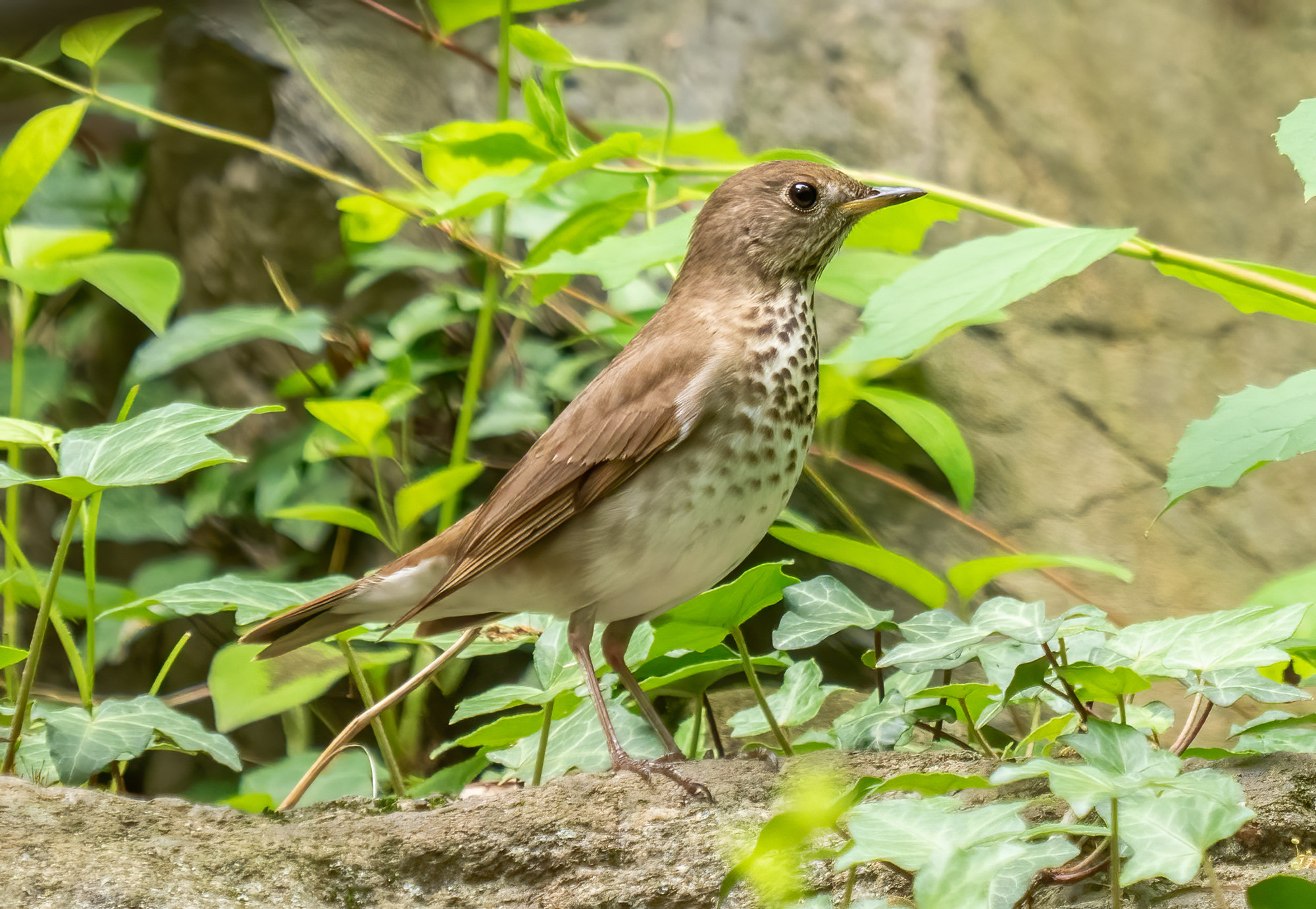
Photo Rhododendrites (opens in a new tab) / Wikimedia Commons, CC BY-SA 4.0 (opens in a new tab)
At a glance
- Size
- About 16 to 18 cm long
- Weight
- About 26 to 50 g
- Habitat
- Northern spruce forest; any woods on migration
- Diet
- Insects and berries
- In Georgia
- An uncommon migrant, May and September to October
- Voice
- A thin, nasal "vee-a"
- Rabies vector
- No
Identification
- Key marks
- Grey-brown above; grey cheeks; spotted breast; no bold eye-ring
- Told apart from
- Swainson's thrush, which has buff spectacles
- Where to look
- Shady woods during migration
Behaviour
Gray-cheeked thrushes migrate at night, calling as they fly, and spend the day in dense cover.
Why they matter
This thrush breeds as far north as Siberia and Alaska and winters in South America, making one of the longest journeys of any thrush.
Reproduction and lifecycle
Nest — A cup in a spruce or willow in the far north
Eggs — Usually three to five
Incubation — About 12 to 14 days
Chicks — Fed by both parents
Lifespan — Several years
Living around people
- Thrushes migrating at night are drawn to lights and hit buildings.
Misconceptions
- Birds migrating at night are lost. Many songbirds migrate by night, navigating by the stars.
Related species
Seasonal activity
When this species is breeding, and when there are nests on the ground. Mowing during the shaded months is how most nests are found.
| Jan | Feb | Mar | Apr | May | Jun | Jul | Aug | Sep | Oct | Nov | Dec | |
|---|---|---|---|---|---|---|---|---|---|---|---|---|
| Breeding | Jan: no | Feb: no | Mar: no | Apr: no | May: no | Jun: no | Jul: no | Aug: no | Sep: no | Oct: no | Nov: no | Dec: no |
| Active nests | Jan: no | Feb: no | Mar: no | Apr: no | May: no | Jun: no | Jul: no | Aug: no | Sep: no | Oct: no | Nov: no | Dec: no |
| Notes | In South America | In South America | In South America | Migrating north | Migrants in Georgia | Nesting in the far north | Nesting | Migrating south | Migrants | Migrants | In South America | In South America |
Where it lives
Recorded in 43 states and provinces. Each one links to the other animals there, and to the rehabilitators licensed for them.
United States
- Alabamapassing through
- Alaskabreeding
- Arkansaspassing through
- Delawarepassing through
- District of Columbiapassing through
- Floridapassing through
- Georgiapassing through
- Illinoispassing through
- Indianapassing through
- Iowapassing through
- Kansaspassing through
- Kentuckypassing through
- Louisianapassing through
- Marylandpassing through
- Michiganpassing through
- Minnesotapassing through
- Mississippipassing through
- Missouripassing through
- Nebraskapassing through
- New Jerseypassing through
- New Yorkpassing through
- North Carolinapassing through
- North Dakotapassing through
- Ohiopassing through
- Pennsylvaniapassing through
- South Carolinapassing through
- South Dakotapassing through
- Tennesseepassing through
- Texaspassing through
- Virginiapassing through
- West Virginiapassing through
- Wisconsinpassing through
Canada
If you found one
Answer a few questions and you will get a specific answer for what you are looking at.
I found an animal