
Species
Eurasian collared-dove
Streptopelia decaocto
A pale, sandy dove with a black half-collar that spread across North America in a few decades after arriving in Florida.
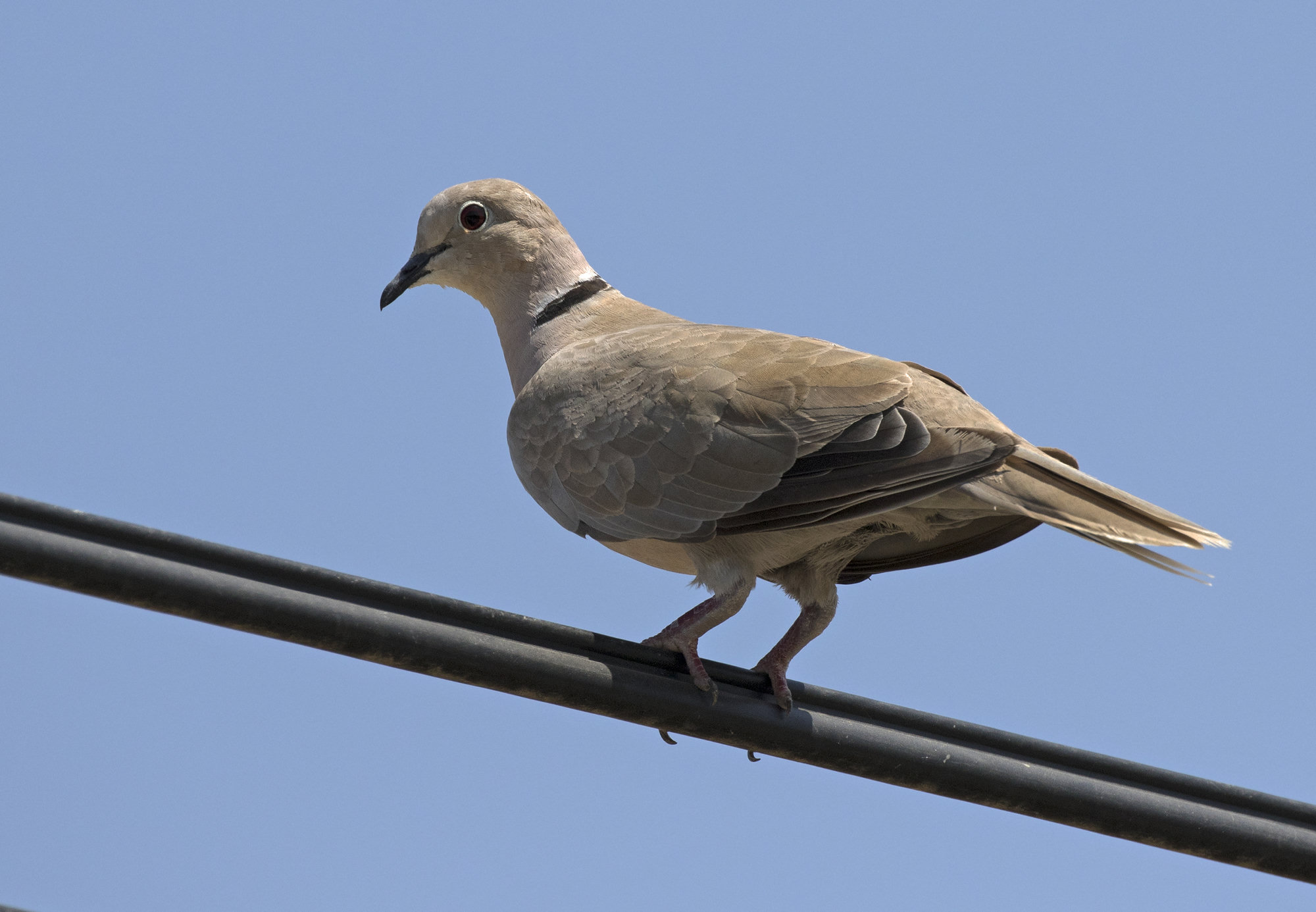
Photo Zeynel Cebeci (opens in a new tab) / Wikimedia Commons, CC BY-SA 4.0 (opens in a new tab)
At a glance
- Size
- About 29 to 30 cm long
- Weight
- About 125 to 200 g
- Habitat
- Towns, farms and suburbs with open ground
- Diet
- Seeds and grain
- In Georgia
- Introduced; common resident across the state
- Voice
- A repeated three-part "coo-COO-coo"
- Rabies vector
- No
Identification
- Key marks
- Pale sandy-grey; black half-collar on the back of the neck; square-ended tail with a broad white tip beneath
- Told apart from
- Mourning dove, which is browner with a pointed tail and no collar
- Told apart from
- Rock pigeon, which is stockier and blue-grey
- Where to look
- Wires, rooftops and farmyards
Behaviour
Collared-doves nest almost year-round in suburbs and around farms. Pairs call from rooftops and wires and display with a steep climb and a long glide.
Why they matter
The Eurasian collared-dove reached Florida from the Bahamas in the 1980s and spread across most of the continent within about thirty years — one of the fastest bird colonisations ever recorded. It is a living example of how a species with the right habits can take advantage of towns and farms.
Reproduction and lifecycle
Nest — A flimsy platform of twigs in a tree or on a building
Eggs — Usually two
Incubation — About 14 to 18 days
Nestlings — Fed crop milk; fledge at about 15 to 19 days
Broods — Several a year
Lifespan — A few years
Living around people
- Collared-doves nest close to houses and are harmless neighbours.
- As a non-native bird it is not protected like native doves, but an injured one still needs a rehabilitator's care.
Misconceptions
- It is a pale mourning dove. It is a different species from Europe and Asia, told by its black collar and square tail.
Related species
Seasonal activity
When this species is breeding, and when there are nests on the ground. Mowing during the shaded months is how most nests are found.
| Jan | Feb | Mar | Apr | May | Jun | Jul | Aug | Sep | Oct | Nov | Dec | |
|---|---|---|---|---|---|---|---|---|---|---|---|---|
| Breeding | Jan: no | Feb: no | Mar: no | Apr: no | May: no | Jun: no | Jul: no | Aug: no | Sep: no | Oct: no | Nov: no | Dec: no |
| Active nests | Jan: no | Feb: no | Mar: no | Apr: no | May: no | Jun: no | Jul: no | Aug: no | Sep: no | Oct: no | Nov: no | Dec: no |
| Notes | Pairs calling; some nesting | Nesting begins | Nesting | Nesting | Nesting | Nesting | Nesting | Nesting | Nesting continues | Flocks around grain | Flocks | Pairs calling |
Where it lives
Recorded in 72 states and provinces. Each one links to the other animals there, and to the rehabilitators licensed for them.
United States
- Alabamaintroduced
- Alaskaintroduced
- Arizonaintroduced
- Arkansasintroduced
- Californiaintroduced
- Coloradointroduced
- Floridaintroduced
- Georgiaintroduced
- Idahointroduced
- Illinoisintroduced
- Indianaintroduced
- Iowaintroduced
- Kansasintroduced
- Kentuckyintroduced
- Louisianaintroduced
- Minnesotaintroduced
- Mississippiintroduced
- Missouriintroduced
- Montanaintroduced
- Nebraskaintroduced
- Nevadaintroduced
- New Mexicointroduced
- North Carolinaintroduced
- North Dakotaintroduced
- Oklahomaintroduced
- Oregonintroduced
- South Carolinaintroduced
- South Dakotaintroduced
- Tennesseeintroduced
- Texasintroduced
- Utahintroduced
- Virginiaintroduced
- Washingtonintroduced
- Wisconsinintroduced
- Wyomingintroduced
Canada
Mexico
- Aguascalientesintroduced
- Baja Californiaintroduced
- Baja California Surintroduced
- Campecheintroduced
- Chiapasintroduced
- Chihuahuaintroduced
- Coahuilaintroduced
- Colimaintroduced
- Durangointroduced
- Guanajuatointroduced
- Guerrerointroduced
- Hidalgointroduced
- Jaliscointroduced
- Mexico Cityintroduced
- Michoacanintroduced
- Morelosintroduced
- Nayaritintroduced
- Nuevo Leonintroduced
- Oaxacaintroduced
- Pueblaintroduced
- Queretarointroduced
- Quintana Roointroduced
- San Luis Potosiintroduced
- Sinaloaintroduced
- Sonoraintroduced
- State of Mexicointroduced
- Tabascointroduced
- Tamaulipasintroduced
- Tlaxcalaintroduced
- Veracruzintroduced
- Yucatanintroduced
- Zacatecasintroduced
If you found one
Answer a few questions and you will get a specific answer for what you are looking at.
I found an animal