
Species
Eastern whip-poor-will
Antrostomus vociferus
A night bird heard far more than seen, calling its own name through spring nights in north Georgia's woods.
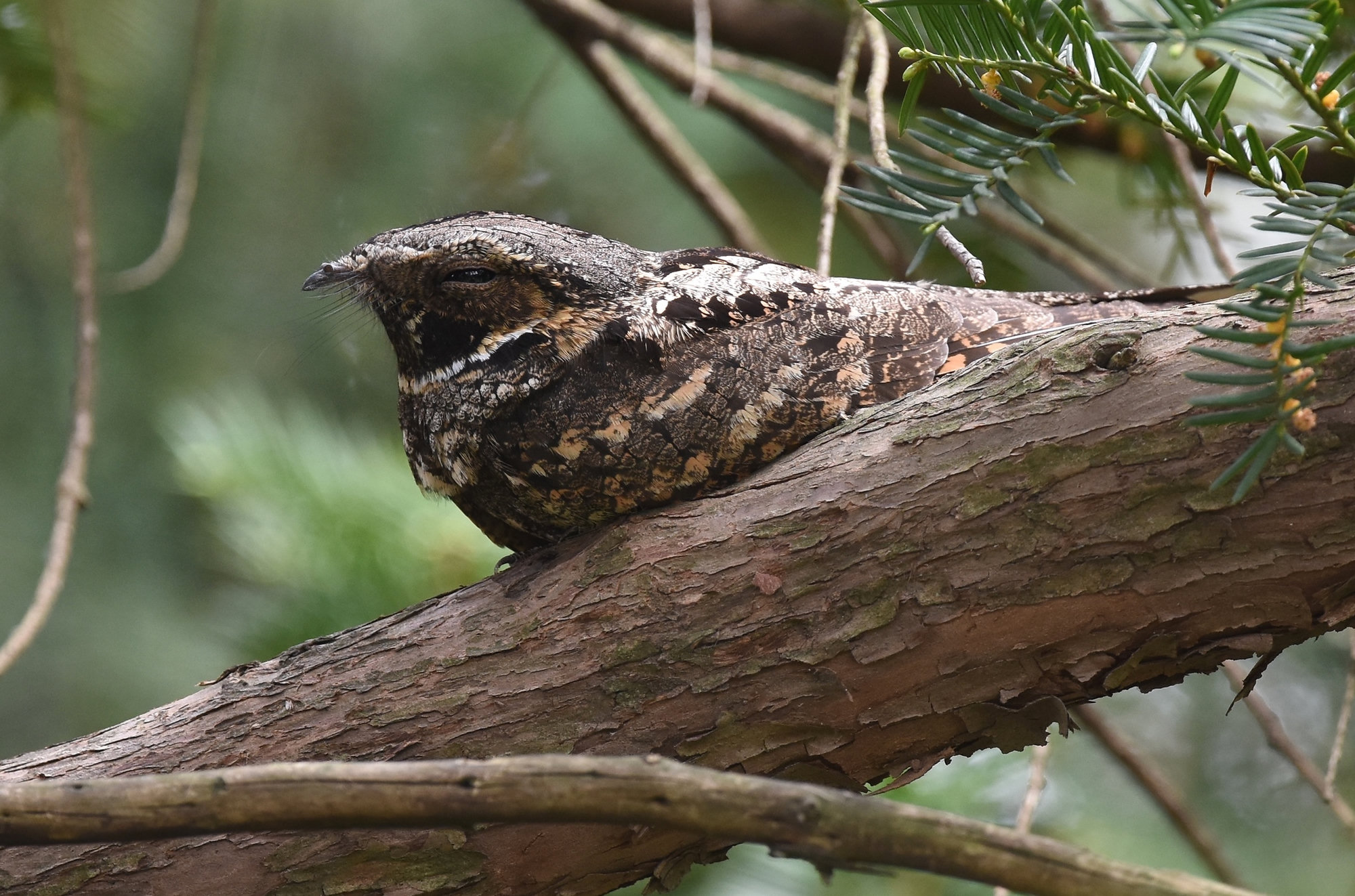
Photo Unknown photographer (opens in a new tab) / iNaturalist, CC0 1.0 (opens in a new tab)
At a glance
- Size
- About 22 to 26 cm long
- Weight
- About 40 to 65 g
- Habitat
- Dry, open woods with clearings
- Diet
- Moths, beetles and other flying insects
- In Georgia
- A summer resident in the north; a winter visitor on the coast
- Voice
- A loud, rapid "WHIP-poor-WILL", repeated for long spells
- Rabies vector
- No
Identification
- Key marks
- Mottled grey-brown; large head; rounded wings; males with white tail corners
- Told apart from
- Chuck-will's-widow, which is larger and browner with a slower call
- Told apart from
- Common nighthawk, which has pointed wings with a white bar
- Where to look
- Open woodland at dusk; seen on roads at night
Behaviour
Whip-poor-wills feed at night by sallying up from the ground or low perches to catch insects. They time their nesting so the chicks hatch as the moon waxes, when moonlight makes hunting easier.
Why they matter
Whip-poor-wills have declined steeply across their range, probably because of falling insect numbers and the loss of open woods. They are a reminder that the loss of insects affects the birds that depend on them.
Reproduction and lifecycle
Nest — No nest; eggs laid on leaf litter
Eggs — Usually two
Incubation — About 19 to 21 days
Chicks — Downy, able to move soon after hatching
Flight — At about two to three weeks
Lifespan — Several years
Living around people
- They roost on quiet roads at night and are often hit by cars.
- Outdoor lights and pesticides reduce the insects they eat.
Misconceptions
- Whip-poor-wills are common everywhere. They have declined sharply and are now absent from many places where they once called.
Related species
Seasonal activity
When this species is breeding, and when there are nests on the ground. Mowing during the shaded months is how most nests are found.
| Jan | Feb | Mar | Apr | May | Jun | Jul | Aug | Sep | Oct | Nov | Dec | |
|---|---|---|---|---|---|---|---|---|---|---|---|---|
| Breeding | Jan: no | Feb: no | Mar: no | Apr: no | May: no | Jun: no | Jul: no | Aug: no | Sep: no | Oct: no | Nov: no | Dec: no |
| Active nests | Jan: no | Feb: no | Mar: no | Apr: no | May: no | Jun: no | Jul: no | Aug: no | Sep: no | Oct: no | Nov: no | Dec: no |
| Notes | A few winter on the coast | Few present | Arriving in the north of the state | Calling on spring nights | Nesting | Nesting | Young fledging | Calling fades | Migrating south | Last migrants | A few winter on the coast | A few winter on the coast |
Where it lives
Recorded in 42 states and provinces. Each one links to the other animals there, and to the rehabilitators licensed for them.
United States
- Alabamabreeding
- Arkansasbreeding
- Connecticutbreeding
- Delawarebreeding
- District of Columbiapassing through
- Floridain winter
- Georgiabreeding
- Illinoisbreeding
- Indianabreeding
- Iowabreeding
- Kansasbreeding
- Kentuckybreeding
- Louisianain winter
- Mainebreeding
- Marylandbreeding
- Massachusettsbreeding
- Michiganbreeding
- Minnesotabreeding
- Mississippibreeding
- Missouribreeding
- Nebraskabreeding
- New Hampshirebreeding
- New Jerseybreeding
- New Yorkbreeding
- North Carolinabreeding
- North Dakotabreeding
- Ohiobreeding
- Oklahomabreeding
- Pennsylvaniabreeding
- Rhode Islandbreeding
- South Carolinabreeding
- South Dakotabreeding
- Tennesseebreeding
- Texaspassing through
- Vermontbreeding
- Virginiabreeding
- West Virginiabreeding
- Wisconsinbreeding
If you found one
Answer a few questions and you will get a specific answer for what you are looking at.
I found an animal