
Species
Eastern screech-owl
Megascops asio
A small, eared owl that lives in yard trees and nest boxes, whinnying and trilling through Georgia nights.
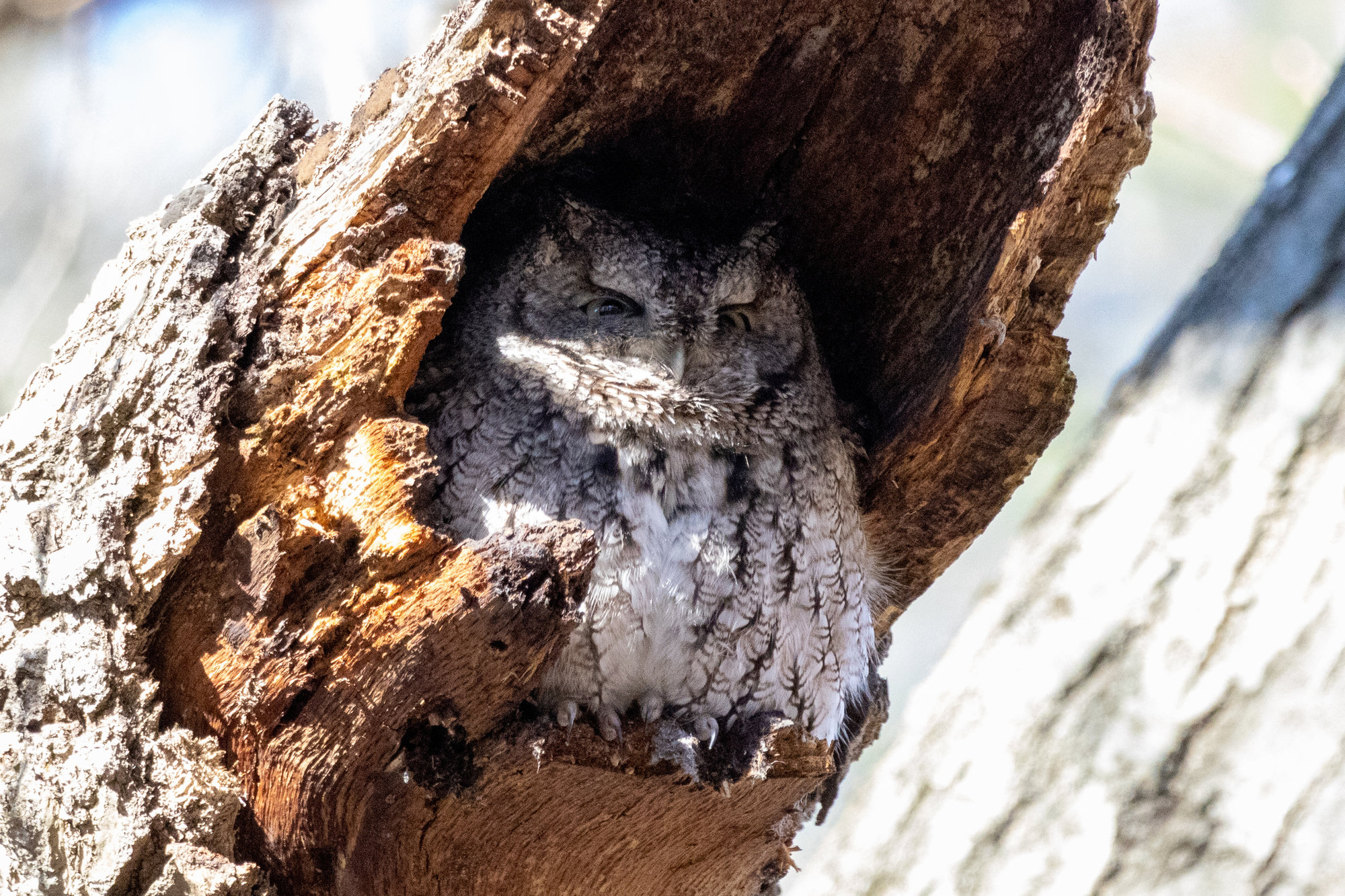
Photo Justin Bull (opens in a new tab) / iNaturalist, CC BY 4.0 (opens in a new tab)
At a glance
- Size
- About 16 to 25 cm long
- Weight
- About 120 to 245 g
- Habitat
- Woodland, suburbs, parks and farms with old trees
- Diet
- Moths, beetles, crayfish, frogs, mice and small birds
- In Georgia
- Common resident statewide
- Voice
- A descending whinny and a soft, even trill
- Rabies vector
- No
Identification
- Key marks
- Small owl with ear tufts; yellow eyes; grey or reddish-brown plumage that looks like bark
- Told apart from
- Great horned owl, which is much larger
- Where to look
- Tree cavities and nest boxes; sitting in the entrance of a hole at dusk
Behaviour
Screech-owls hunt at night from low perches. They nest in tree holes and nest boxes and, unusually, sometimes bring live blind snakes to the nest, where they eat insect larvae that would otherwise infest the nest debris.
Why they matter
Eastern screech-owls are common in suburbs, eating moths, beetles and rodents. They show how old trees with cavities — and nest boxes — keep owls living alongside people.
Reproduction and lifecycle
Nest — A tree cavity or nest box
Eggs — Usually three to five
Incubation — About 26 to 30 days
Chicks — Fed by both parents
Leaving the nest — At about four weeks, before they fly well
Flight — A few days to a week after leaving the nest
Lifespan — Several years
Living around people
- Young owls leave the nest before they can fly well and sit on low branches; their parents feed them at night. They do not need rescuing unless injured.
- Nest boxes placed in trees in yards are used readily.
- Owls are often hit by cars at night.
Misconceptions
- A baby owl on a branch or the ground is orphaned. Owlets leave the nest early and are fed by their parents; they need help only if injured or in danger.
- Screech-owls screech. They whinny and trill; the screech belongs to the barn owl.
Related species
Seasonal activity
When this species is breeding, and when there are nests on the ground. Mowing during the shaded months is how most nests are found.
| Jan | Feb | Mar | Apr | May | Jun | Jul | Aug | Sep | Oct | Nov | Dec | |
|---|---|---|---|---|---|---|---|---|---|---|---|---|
| Breeding | Jan: no | Feb: no | Mar: no | Apr: no | May: no | Jun: no | Jul: no | Aug: no | Sep: no | Oct: no | Nov: no | Dec: no |
| Active nests | Jan: no | Feb: no | Mar: no | Apr: no | May: no | Jun: no | Jul: no | Aug: no | Sep: no | Oct: no | Nov: no | Dec: no |
| Notes | Pairs calling | Courtship | Nesting | Incubating | Chicks | Young fledging | Families together | Young independent | Present | Present | Present | Pairs calling |
Where it lives
Recorded in 46 states and provinces. Each one links to the other animals there, and to the rehabilitators licensed for them.
United States
- Alabama
- Arkansas
- Coloradoin winter
- Connecticutin winter
- Delawarein winter
- District of Columbiabreeding
- Florida
- Georgia
- Illinoisin winter
- Indianain winter
- Iowain winter
- Kansas
- Kentucky
- Louisiana
- Mainein winter
- Maryland
- Massachusettsin winter
- Michiganin winter
- Minnesotain winter
- Mississippi
- Missouri
- Montana
- Nebraska
- New Hampshirein winter
- New Jerseyin winter
- New Yorkin winter
- North Carolina
- North Dakota
- Ohioin winter
- Oklahoma
- Pennsylvaniain winter
- Rhode Islandin winter
- South Carolina
- South Dakota
- Tennessee
- Texas
- Vermontin winter
- Virginia
- West Virginiain winter
- Wisconsinin winter
- Wyoming
If you found one
Answer a few questions and you will get a specific answer for what you are looking at.
I found an animal