
Species
Barn owl
Tyto furcata
A pale, heart-faced owl that can catch mice in total darkness by sound alone.
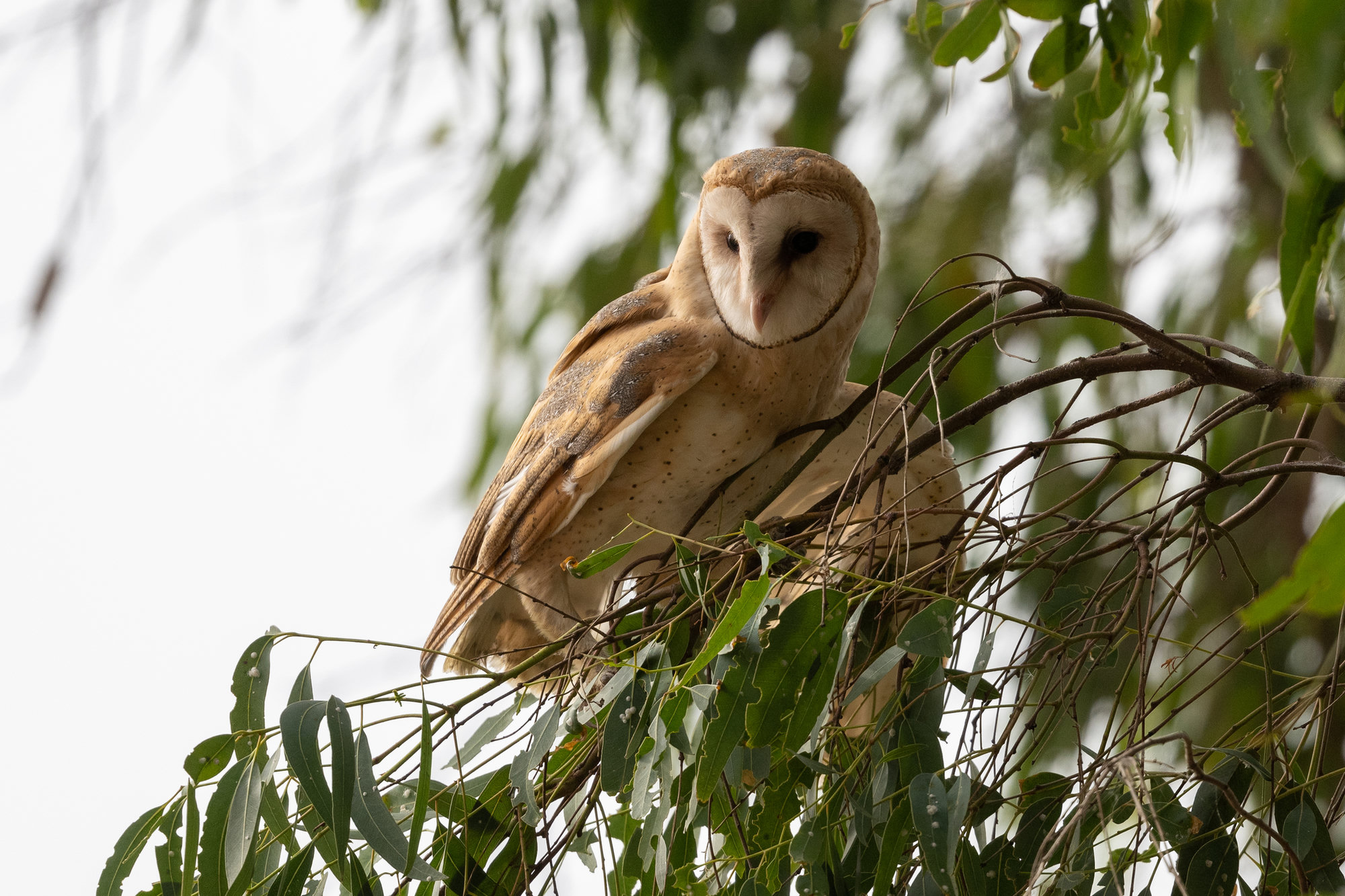
Photo Michael Eisen (opens in a new tab) / iNaturalist, CC BY 4.0 (opens in a new tab)
At a glance
- Size
- About 32 to 40 cm long; wingspan about 1 m
- Weight
- About 400 to 700 g
- Habitat
- Open fields, farmland, marshes and old barns
- Diet
- Voles, mice, rats and shrews
- In Georgia
- An uncommon resident statewide
- Voice
- A long, rasping scream; hisses and clicks at the nest
- Rabies vector
- No
Identification
- Key marks
- Pale, white heart-shaped face; golden-buff back; white or pale underparts; long legs; dark eyes
- Told apart from
- Barred owl, which is brown and white with a round face
- Where to look
- Hunting over fields at dusk; roosting in barns, silos and hollow trees
Behaviour
Barn owls hunt by flying low over fields, listening for rodents. Their asymmetrical ears — one higher than the other — let them pinpoint sound in three dimensions.
Why they matter
A family of barn owls can eat over a thousand rodents in a year. Farmers in many countries put up nest boxes to encourage them as natural pest control. They have declined in much of the eastern US as old barns and grasslands disappeared.
Reproduction and lifecycle
Nest — No nest; eggs laid in a barn, silo, hollow tree or nest box
Eggs — Usually four to seven
Incubation — About 29 to 34 days
Chicks — Fed by both parents; hatch days apart, so sizes vary
Flight — At about eight to nine weeks
Lifespan — Usually a few years in the wild
Living around people
- Rodent poisons kill owls that eat poisoned rodents.
- Nest boxes in barns or on poles near fields help barn owls and control rodents.
- Owls are often hit by cars when hunting along road verges.
Misconceptions
- The scream at night is someone in danger. It is often a barn owl.
- Owls are bad omens. Barn owls are among the most useful animals on a farm.
Related species
Seasonal activity
When this species is breeding, and when there are nests on the ground. Mowing during the shaded months is how most nests are found.
| Jan | Feb | Mar | Apr | May | Jun | Jul | Aug | Sep | Oct | Nov | Dec | |
|---|---|---|---|---|---|---|---|---|---|---|---|---|
| Breeding | Jan: no | Feb: no | Mar: no | Apr: no | May: no | Jun: no | Jul: no | Aug: no | Sep: no | Oct: no | Nov: no | Dec: no |
| Active nests | Jan: no | Feb: no | Mar: no | Apr: no | May: no | Jun: no | Jul: no | Aug: no | Sep: no | Oct: no | Nov: no | Dec: no |
| Notes | Pairs roosting | Nesting may begin | Nesting | Chicks | Chicks | Young fledging | Second broods in good years | Young dispersing | Present | Present | Present | Present |
Where it lives
Recorded in 69 states and provinces. Each one links to the other animals there, and to the rehabilitators licensed for them.
United States
- Alabama
- Arizona
- Arkansasin winter
- California
- Colorado
- Delaware
- Florida
- Georgia
- Hawaiiintroduced
- Idaho
- Illinois
- Indiana
- Iowabreeding
- Kansas
- Kentucky
- Louisianain winter
- Massachusettsin winter
- Mississippiin winter
- Missouri
- Nebraskabreeding
- Nevada
- New Jersey
- New Mexico
- North Carolina
- Ohio
- Oklahoma
- Oregon
- Rhode Islandin winter
- South Carolina
- South Dakotabreeding
- Tennessee
- Texas
- Utah
- Virginia
- Washington
- West Virginia
- Wyomingpassing through
Mexico
- Aguascalientesin winter
- Baja California
- Baja California Sur
- Campechebreeding
- Chiapasin winter
- Chihuahuain winter
- Coahuilabreeding
- Colimabreeding
- Durangobreeding
- Guanajuatobreeding
- Guerreropassing through
- Hidalgobreeding
- Jalisco
- Mexico Citybreeding
- Michoacanbreeding
- Morelosin winter
- Nayaritin winter
- Nuevo Leonbreeding
- Oaxacabreeding
- Pueblabreeding
- Queretarobreeding
- Quintana Roobreeding
- San Luis Potosibreeding
- Sinaloabreeding
- Sonora
- State of Mexico
- Tabascoin winter
- Tamaulipasbreeding
- Tlaxcalapassing through
- Veracruz
- Yucatan
- Zacatecaspassing through
If you found one
Answer a few questions and you will get a specific answer for what you are looking at.
I found an animal