
Species
Eastern meadowlark
Sturnella magna
A yellow-breasted grassland bird with a black V on its chest and a clear, whistled song from fence posts.
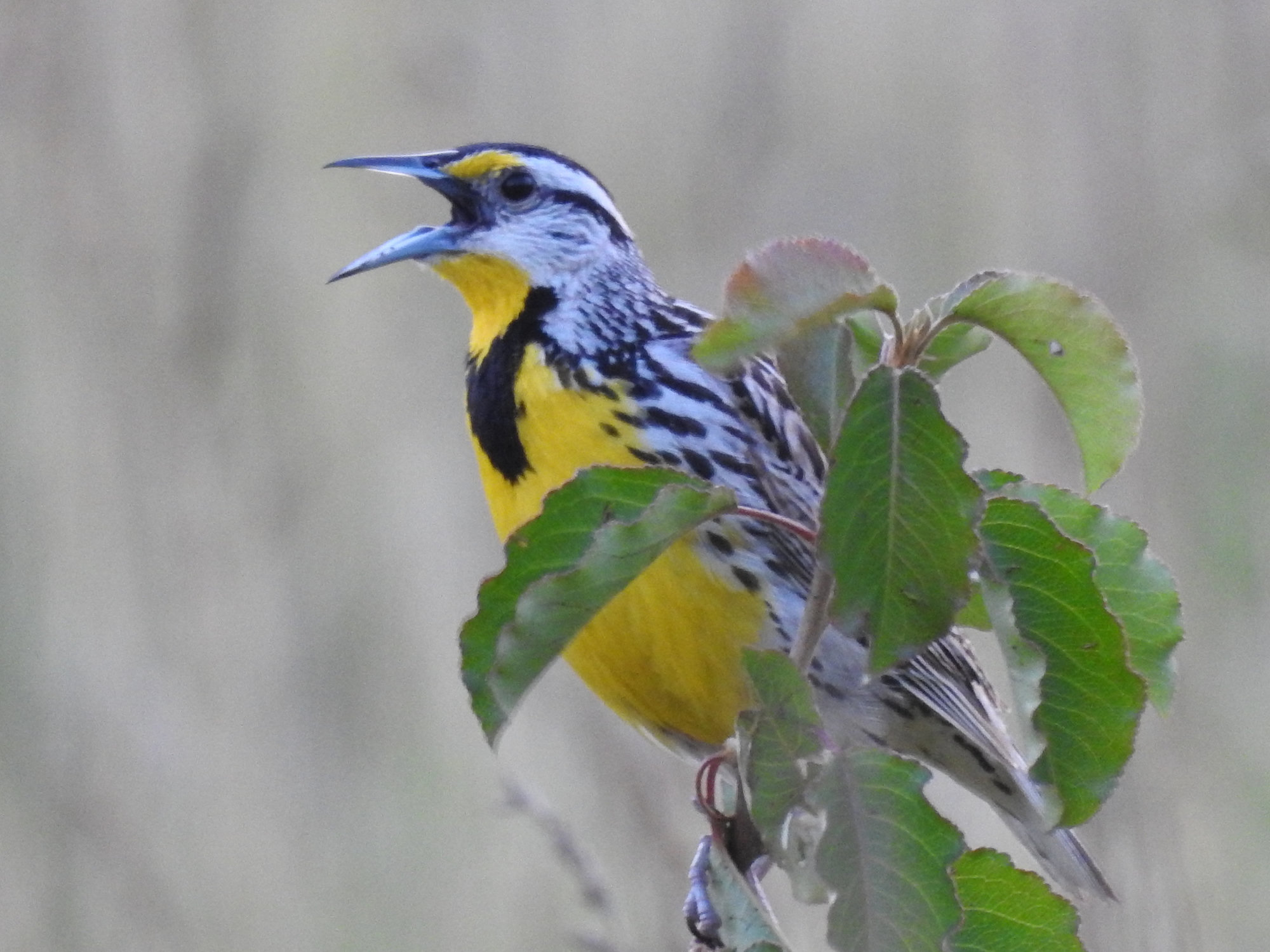
Photo Laura Mae (opens in a new tab) / iNaturalist, CC BY 4.0 (opens in a new tab)
At a glance
- Size
- About 19 to 26 cm long
- Weight
- About 76 to 150 g
- Habitat
- Pastures, hayfields, grasslands and airports
- Diet
- Insects, especially grasshoppers and crickets; seeds
- In Georgia
- A common resident in open country
- Voice
- A clear, whistled "see-you, see-yeeer"
- Rabies vector
- No
Identification
- Key marks
- Bright yellow throat and breast; black V across the chest; streaked brown back; white outer tail feathers
- Told apart from
- Dickcissel, which is smaller with a thick bill
- Where to look
- Fence posts and pastures
Behaviour
Meadowlarks walk through grass looking for insects and probe the ground with their bills. They sing from fence posts and wires.
Why they matter
Eastern meadowlarks have declined by about 70 per cent since the 1960s as grasslands were lost. They eat many grasshoppers and crickets, and they depend on pastures and hayfields managed with birds in mind.
Reproduction and lifecycle
Nest — A domed cup of grass on the ground
Eggs — Usually three to five
Incubation — About 13 to 14 days
Chicks — Fed by both parents
Flight — At about 11 to 12 days
Lifespan — Several years
Living around people
- Mowing pastures after nesting season protects nests.
Misconceptions
- Meadowlarks are larks. They are related to blackbirds and orioles.
Related species
Seasonal activity
When this species is breeding, and when there are nests on the ground. Mowing during the shaded months is how most nests are found.
| Jan | Feb | Mar | Apr | May | Jun | Jul | Aug | Sep | Oct | Nov | Dec | |
|---|---|---|---|---|---|---|---|---|---|---|---|---|
| Breeding | Jan: no | Feb: no | Mar: no | Apr: no | May: no | Jun: no | Jul: no | Aug: no | Sep: no | Oct: no | Nov: no | Dec: no |
| Active nests | Jan: no | Feb: no | Mar: no | Apr: no | May: no | Jun: no | Jul: no | Aug: no | Sep: no | Oct: no | Nov: no | Dec: no |
| Notes | Winter flocks | Singing | Nesting begins | Nesting | Chicks | Second broods | Young fledging | Present | Present | Flocks forming | Flocks | Flocks |
Where it lives
Recorded in 49 states and provinces. Each one links to the other animals there, and to the rehabilitators licensed for them.
United States
- Alabama
- Arkansas
- Connecticut
- Delaware
- District of Columbiabreeding
- Florida
- Georgia
- Illinoisbreeding
- Indiana
- Iowabreeding
- Kansasbreeding
- Kentucky
- Louisiana
- Mainebreeding
- Maryland
- Massachusetts
- Michiganbreeding
- Minnesotabreeding
- Mississippi
- Missouri
- Nebraskabreeding
- New Hampshirebreeding
- New Jersey
- New Yorkbreeding
- North Carolina
- Ohiobreeding
- Oklahoma
- Pennsylvaniabreeding
- Rhode Islandin winter
- South Carolina
- Tennessee
- Texas
- Vermontbreeding
- Virginia
- West Virginiabreeding
- Wisconsinbreeding
If you found one
Answer a few questions and you will get a specific answer for what you are looking at.
I found an animal