
Species
Dickcissel
Spiza americana
A sparrow-like bird with a yellow breast and a black bib, which says its name from grassland fence posts.
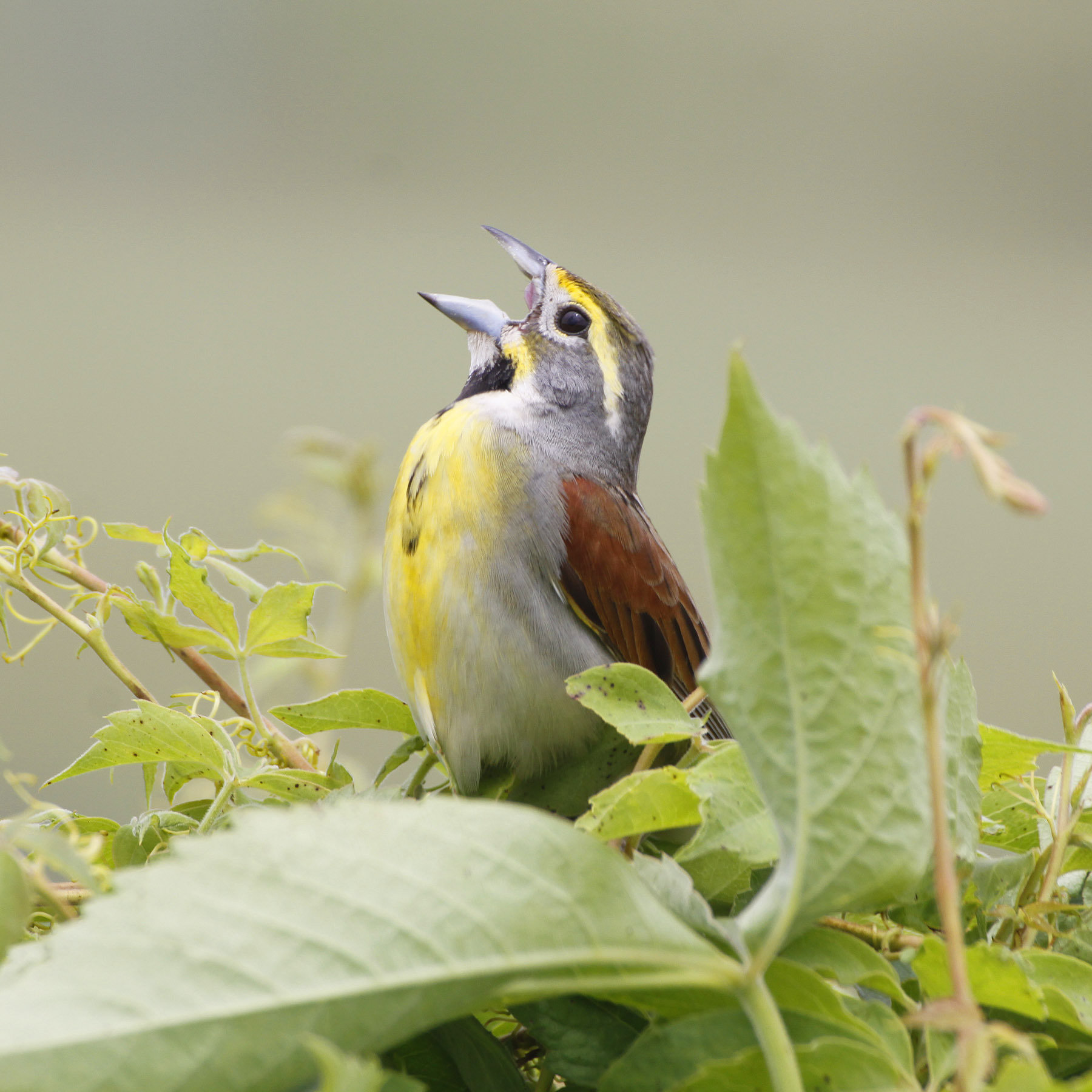
Photo Dan Vickers (opens in a new tab) / iNaturalist, CC BY 4.0 (opens in a new tab)
At a glance
- Size
- About 14 to 16 cm long
- Weight
- About 24 to 30 g
- Habitat
- Grasslands, hayfields and weedy fields
- Diet
- Seeds and insects
- In Georgia
- An uncommon migrant; a few nest in open farmland
- Voice
- A dry "dick-dick-ciss-ciss"
- Rabies vector
- No
Identification
- Male
- Yellow breast; black bib; chestnut shoulder
- Female
- Paler, with less yellow and no bib
- Told apart from
- Eastern meadowlark, which is larger with a black V
- Where to look
- Weedy fields and hayfields
Behaviour
Dickcissels sing from fence posts and tall weeds, and form huge flocks in winter in South America.
Why they matter
Dickcissels nest in unpredictable places from year to year, following good grassland conditions. In winter, millions gather in Venezuela's rice fields.
Reproduction and lifecycle
Nest — A cup in grass or a shrub
Eggs — Usually four
Incubation — About 11 to 13 days
Chicks — Fed by the female
Lifespan — Several years
Living around people
- Grassland birds benefit from delayed mowing.
Misconceptions
- It is a meadowlark. Dickcissels are related to cardinals.
Related species
Seasonal activity
When this species is breeding, and when there are nests on the ground. Mowing during the shaded months is how most nests are found.
| Jan | Feb | Mar | Apr | May | Jun | Jul | Aug | Sep | Oct | Nov | Dec | |
|---|---|---|---|---|---|---|---|---|---|---|---|---|
| Breeding | Jan: no | Feb: no | Mar: no | Apr: no | May: no | Jun: no | Jul: no | Aug: no | Sep: no | Oct: no | Nov: no | Dec: no |
| Active nests | Jan: no | Feb: no | Mar: no | Apr: no | May: no | Jun: no | Jul: no | Aug: no | Sep: no | Oct: no | Nov: no | Dec: no |
| Notes | In South America | In South America | In South America | Migrating north | Nesting | Nesting | Young fledging | Migrating | Migrants | Last migrants | In South America | In South America |
Where it lives
Recorded in 65 states and provinces. Each one links to the other animals there, and to the rehabilitators licensed for them.
United States
- Alabamabreeding
- Arkansasbreeding
- Coloradobreeding
- Connecticutin winter
- Delawarebreeding
- Florida
- Georgiabreeding
- Illinoisbreeding
- Indianabreeding
- Iowabreeding
- Kansasbreeding
- Kentuckybreeding
- Louisianabreeding
- Mainein winter
- Marylandbreeding
- Massachusetts
- Michiganbreeding
- Minnesotabreeding
- Mississippibreeding
- Missouribreeding
- Montanabreeding
- Nebraskabreeding
- New Hampshirein winter
- New Jerseybreeding
- New Mexicobreeding
- New Yorkbreeding
- North Carolinabreeding
- North Dakotabreeding
- Ohiobreeding
- Oklahomabreeding
- Pennsylvaniabreeding
- Rhode Islandin winter
- South Carolinabreeding
- South Dakotabreeding
- Tennesseebreeding
- Texasbreeding
- Vermontbreeding
- Virginiabreeding
- West Virginiabreeding
- Wisconsinbreeding
- Wyomingbreeding
Canada
Mexico
- Campechein winter
- Chiapasin winter
- Coahuilapassing through
- Colimain winter
- Durangopassing through
- Guerreroin winter
- Jaliscoin winter
- Mexico Citypassing through
- Nayaritin winter
- Nuevo Leonpassing through
- Oaxacain winter
- Queretaropassing through
- Sinaloain winter
- State of Mexicopassing through
- Tabascopassing through
- Tamaulipaspassing through
- Veracruzpassing through
- Yucatanpassing through
If you found one
Answer a few questions and you will get a specific answer for what you are looking at.
I found an animal