
Species
Diamondback terrapin
Malaclemys terrapin
The turtle of the salt marsh, living where fresh water meets the sea along Georgia's coast.
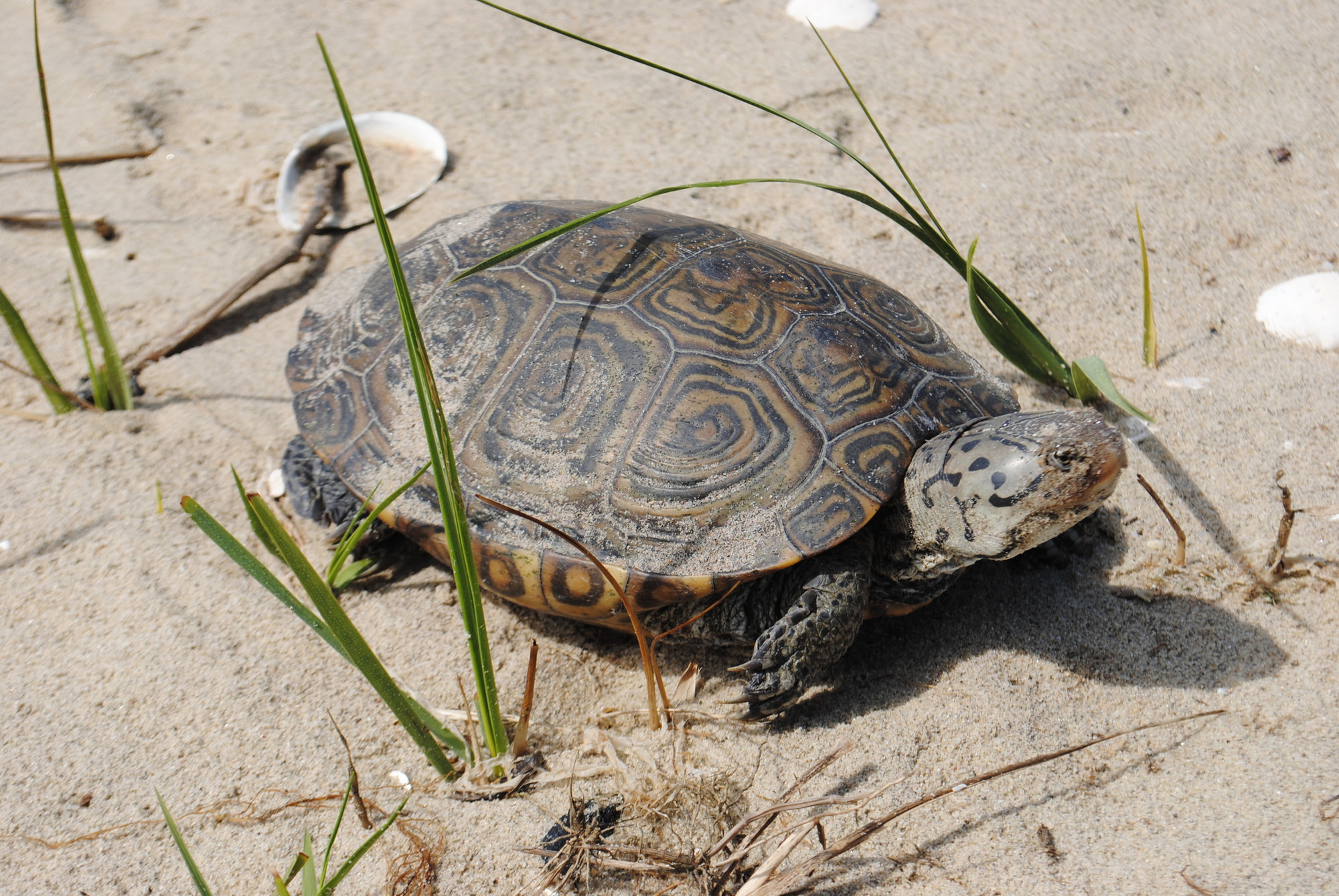
Photo Zihao Wang (opens in a new tab) / iNaturalist, CC BY 4.0 (opens in a new tab)
At a glance
- Size
- Females usually 15 to 23 cm shell length; males 10 to 14 cm
- Habitat
- Tidal salt marsh, creeks and estuaries
- Diet
- Marsh periwinkles and other snails, crabs and clams
- In Georgia
- Salt marshes along the whole coast
- Rabies vector
- No
Identification
- Key marks
- Grey shell with concentric rings on each plate; pale grey skin with black spots; light upper lip
- Told apart from
- Sea turtles, which have flippers; terrapins have clawed, webbed feet
- Where to look
- Heads at the surface of tidal creeks; crossing marsh causeways in May to July
Behaviour
The diamondback terrapin is the only turtle in North America that lives entirely in brackish water. It drinks fresh rainwater from the surface and gets rid of excess salt through glands near its eyes. Females leave the marsh in early summer to nest in high ground, often on causeways and roadsides.
Why they matter
Terrapins eat marsh periwinkles, snails that can strip marsh grass when their numbers grow unchecked, so terrapins help protect the marsh itself. Salt marshes shelter young fish and shrimp and buffer the coast from storms.
Reproduction and lifecycle
Nest — Dug in sandy high ground near the marsh
Eggs — Usually 4 to 22
Incubation — About 60 to 100 days
Hatchlings — Small; many stay in the nest over winter
Maturity — Males at 2 to 3 years, females later
Lifespan — Over 40 years
Living around people
- Drive slowly on marsh causeways from May to July, when females cross to nest.
- Crab pots drown terrapins that swim in; bycatch reduction devices on the funnels keep them out.
- A terrapin crossing a road can be helped across in the direction it was heading.
Misconceptions
- Terrapins are small sea turtles. They are marsh turtles related to map turtles and sliders.
Related species
Seasonal activity
When this species is breeding, and when there are nests on the ground. Mowing during the shaded months is how most nests are found.
| Jan | Feb | Mar | Apr | May | Jun | Jul | Aug | Sep | Oct | Nov | Dec | |
|---|---|---|---|---|---|---|---|---|---|---|---|---|
| Breeding | Jan: no | Feb: no | Mar: no | Apr: no | May: no | Jun: no | Jul: no | Aug: no | Sep: no | Oct: no | Nov: no | Dec: no |
| Active nests | Jan: no | Feb: no | Mar: no | Apr: no | May: no | Jun: no | Jul: no | Aug: no | Sep: no | Oct: no | Nov: no | Dec: no |
| Notes | Buried in creek mud | Buried | Emerging | Courtship in creeks | Nesting; road crossings on causeways | Nesting | Nesting ends | Hatching | Hatchlings emerge or overwinter | Feeding | Burying in for winter | Buried |
Where it lives
Recorded in 16 states and provinces. Each one links to the other animals there, and to the rehabilitators licensed for them.
If you found one
Answer a few questions and you will get a specific answer for what you are looking at.
I found an animal