
Species
Cuban treefrog
Osteopilus septentrionalis
A large Caribbean treefrog that has spread to coastal Georgia, where it eats native frogs.
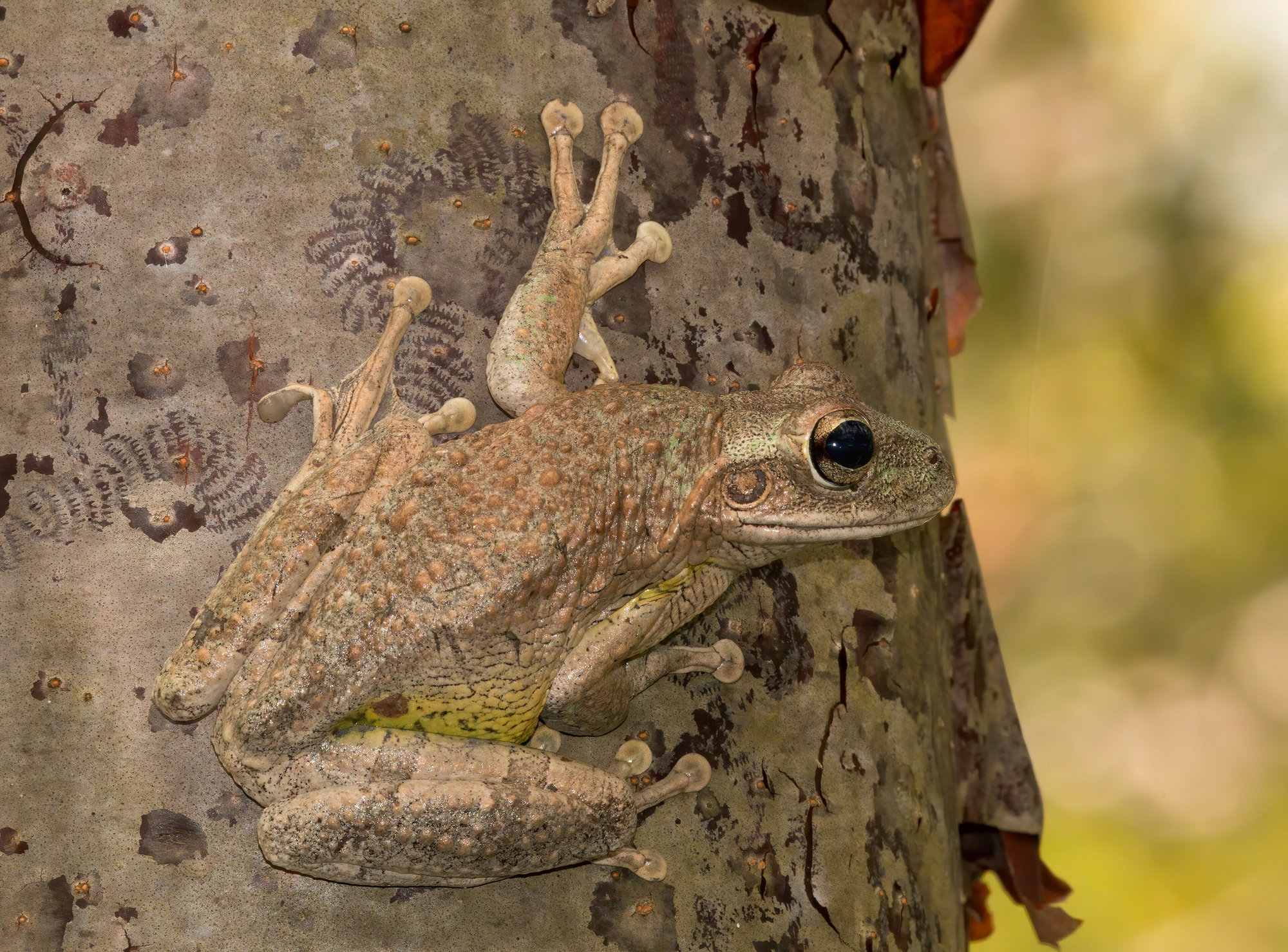
Photo Charles J. Sharp (opens in a new tab) / Wikimedia Commons, CC BY-SA 4.0 (opens in a new tab)
At a glance
- Size
- About 5 to 14 cm long; females much larger
- Habitat
- Towns, gardens and wetlands; often on buildings
- Diet
- Insects, spiders and other frogs, including native treefrogs
- In Georgia
- Coastal Georgia; introduced
- Voice
- A rasping snore
- Rabies vector
- No
Identification
- Key marks
- Large; warty skin; very large toe pads; colour from white to green or brown
- Told apart from
- Native treefrogs, which are smaller with smoother skin
- Where to look
- On walls, in drains and in potted plants near the coast
Behaviour
Cuban treefrogs arrived in Florida from the Caribbean and have spread north, often in plant shipments and vehicles. They eat native treefrogs and shelter in pipes and electrical boxes.
Why they matter
Where they arrive, native treefrogs decline. None of that is the frog's fault; recording sightings helps track where they are.
Reproduction and lifecycle
Eggs — Thousands, in a film on the water
Hatching — In a day or two
Tadpoles — Change into frogs in about 4 to 8 weeks
Maturity — Within a year
Lifespan — Several years
Calling — On warm, wet nights
Living around people
- Their skin secretions irritate eyes; wash hands after touching one.
- A sighting on the Georgia coast is worth recording on iNaturalist.
Misconceptions
- All big treefrogs are native. The Cuban treefrog is from the Caribbean.
Related species
Seasonal activity
When this species is breeding, and when there are nests on the ground. Mowing during the shaded months is how most nests are found.
| Jan | Feb | Mar | Apr | May | Jun | Jul | Aug | Sep | Oct | Nov | Dec | |
|---|---|---|---|---|---|---|---|---|---|---|---|---|
| Breeding | Jan: no | Feb: no | Mar: no | Apr: no | May: no | Jun: no | Jul: no | Aug: no | Sep: no | Oct: no | Nov: no | Dec: no |
| Active nests | Jan: no | Feb: no | Mar: no | Apr: no | May: no | Jun: no | Jul: no | Aug: no | Sep: no | Oct: no | Nov: no | Dec: no |
| Notes | Sheltering | Sheltering | Active on warm nights | Active | Breeding | Breeding | Breeding | Breeding | Active | Active on warm nights | Sheltering | Sheltering |
Where it lives
Recorded in 5 states and provinces. Each one links to the other animals there, and to the rehabilitators licensed for them.
If you found one
Answer a few questions and you will get a specific answer for what you are looking at.
I found an animal