
Species
Common ribbon snake
Thamnophis saurita
A slender, striped snake of wetland edges that looks like a garter snake stretched thin.
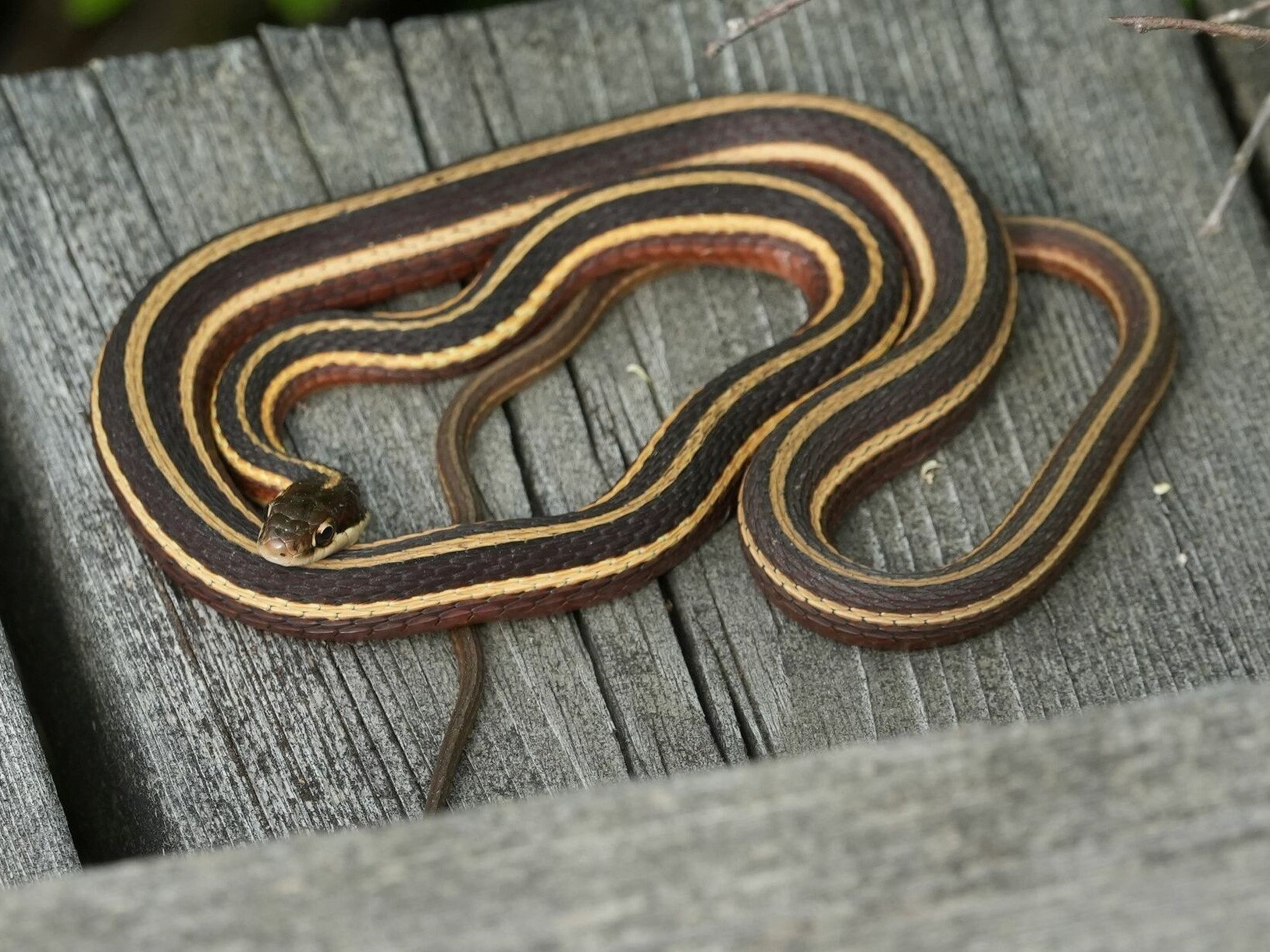
Photo Peter Waycik (opens in a new tab) / Wikimedia Commons, CC BY 4.0 (opens in a new tab)
At a glance
- Size
- Usually 45 to 85 cm long; very slender with a long tail
- Habitat
- Edges of ponds, marshes, streams and wet meadows
- Diet
- Frogs, tadpoles, salamanders and small fish
- In Georgia
- Statewide
- Venomous
- No
- Rabies vector
- No
Identification
- Key marks
- Three bright stripes on a dark body; white mark in front of the eye; tail about a third of its length
- Told apart from
- Common garter snake, which is stouter with a shorter tail and often a chequered pattern
- Where to look
- Among vegetation at the edge of water
Behaviour
Ribbon snakes hunt frogs and small fish along water edges and are good swimmers. They are fast and dash into vegetation when approached.
Why they matter
They are predators of frogs and tadpoles and prey for herons, hawks and larger snakes.
Reproduction and lifecycle
Young — Born live, usually 4 to 20
Size at birth — About 16 to 23 cm
Maturity — In two to three years
Breeding — Every year
Lifespan — Several years
Diet shift — Young eat tadpoles
Living around people
- It is harmless.
Misconceptions
- Striped snakes near water are dangerous. Ribbon snakes are harmless.
Related species
Seasonal activity
When this species is breeding, and when there are nests on the ground. Mowing during the shaded months is how most nests are found.
| Jan | Feb | Mar | Apr | May | Jun | Jul | Aug | Sep | Oct | Nov | Dec | |
|---|---|---|---|---|---|---|---|---|---|---|---|---|
| Breeding | Jan: no | Feb: no | Mar: no | Apr: no | May: no | Jun: no | Jul: no | Aug: no | Sep: no | Oct: no | Nov: no | Dec: no |
| Active nests | Jan: no | Feb: no | Mar: no | Apr: no | May: no | Jun: no | Jul: no | Aug: no | Sep: no | Oct: no | Nov: no | Dec: no |
| Notes | Sheltering | Out on warm days | Active | Mating | Active | Active | Young born | Young born | Active | Active | Sheltering | Sheltering |
Where it lives
Recorded in 28 states and provinces. Each one links to the other animals there, and to the rehabilitators licensed for them.
United States
Canada
If you found one
Answer a few questions and you will get a specific answer for what you are looking at.
I found an animal