
Species
Common garter snake
Thamnophis sirtalis
A striped, adaptable snake of gardens, meadows and stream edges across nearly all of North America.
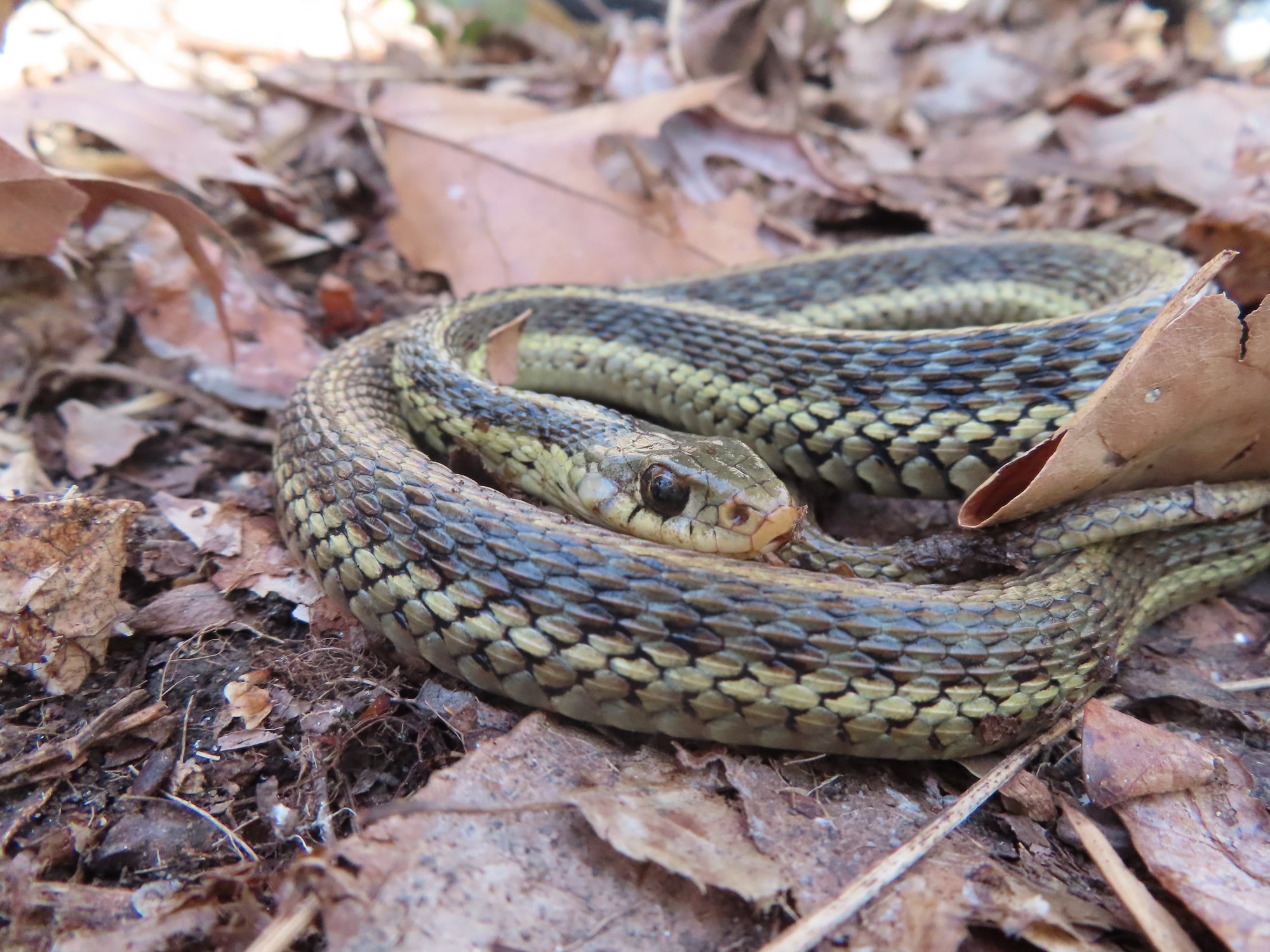
Photo Mila C. (opens in a new tab) / iNaturalist, CC BY 4.0 (opens in a new tab)
At a glance
- Size
- Usually 45 to 70 cm long
- Habitat
- Meadows, woodland edges, marshes, gardens and parks
- Diet
- Earthworms, frogs, toads, salamanders, fish and slugs
- In Georgia
- Common statewide
- Venomous
- No
- Rabies vector
- No
Identification
- Key marks
- Three light stripes (one down the back, one on each side) on a dark body, often with a chequered pattern between
- Told apart from
- Common ribbon snake, which is slimmer with a longer tail and a white mark in front of the eye
- Where to look
- In gardens, meadows and along streams
Behaviour
Garter snakes are active by day and hunt frogs and worms by smell and sight. When handled they release musk. They are one of the snakes that can tolerate the toxins in toads.
Why they matter
Garter snakes eat slugs and worms in gardens and are food for hawks, herons and larger snakes. Their range covers more of North America than any other reptile's.
Reproduction and lifecycle
Young — Born live, often 10 to 40
Size at birth — About 13 to 23 cm
Maturity — In two years
Breeding — Every year
Lifespan — A few years
Diet shift — Young eat worms and small frogs
Living around people
- A garter snake is harmless and eats garden slugs.
Misconceptions
- Garden snakes are baby snakes of something dangerous. Garter snakes are harmless adults.
Related species
Seasonal activity
When this species is breeding, and when there are nests on the ground. Mowing during the shaded months is how most nests are found.
| Jan | Feb | Mar | Apr | May | Jun | Jul | Aug | Sep | Oct | Nov | Dec | |
|---|---|---|---|---|---|---|---|---|---|---|---|---|
| Breeding | Jan: no | Feb: no | Mar: no | Apr: no | May: no | Jun: no | Jul: no | Aug: no | Sep: no | Oct: no | Nov: no | Dec: no |
| Active nests | Jan: no | Feb: no | Mar: no | Apr: no | May: no | Jun: no | Jul: no | Aug: no | Sep: no | Oct: no | Nov: no | Dec: no |
| Notes | Sheltering | Out on warm days | Active; mating | Mating | Active | Active | Young born | Young born | Active | Active | Sheltering | Sheltering |
Where it lives
Recorded in 58 states and provinces. Each one links to the other animals there, and to the rehabilitators licensed for them.
United States
- Alabama
- Arkansas
- California
- Colorado
- Connecticut
- Delaware
- District of Columbia
- Florida
- Georgia
- Idaho
- Illinois
- Indiana
- Iowa
- Kansas
- Kentucky
- Louisiana
- Maine
- Maryland
- Massachusetts
- Michigan
- Minnesota
- Mississippi
- Missouri
- Montana
- Nebraska
- New Hampshire
- New Jersey
- New Mexico
- New York
- North Carolina
- North Dakota
- Ohio
- Oklahoma
- Oregon
- Pennsylvania
- Rhode Island
- South Carolina
- South Dakota
- Tennessee
- Texas
- Utah
- Vermont
- Virginia
- Washington
- West Virginia
- Wisconsin
- Wyoming
If you found one
Answer a few questions and you will get a specific answer for what you are looking at.
I found an animal