
Species
Common coachwhip
Masticophis flagellum
A very long, very fast snake of dry, sandy country, with a tail patterned like a braided whip.
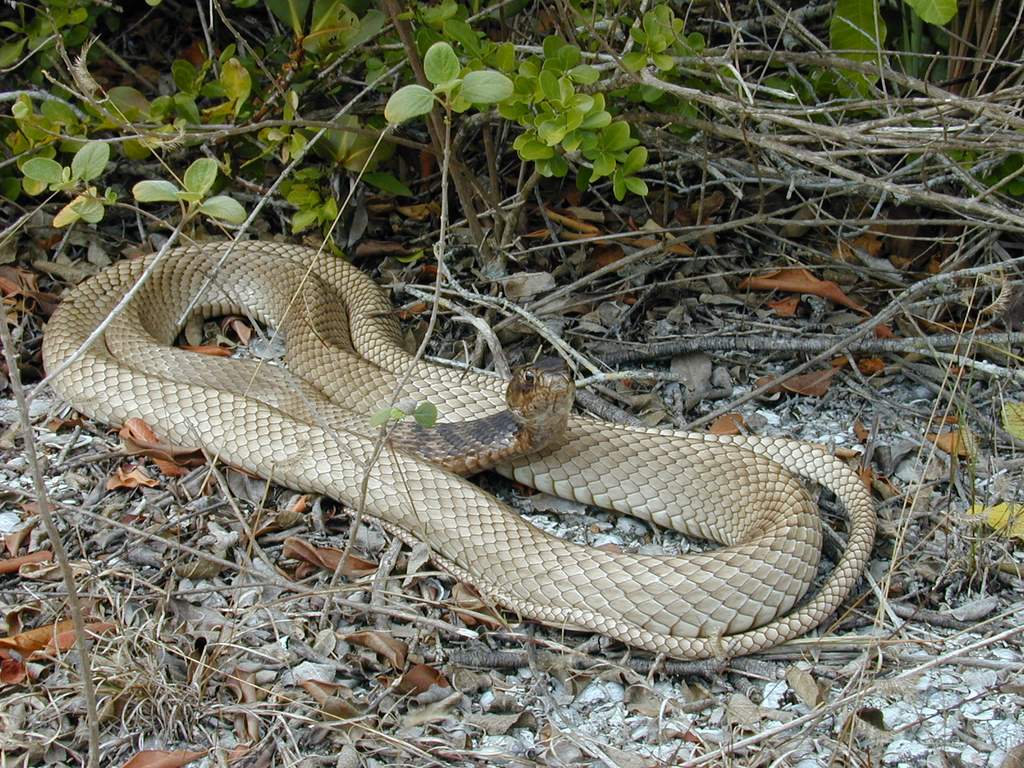
Photo Hunter Desportes (opens in a new tab) / Wikimedia Commons, CC BY 2.0 (opens in a new tab)
At a glance
- Size
- Usually 1.2 to 1.8 m long; very slender
- Habitat
- Sandhills, open pine woods, old fields and coastal dunes
- Diet
- Lizards, snakes, rodents, birds and insects
- In Georgia
- The Coastal Plain and lower Piedmont
- Venomous
- No
- Rabies vector
- No
Identification
- Key marks
- Very long and slim; head and front of the body dark brown to black, fading to tan toward the tail
- Told apart from
- North American racer, which is black all over
- Where to look
- Crossing sandy roads by day in the heat
Behaviour
Coachwhips hunt by sight in the heat of the day, often with their heads raised above the grass. They are among the fastest snakes in North America and escape quickly.
Why they matter
They are important predators of lizards and rodents in sandy habitats.
Reproduction and lifecycle
Eggs — Usually 4 to 16
Nest — In sand or rotting logs
Incubation — About 6 to 11 weeks
Hatchlings — Blotched
Maturity — In two to three years
Lifespan — Over 10 years
Living around people
- It is harmless; it may bite if cornered.
Misconceptions
- Coachwhips chase people and whip them. They flee; any movement toward you is toward cover.
Related species
Seasonal activity
When this species is breeding, and when there are nests on the ground. Mowing during the shaded months is how most nests are found.
| Jan | Feb | Mar | Apr | May | Jun | Jul | Aug | Sep | Oct | Nov | Dec | |
|---|---|---|---|---|---|---|---|---|---|---|---|---|
| Breeding | Jan: no | Feb: no | Mar: no | Apr: no | May: no | Jun: no | Jul: no | Aug: no | Sep: no | Oct: no | Nov: no | Dec: no |
| Active nests | Jan: no | Feb: no | Mar: no | Apr: no | May: no | Jun: no | Jul: no | Aug: no | Sep: no | Oct: no | Nov: no | Dec: no |
| Notes | Underground | Underground | Emerging | Active | Mating | Laying | Active | Hatching | Young active | Active | Underground | Underground |
Where it lives
Recorded in 30 states and provinces. Each one links to the other animals there, and to the rehabilitators licensed for them.
United States
If you found one
Answer a few questions and you will get a specific answer for what you are looking at.
I found an animal