
Species
Chimney swift
Chaetura pelagica
A cigar-shaped bird that lives almost entirely on the wing and nests inside chimneys.
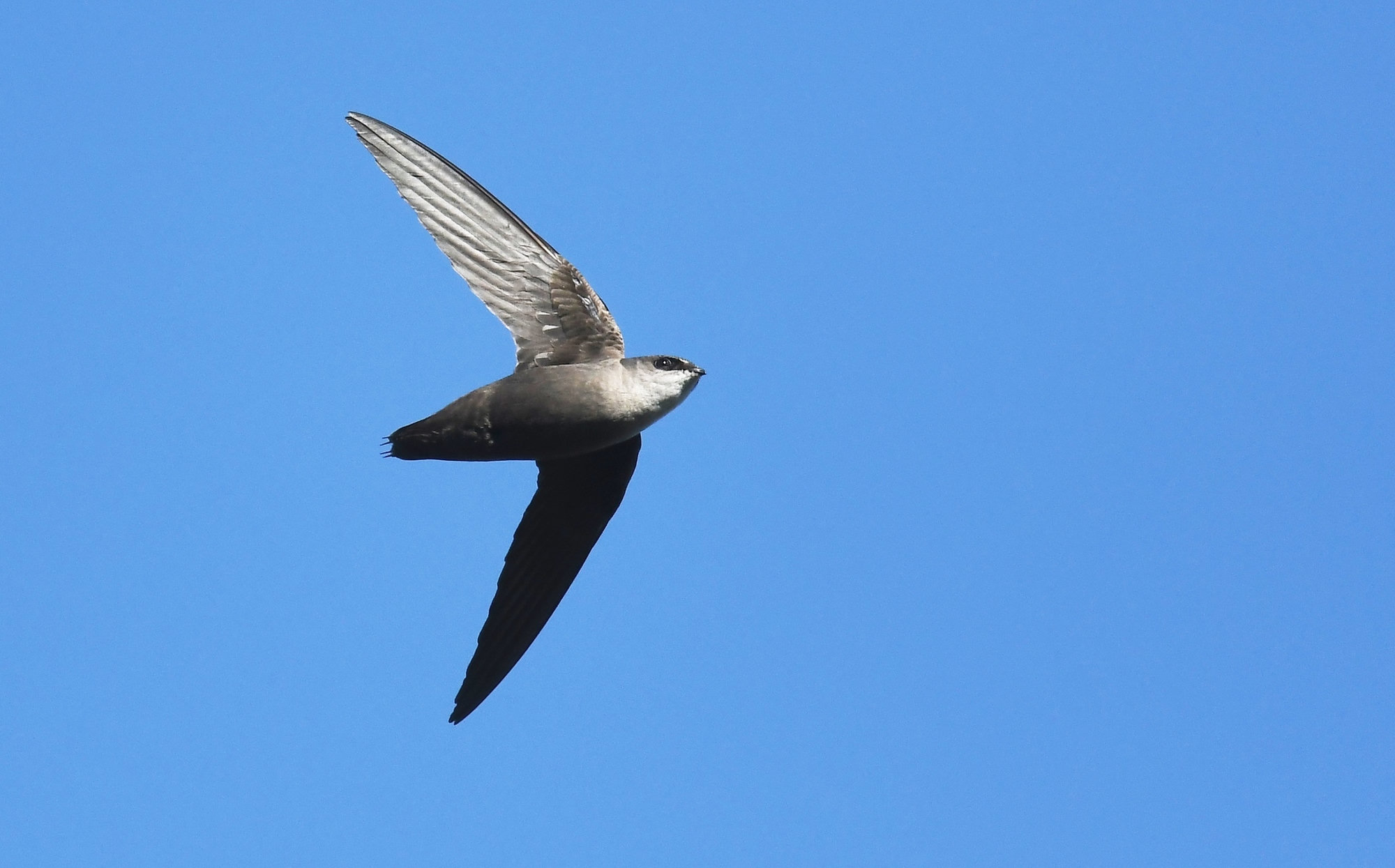
Photo Unknown photographer (opens in a new tab) / iNaturalist, CC0 1.0 (opens in a new tab)
At a glance
- Size
- About 12 to 15 cm long
- Weight
- About 17 to 30 g
- Habitat
- The air over towns, fields and water
- Diet
- Flying insects
- In Georgia
- A common summer resident, late March to October
- Voice
- A high, rapid twittering in flight
- Rabies vector
- No
Identification
- Key marks
- Dark grey-brown; long, curved, stiff wings; short, stubby tail; flickering wingbeats and fast glides
- Told apart from
- Swallows, which have broader wings, forked or square tails and often perch on wires
- Told apart from
- Bats, which fly mostly at night with erratic flight
- Where to look
- Overhead in towns in summer; pouring into chimneys at dusk in autumn
Behaviour
Chimney swifts cannot perch like other birds. Their feet are made for clinging to vertical surfaces, and they roost and nest inside chimneys, hollow trees and air shafts. They eat, drink and bathe in flight.
In autumn, hundreds or thousands gather at dusk and swirl down into a single large chimney to roost.
Why they matter
A single chimney swift eats thousands of flying insects a day. Swifts moved from hollow trees into chimneys as forests were cleared, and now their numbers are falling as old chimneys are capped or torn down. An open chimney can house a nesting pair all summer.
Reproduction and lifecycle
Nest — A small bracket of twigs glued with saliva to the inside of a chimney
Eggs — Usually four or five
Incubation — About 19 to 21 days
Nestlings — Climb out of the nest to cling to the chimney wall at about two weeks
Flight — At about four weeks
Lifespan — Several years; wild birds over fourteen are recorded
Living around people
- A chimney left uncapped from spring to autumn can house a nesting pair; the chimney can be cleaned in late autumn after they leave.
- Chattering in the chimney in summer is nestlings being fed; it stops in a few weeks.
- A swift on the ground cannot take off from flat ground; it needs help from a rehabilitator.
Misconceptions
- Swifts are swallows. They are not closely related; swifts are closer to hummingbirds.
- A swift on the ground can be thrown into the air. Throwing a grounded swift is dangerous; it usually needs a rehabilitator's care.
Related species
Seasonal activity
When this species is breeding, and when there are nests on the ground. Mowing during the shaded months is how most nests are found.
| Jan | Feb | Mar | Apr | May | Jun | Jul | Aug | Sep | Oct | Nov | Dec | |
|---|---|---|---|---|---|---|---|---|---|---|---|---|
| Breeding | Jan: no | Feb: no | Mar: no | Apr: no | May: no | Jun: no | Jul: no | Aug: no | Sep: no | Oct: no | Nov: no | Dec: no |
| Active nests | Jan: no | Feb: no | Mar: no | Apr: no | May: no | Jun: no | Jul: no | Aug: no | Sep: no | Oct: no | Nov: no | Dec: no |
| Notes | In South America | In South America | First arrivals late in the month | Arriving | Nesting in chimneys | Nesting | Young fledging | Roosts growing | Large roosts in chimneys; migration | Last birds leaving | In the Amazon basin | In South America |
Where it lives
Recorded in 50 states and provinces. Each one links to the other animals there, and to the rehabilitators licensed for them.
United States
- Alabamabreeding
- Arkansasbreeding
- Coloradobreeding
- Connecticutbreeding
- Delawarebreeding
- District of Columbiabreeding
- Floridabreeding
- Georgiabreeding
- Illinoisbreeding
- Indianabreeding
- Iowabreeding
- Kansasbreeding
- Kentuckybreeding
- Louisianabreeding
- Mainebreeding
- Marylandbreeding
- Massachusettsbreeding
- Michiganbreeding
- Minnesotabreeding
- Mississippibreeding
- Missouribreeding
- Montanabreeding
- Nebraskabreeding
- New Hampshirebreeding
- New Jerseybreeding
- New Mexicobreeding
- New Yorkbreeding
- North Carolinabreeding
- North Dakotabreeding
- Ohiobreeding
- Oklahomabreeding
- Pennsylvaniabreeding
- Rhode Islandbreeding
- South Carolinabreeding
- South Dakotabreeding
- Tennesseebreeding
- Texasbreeding
- Vermontbreeding
- Virginiabreeding
- West Virginiabreeding
- Wisconsinbreeding
- Wyomingbreeding
If you found one
Answer a few questions and you will get a specific answer for what you are looking at.
I found an animal