
Species
Cedar waxwing
Bombycilla cedrorum
A sleek, crested fruit-eater with red waxy wingtips, travelling in flocks that strip berry bushes.
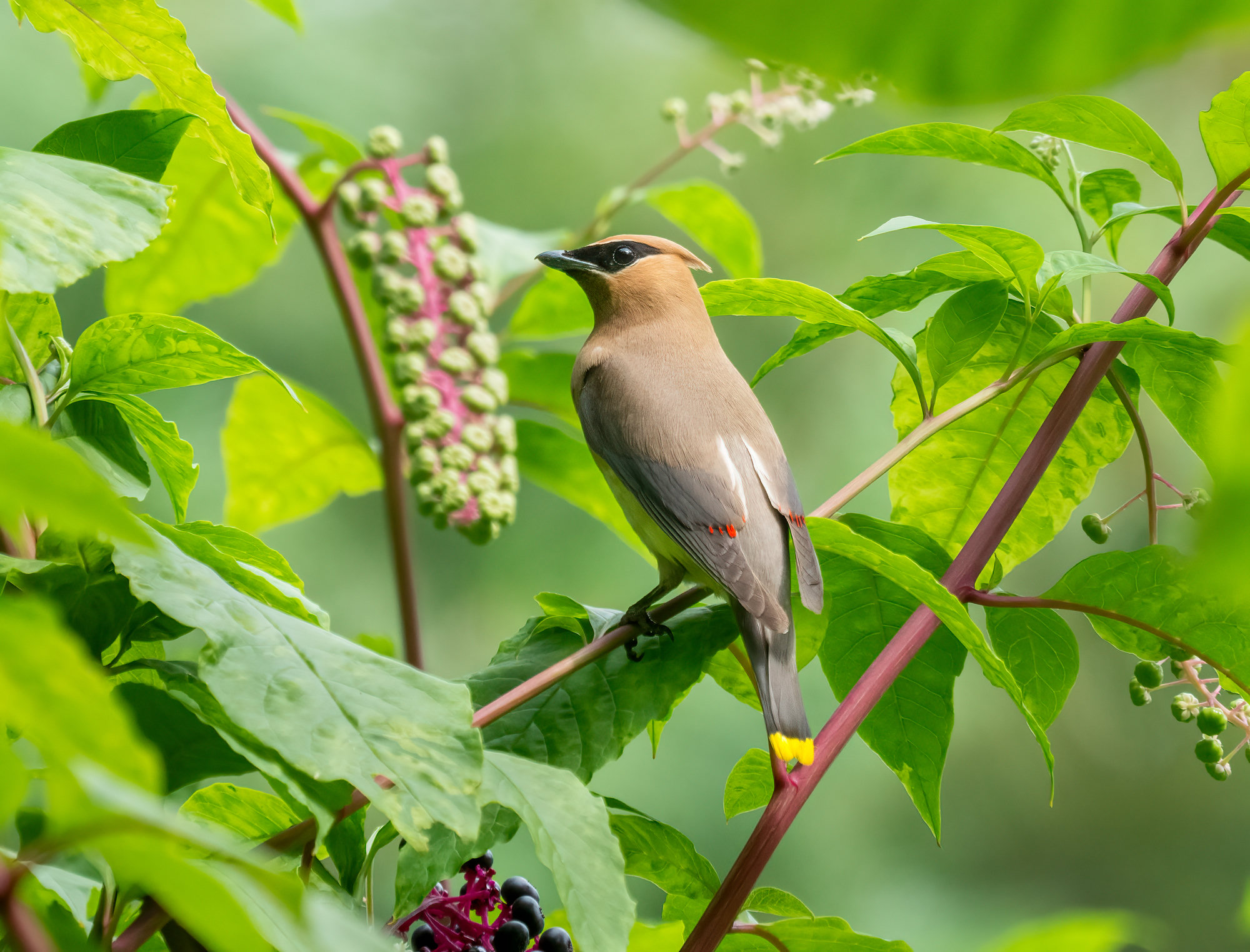
Photo Rhododendrites (opens in a new tab) / Wikimedia Commons, CC BY-SA 4.0 (opens in a new tab)
At a glance
- Size
- About 14 to 17 cm long
- Weight
- About 30 to 35 g
- Habitat
- Woods, parks, suburbs and orchards with fruiting trees
- Diet
- Berries and fruit; insects in summer
- In Georgia
- A common winter visitor and migrant, November to May
- Voice
- A thin, high "sree"
- Rabies vector
- No
Identification
- Key marks
- Soft brown crest; black mask; yellow-tipped tail; red waxy tips on the wing feathers
- Told apart from
- Northern cardinal females, which have a red bill and no mask
- Where to look
- Flocks in fruiting trees such as holly, cedar and hackberry
Behaviour
Cedar waxwings travel in flocks, eating berries whole. They sometimes pass a berry from bird to bird along a branch. Birds that eat fermented fruit can become intoxicated.
Why they matter
Waxwings spread the seeds of many native trees and shrubs. Their diet is so rich in fruit that they can survive on berries alone for months.
Reproduction and lifecycle
Nest — A bulky cup of grass and twigs in a tree
Eggs — Usually four or five
Incubation — About 11 to 13 days
Chicks — Fed by both parents
Flight — At about 14 to 18 days
Lifespan — Several years
Living around people
- Waxwings flying into windows near fruiting trees are common; decals help.
- Planting native fruiting trees feeds them.
Misconceptions
- Waxwings get drunk on purpose. They eat fermented fruit by accident.
Related species
Seasonal activity
When this species is breeding, and when there are nests on the ground. Mowing during the shaded months is how most nests are found.
| Jan | Feb | Mar | Apr | May | Jun | Jul | Aug | Sep | Oct | Nov | Dec | |
|---|---|---|---|---|---|---|---|---|---|---|---|---|
| Breeding | Jan: no | Feb: no | Mar: no | Apr: no | May: no | Jun: no | Jul: no | Aug: no | Sep: no | Oct: no | Nov: no | Dec: no |
| Active nests | Jan: no | Feb: no | Mar: no | Apr: no | May: no | Jun: no | Jul: no | Aug: no | Sep: no | Oct: no | Nov: no | Dec: no |
| Notes | Wintering flocks | Flocks | Flocks | Flocks | Last flocks leave | Nesting farther north | Nesting | Nesting | Moving south | Moving south | Arriving | Flocks |
Where it lives
Recorded in 89 states and provinces. Each one links to the other animals there, and to the rehabilitators licensed for them.
United States
- Alabamain winter
- Alaskabreeding
- Arizonain winter
- Arkansasin winter
- Californiain winter
- Colorado
- Connecticutbreeding
- Delaware
- District of Columbia
- Floridain winter
- Georgia
- Idaho
- Illinoisbreeding
- Indianabreeding
- Iowa
- Kansas
- Kentuckybreeding
- Louisianain winter
- Mainebreeding
- Maryland
- Massachusettsbreeding
- Michiganbreeding
- Minnesotabreeding
- Mississippiin winter
- Missouri
- Montanabreeding
- Nebraska
- Nevadain winter
- New Hampshirebreeding
- New Jerseybreeding
- New Mexicoin winter
- New Yorkbreeding
- North Carolina
- North Dakota
- Ohiobreeding
- Oklahomain winter
- Oregonbreeding
- Pennsylvaniabreeding
- Rhode Islandbreeding
- South Carolinain winter
- South Dakota
- Tennessee
- Texasin winter
- Utah
- Vermontbreeding
- Virginia
- Washingtonbreeding
- West Virginiabreeding
- Wisconsinbreeding
- Wyoming
Canada
Mexico
- Aguascalientesin winter
- Baja Californiain winter
- Baja California Surin winter
- Chiapasin winter
- Chihuahuain winter
- Coahuilain winter
- Colimain winter
- Durangoin winter
- Guanajuatoin winter
- Guerreroin winter
- Hidalgoin winter
- Jaliscoin winter
- Mexico Cityin winter
- Michoacanin winter
- Morelosin winter
- Nuevo Leonin winter
- Oaxacain winter
- Pueblain winter
- Queretaroin winter
- San Luis Potosiin winter
- Sonorain winter
- State of Mexicoin winter
- Tamaulipasin winter
- Tlaxcalain winter
- Veracruzin winter
- Zacatecasin winter
If you found one
Answer a few questions and you will get a specific answer for what you are looking at.
I found an animal