
Species
Caspian tern
Hydroprogne caspia
The world's largest tern, with a thick, blood-red bill and a harsh, heron-like call.
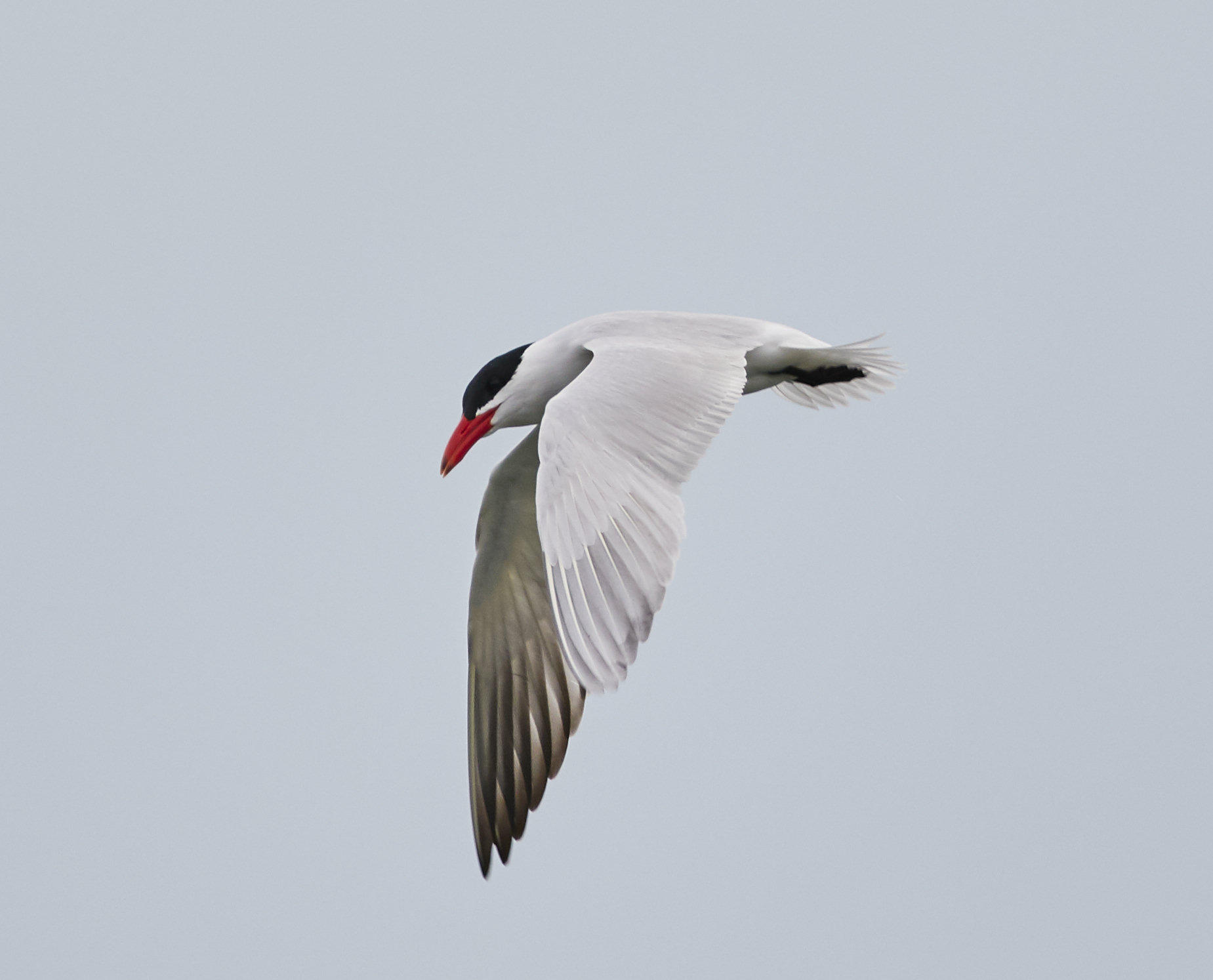
Photo Unknown photographer (opens in a new tab) / iNaturalist, CC0 1.0 (opens in a new tab)
At a glance
- Size
- About 47 to 54 cm long; wingspan about 1.3 to 1.4 m
- Weight
- About 530 to 780 g
- Habitat
- Coasts, large lakes and reservoirs
- Diet
- Fish
- In Georgia
- A fairly common migrant and winter visitor on the coast; also on large reservoirs
- Voice
- A loud, harsh "kraa-ak"
- Rabies vector
- No
Identification
- Key marks
- Large; thick, deep red bill with a dark tip; black cap; dark undersides to the wingtips
- Told apart from
- Royal tern, which has a slimmer orange bill and a shaggy crest
- Where to look
- Sandbars and large reservoirs
Behaviour
Caspian terns fly over water with bill pointed down, then plunge-dive for fish. Young birds stay with their parents for many months, following them and begging for food.
Why they matter
The Caspian tern is the largest tern in the world and is found on every continent except Antarctica. Its long period of parental care, sometimes lasting into the next breeding season, is unusual among seabirds.
Reproduction and lifecycle
Nest — A scrape on sand or gravel in colonies
Eggs — Usually two or three
Incubation — About 25 to 28 days
Chicks — Fed by both parents
Flight — At about five to six weeks
Family — Young fed by parents for months after flying
Lifespan — Wild birds over twenty-five years are recorded
Living around people
- Terns caught on fishing lures need a rehabilitator.
Misconceptions
- A young tern begging from an adult is a chick that cannot feed itself. Caspian tern young are fed by their parents for months as they learn to fish.
Related species
Seasonal activity
When this species is breeding, and when there are nests on the ground. Mowing during the shaded months is how most nests are found.
| Jan | Feb | Mar | Apr | May | Jun | Jul | Aug | Sep | Oct | Nov | Dec | |
|---|---|---|---|---|---|---|---|---|---|---|---|---|
| Breeding | Jan: no | Feb: no | Mar: no | Apr: no | May: no | Jun: no | Jul: no | Aug: no | Sep: no | Oct: no | Nov: no | Dec: no |
| Active nests | Jan: no | Feb: no | Mar: no | Apr: no | May: no | Jun: no | Jul: no | Aug: no | Sep: no | Oct: no | Nov: no | Dec: no |
| Notes | Wintering | Wintering | Migrants passing | Migrants passing | Nesting farther north | Nesting | Chicks | Migrants arriving | Migrants | Wintering birds settle | Wintering | Wintering |
Where it lives
Recorded in 81 states and provinces. Each one links to the other animals there, and to the rehabilitators licensed for them.
United States
- Alabama
- Alaskabreeding
- Arizona
- Arkansasbreeding
- Californiabreeding
- Coloradobreeding
- Delawarebreeding
- District of Columbiapassing through
- Florida
- Georgia
- Idahobreeding
- Illinoisbreeding
- Indianabreeding
- Iowabreeding
- Kansasbreeding
- Kentuckybreeding
- Louisiana
- Marylandbreeding
- Massachusettsbreeding
- Michiganbreeding
- Minnesotabreeding
- Mississippi
- Missouribreeding
- Montanabreeding
- Nebraskabreeding
- Nevadabreeding
- New Jerseybreeding
- New Yorkbreeding
- North Carolinabreeding
- North Dakotabreeding
- Ohiobreeding
- Oklahomabreeding
- Oregonbreeding
- Pennsylvaniabreeding
- Rhode Islandbreeding
- South Carolina
- South Dakotabreeding
- Tennesseebreeding
- Texas
- Utahbreeding
- Vermontbreeding
- Virginiabreeding
- Washingtonbreeding
- Wisconsinbreeding
- Wyomingbreeding
Canada
Mexico
- Baja California
- Baja California Sur
- Campechein winter
- Chiapasin winter
- Chihuahuapassing through
- Colimain winter
- Guanajuatoin winter
- Guerreroin winter
- Hidalgoin winter
- Jaliscoin winter
- Michoacanin winter
- Nayaritin winter
- Nuevo Leonbreeding
- Oaxacain winter
- Queretaroin winter
- Quintana Rooin winter
- Sinaloa
- Sonora
- State of Mexicoin winter
- Tabascoin winter
- Tamaulipas
- Veracruzin winter
- Yucatanin winter
If you found one
Answer a few questions and you will get a specific answer for what you are looking at.
I found an animal