
Species
Bobcat
Lynx rufus
North America's most common wild cat, a quiet predator of rabbits, rodents and other abundant prey.
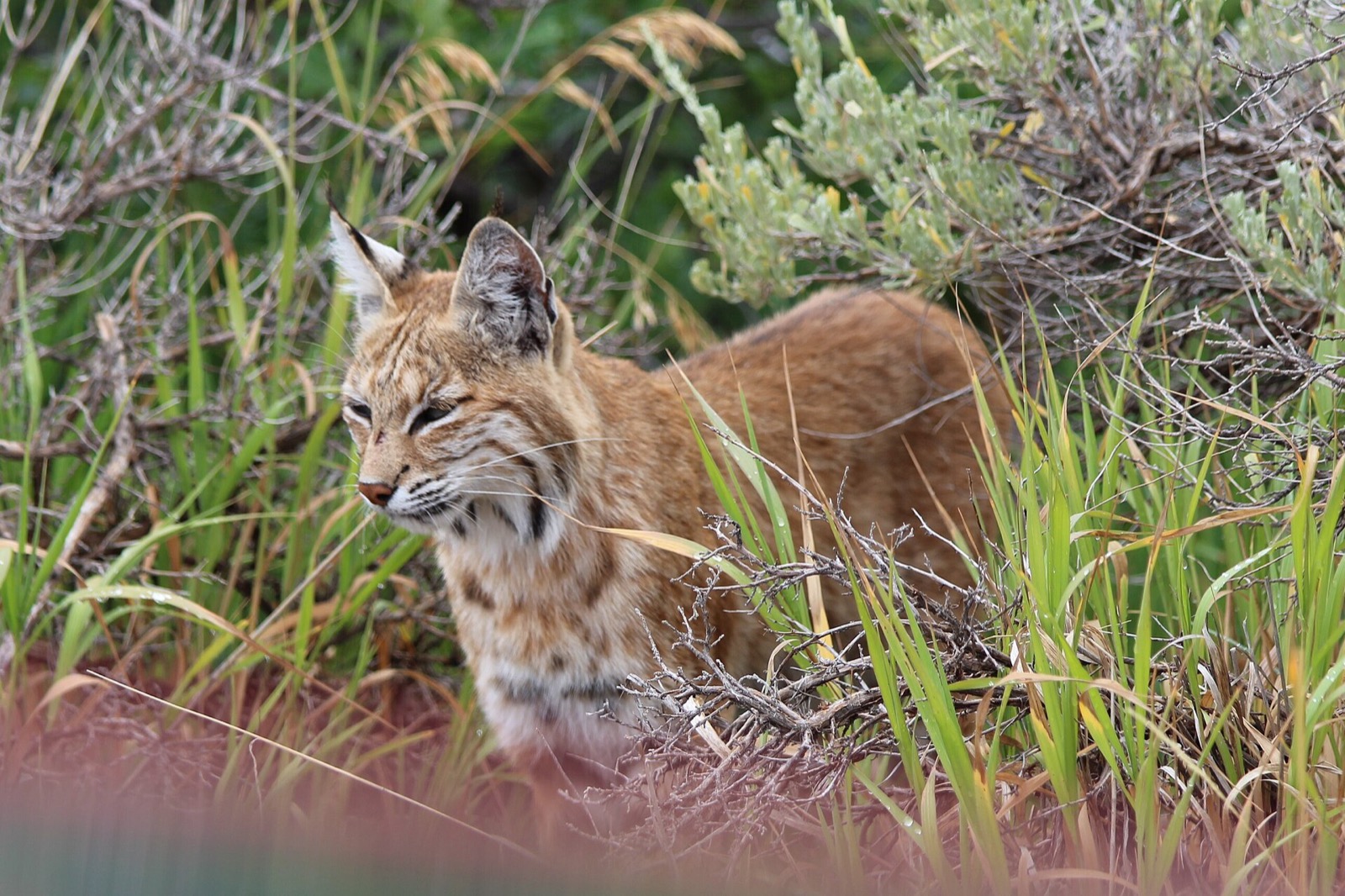
Photo National Park Service (opens in a new tab), Public domain (opens in a new tab)
At a glance
- Occurrence
- Native to North America
- Habitat
- Forests, swamps, brushlands, farms and large undeveloped tracts
- Diet
- Rabbits, rodents, birds and occasionally larger prey such as young deer
- Activity
- Mostly nocturnal and crepuscular
- Shelter
- Dense vegetation, rock ledges, hollow logs or secluded resting sites
- Social pattern
- Solitary except during mating and when females raise kittens
- Rabies vector
- Yes
Identification
- Key marks
- Short bobbed tail with a black tip above, spotted or barred coat, ear tufts and a ruff around the face
- Told apart from
- Domestic cat, which is much smaller and lacks the bobcat's heavy legs, facial ruff and characteristic tail pattern
- Where to look
- Forests, swamps, brushlands, farms and large undeveloped tracts
Behaviour
It is mostly nocturnal and crepuscular. It uses habitats including forests, swamps, brushlands, farms and large undeveloped tracts. It feeds on rabbits, rodents, birds and occasionally larger prey such as young deer.
Bobcats move quietly along edges, trails and cover, using short bursts of speed rather than long chases. They hunt mainly by stalking and ambush.
Bobcats can live in surprisingly close proximity to people while remaining almost entirely unseen because they move mostly at night and around dawn or dusk.
Why they matter
As a native mesopredator, bobcats help regulate rabbits, rodents and other prey and occupy an important place between smaller carnivores and the largest predators.
A bobcat can live in a patchwork of woods and suburbs while remaining nearly invisible because it relies on cover and low-light activity.
Reproduction and lifecycle
Mating — most often winter to early spring, though breeding can occur outside that peak.
Gestation — about 60 days.
Kittens — usually 1–4 are born in a secluded den and remain there for several weeks.
Dependency — kittens travel with the mother for many months while learning to hunt and usually disperse before the next breeding season.
Living around people
- Keep small pets indoors or supervised, especially at night.
- Secure poultry with a roofed enclosure and sturdy wire rather than relying on deterrents alone.
- Remove outdoor pet food and other attractants that gather prey around homes.
- Give a bobcat an open escape route; cornering any wild cat increases risk.
Misconceptions
- A bobcat near a neighbourhood is stalking people. Bobcats usually use wooded edges and prey-rich corridors while avoiding direct human contact.
- Bobcats routinely take adult dogs. Small pets can be vulnerable, but bobcats chiefly hunt wild prey such as rabbits and rodents.
- A short tail means a domestic cat lost part of its tail. Bobcats naturally have a short tail with a characteristic black tip above.
Seasonal activity
When this species is breeding, and when there are nests on the ground. Mowing during the shaded months is how most nests are found.
| Jan | Feb | Mar | Apr | May | Jun | Jul | Aug | Sep | Oct | Nov | Dec | |
|---|---|---|---|---|---|---|---|---|---|---|---|---|
| Breeding | Jan: no | Feb: no | Mar: no | Apr: no | May: no | Jun: no | Jul: no | Aug: no | Sep: no | Oct: no | Nov: no | Dec: no |
| Active nests | Jan: no | Feb: no | Mar: no | Apr: no | May: no | Jun: no | Jul: no | Aug: no | Sep: no | Oct: no | Nov: no | Dec: no |
| Notes | Winter breeding activity increases; adults may travel farther than usual. | Peak mating period for bobcats across much of the range. | Pregnancy is common and some early litters are born. | Kittens remain hidden in secluded dens. | Mothers make frequent hunting trips; kittens begin exploring near the den. | Kittens travel with the mother and start learning hunting behaviour. | Family groups range more broadly, mostly at night. | Young continue developing hunting skills. | Juveniles become increasingly independent. | Dispersal can bring young bobcats through unfamiliar habitats and across roads. | Mostly solitary winter ranges are re-established. | Adults remain active and mating movements begin increasing late in the month. |
If you found one
Answer a few questions and you will get a specific answer for what you are looking at.
I found an animal