
Species
Black tern
Chlidonias niger
A small, dark marsh tern that passes Georgia's coast in late summer on its way to South America.
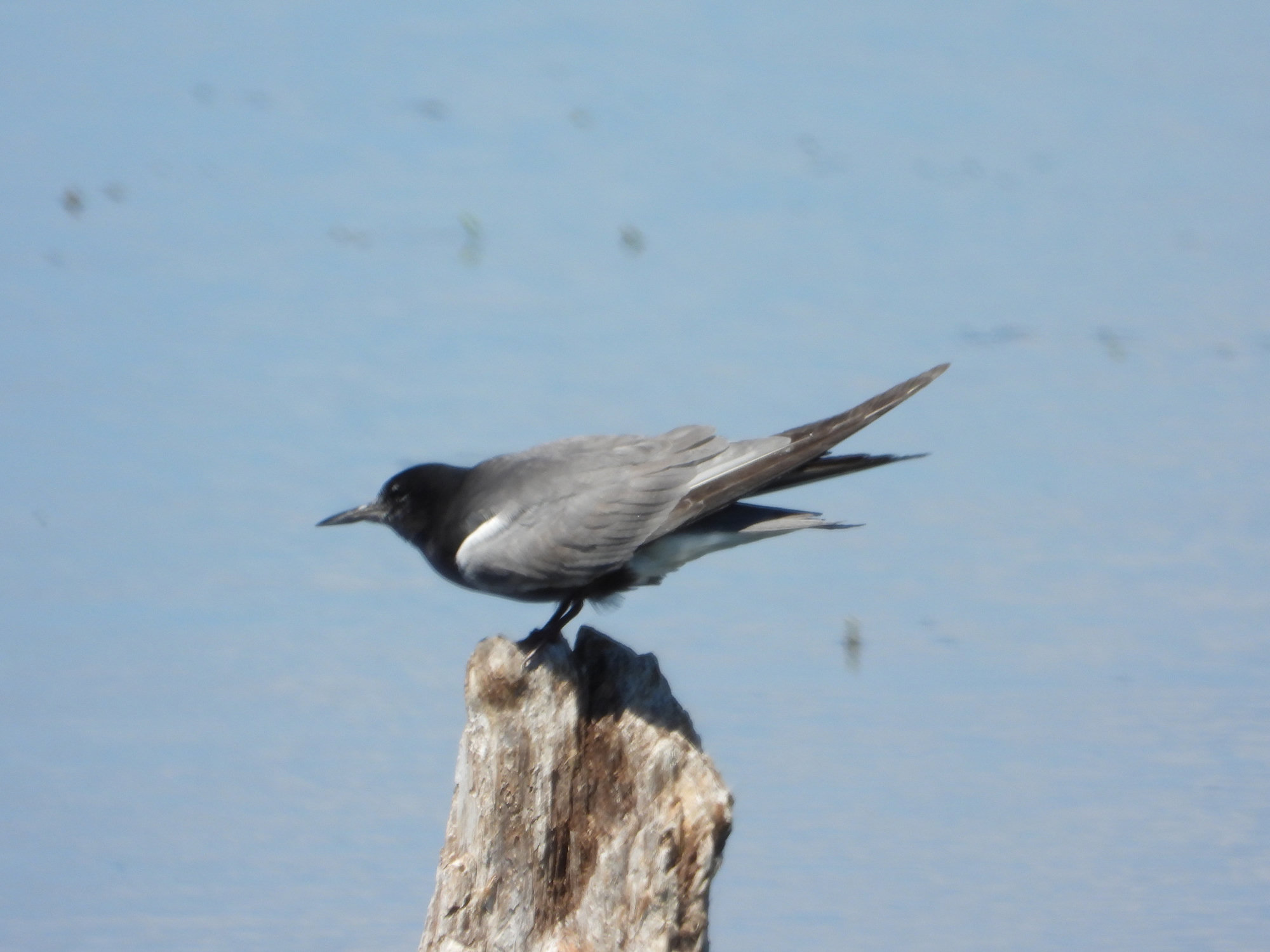
Photo Craig K (opens in a new tab) / iNaturalist, CC BY 4.0 (opens in a new tab)
At a glance
- Size
- About 23 to 26 cm long
- Weight
- About 50 to 70 g
- Habitat
- Freshwater marshes in summer; coastal waters and lakes on migration
- Diet
- Insects, small fish and crustaceans
- In Georgia
- A common migrant offshore and on the coast, July to October
- Voice
- A sharp "kik"
- Rabies vector
- No
Identification
- Key marks
- In summer, black head and body with grey wings; in autumn white below with a dark cap and a dark mark on the side of the breast
- Told apart from
- Least tern, which is white with a yellow bill
- Where to look
- Offshore and over coastal waters in August and September
Behaviour
Black terns pick insects and small fish from the surface in buoyant, erratic flight, rarely plunging.
Why they matter
Black terns have declined as the freshwater marshes where they nest have been drained. On migration they gather over the ocean, feeding on small fish pushed to the surface.
Reproduction and lifecycle
Nest — A floating mat of plants in marshes
Eggs — Usually three
Incubation — About 21 to 22 days
Chicks — Fed by both parents
Flight — At about three weeks
Lifespan — Several years
Living around people
- Black terns are rarely near people in Georgia, but those blown inland by storms may need help.
Misconceptions
- A tern this dark is a young bird. Adult black terns are dark in summer.
Related species
Seasonal activity
When this species is breeding, and when there are nests on the ground. Mowing during the shaded months is how most nests are found.
| Jan | Feb | Mar | Apr | May | Jun | Jul | Aug | Sep | Oct | Nov | Dec | |
|---|---|---|---|---|---|---|---|---|---|---|---|---|
| Breeding | Jan: no | Feb: no | Mar: no | Apr: no | May: no | Jun: no | Jul: no | Aug: no | Sep: no | Oct: no | Nov: no | Dec: no |
| Active nests | Jan: no | Feb: no | Mar: no | Apr: no | May: no | Jun: no | Jul: no | Aug: no | Sep: no | Oct: no | Nov: no | Dec: no |
| Notes | In South America | In South America | In South America | Migrating north | Migrants passing | Nesting on northern marshes | Migrants arriving | Peak migration | Migrants | Last migrants | In South America | In South America |
Where it lives
Recorded in 69 states and provinces. Each one links to the other animals there, and to the rehabilitators licensed for them.
United States
- Alabamapassing through
- Arkansaspassing through
- Californiabreeding
- Coloradobreeding
- Delawarepassing through
- Floridapassing through
- Georgiapassing through
- Idahobreeding
- Illinoisbreeding
- Indianabreeding
- Iowabreeding
- Kansaspassing through
- Kentuckypassing through
- Louisianapassing through
- Mainebreeding
- Marylandpassing through
- Massachusettsbreeding
- Michiganbreeding
- Minnesotabreeding
- Mississippipassing through
- Missouripassing through
- Montanabreeding
- Nebraskabreeding
- Nevadabreeding
- New Jerseypassing through
- New Mexicopassing through
- New Yorkbreeding
- North Carolinapassing through
- North Dakotabreeding
- Ohiobreeding
- Oklahomapassing through
- Oregonbreeding
- Rhode Islandpassing through
- South Carolinapassing through
- South Dakotabreeding
- Tennesseepassing through
- Texaspassing through
- Utahbreeding
- Vermontbreeding
- Washingtonbreeding
- Wisconsinbreeding
- Wyomingbreeding
Canada
Mexico
- Baja Californiapassing through
- Baja California Surpassing through
- Campechepassing through
- Chihuahuapassing through
- Colimain winter
- Durangopassing through
- Guerreroin winter
- Jaliscopassing through
- Nayaritpassing through
- Oaxacain winter
- Pueblapassing through
- Quintana Roopassing through
- Sinaloain winter
- Sonorapassing through
- Tabascopassing through
- Tamaulipaspassing through
- Veracruzpassing through
- Yucatanpassing through
If you found one
Answer a few questions and you will get a specific answer for what you are looking at.
I found an animal