
Species
Black-necked stilt
Himantopus mexicanus
A black-and-white wader on impossibly long pink legs, nesting in Georgia's coastal impoundments.
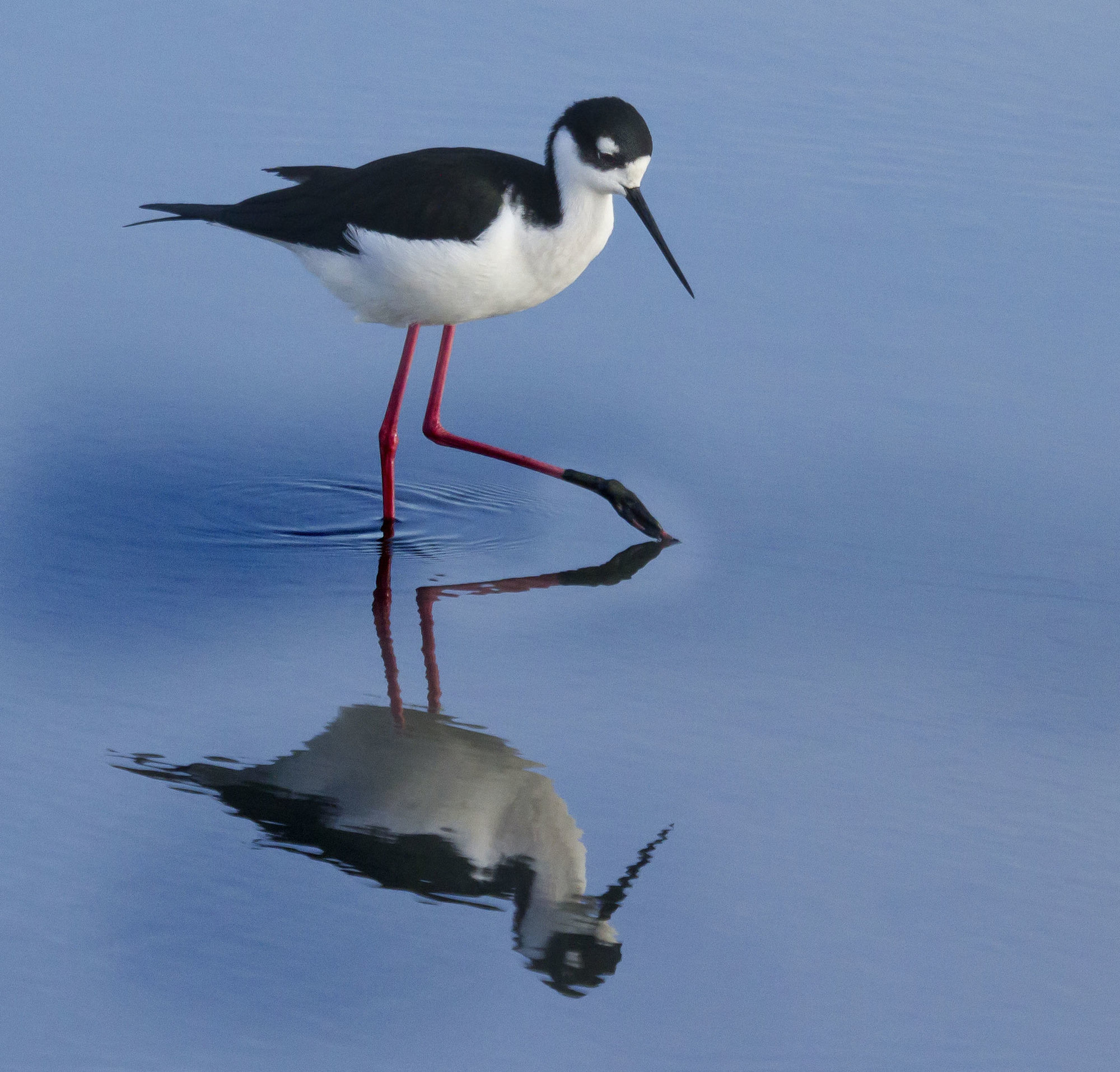
Photo Unknown photographer (opens in a new tab) / iNaturalist, CC0 1.0 (opens in a new tab)
At a glance
- Size
- About 35 to 39 cm long
- Weight
- About 150 to 220 g
- Habitat
- Shallow ponds, coastal impoundments, salt pans and flooded fields
- Diet
- Aquatic insects, small crustaceans, snails and small fish
- In Georgia
- A local summer resident on the coast; rare inland
- Voice
- A sharp, yapping "kek-kek-kek"
- Rabies vector
- No
Identification
- Key marks
- Black above, white below; long, needle-thin black bill; very long bright pink legs
- Told apart from
- American avocet, which has an upturned bill and, in summer, a rusty head
- Where to look
- Coastal impoundments and shallow ponds, April to September
Behaviour
Stilts wade in deeper water than most shorebirds, picking prey from the surface. They are noisy and defend nests aggressively, calling and diving at intruders.
Why they matter
Proportionally, the black-necked stilt has among the longest legs of any bird, letting it feed in water other shorebirds cannot reach. It nests in managed impoundments on the Georgia coast, which show how shallow water, carefully managed, supports breeding birds.
Reproduction and lifecycle
Nest — A scrape on bare ground or a mound in shallow water
Eggs — Usually four
Incubation — About 22 to 26 days, shared by both parents
Chicks — Leave the nest within hours and feed themselves
Flight — At about four to five weeks
Lifespan — Wild birds over twelve years are recorded
Living around people
- Adults that call and dive at people are protecting nests or chicks nearby; moving away is all they want.
Misconceptions
- A bird calling and diving at you is attacking. It is warning you away from its eggs or young.
Related species
Seasonal activity
When this species is breeding, and when there are nests on the ground. Mowing during the shaded months is how most nests are found.
| Jan | Feb | Mar | Apr | May | Jun | Jul | Aug | Sep | Oct | Nov | Dec | |
|---|---|---|---|---|---|---|---|---|---|---|---|---|
| Breeding | Jan: no | Feb: no | Mar: no | Apr: no | May: no | Jun: no | Jul: no | Aug: no | Sep: no | Oct: no | Nov: no | Dec: no |
| Active nests | Jan: no | Feb: no | Mar: no | Apr: no | May: no | Jun: no | Jul: no | Aug: no | Sep: no | Oct: no | Nov: no | Dec: no |
| Notes | Mostly south of Georgia | Few present | First arrivals | Arriving; pairs forming | Nesting | Chicks | Chicks and young | Young flying | Leaving | Few remain | Mostly gone | Mostly gone |
Where it lives
Recorded in 73 states and provinces. Each one links to the other animals there, and to the rehabilitators licensed for them.
United States
- Alabama
- Arizona
- Arkansasbreeding
- California
- Coloradobreeding
- Delawarebreeding
- Florida
- Georgiabreeding
- Hawaii
- Idahobreeding
- Illinoisbreeding
- Indianabreeding
- Iowabreeding
- Kansasbreeding
- Kentuckybreeding
- Louisiana
- Mainebreeding
- Marylandbreeding
- Michiganbreeding
- Mississippi
- Missouribreeding
- Montanabreeding
- Nebraskabreeding
- Nevadabreeding
- New Mexicobreeding
- North Carolinabreeding
- North Dakotabreeding
- Ohiobreeding
- Oklahomabreeding
- Oregonbreeding
- South Carolinabreeding
- South Dakotabreeding
- Tennesseebreeding
- Texas
- Utahbreeding
- Virginiabreeding
- Washingtonbreeding
- Wisconsinbreeding
- Wyomingbreeding
Mexico
- Aguascalientesin winter
- Baja California
- Baja California Sur
- Campeche
- Chiapasin winter
- Chihuahua
- Coahuila
- Colimain winter
- Durango
- Guanajuatoin winter
- Guerrero
- Hidalgoin winter
- Jaliscoin winter
- Mexico City
- Michoacanin winter
- Morelosin winter
- Nayaritin winter
- Nuevo Leon
- Oaxacain winter
- Pueblain winter
- Queretaro
- Quintana Roo
- San Luis Potosi
- Sinaloa
- Sonora
- State of Mexico
- Tabascoin winter
- Tamaulipas
- Tlaxcalain winter
- Veracruz
- Yucatan
- Zacatecasin winter
If you found one
Answer a few questions and you will get a specific answer for what you are looking at.
I found an animal