
Species
Willet
Tringa semipalmata
A large, plain grey shorebird that bursts into bold black-and-white wings and a loud 'pill-will-willet' call.
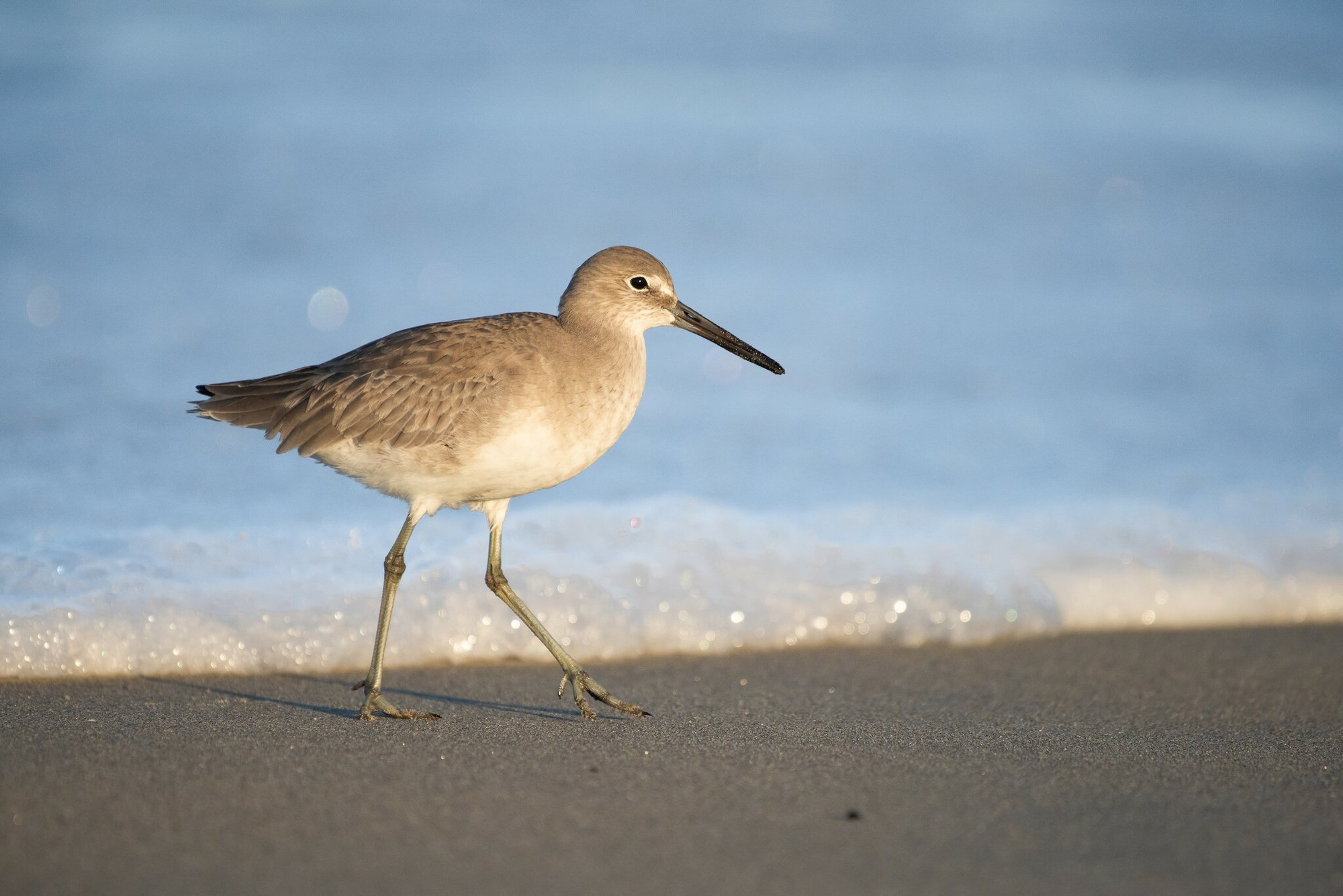
Photo Unknown photographer (opens in a new tab) / iNaturalist, CC0 1.0 (opens in a new tab)
At a glance
- Size
- About 33 to 41 cm long
- Weight
- About 200 to 330 g
- Habitat
- Salt marshes, beaches and mudflats
- Diet
- Crabs, marine worms, clams and small fish
- In Georgia
- A common resident on the coast; nesting birds in summer and wintering birds from the West
- Voice
- A loud, ringing "pill-will-willet"
- Rabies vector
- No
Identification
- Key marks
- Large, plain grey-brown shorebird; thick, straight grey bill; bold black-and-white wing pattern in flight
- Told apart from
- Greater yellowlegs, which has yellow legs and no wing pattern
- Told apart from
- Marbled godwit, which is cinnamon with an upturned bill
- Where to look
- Salt marsh edges and beaches
Behaviour
Willets probe and pick in mud and sand. Nesting birds are noisy and aggressive, calling loudly from posts and flying at intruders.
Why they matter
Georgia's salt marshes are home to nesting willets of the eastern population, while birds of the western population winter on the same beaches. The willet is one of the most characteristic birds of the coast and a key predator of fiddler crabs.
Reproduction and lifecycle
Nest — A grass-lined scrape in marsh grass or dunes
Eggs — Usually four
Incubation — About 22 to 29 days
Chicks — Leave the nest within a day
Flight — At about four weeks
Lifespan — Wild birds over ten years are recorded
Living around people
- Willets that call and fly at people are defending nests or chicks; leaving the area ends it.
Misconceptions
- The willet is a dull bird. It is plain on the ground, but its flashing wings and loud call are unmistakable.
Related species
Seasonal activity
When this species is breeding, and when there are nests on the ground. Mowing during the shaded months is how most nests are found.
| Jan | Feb | Mar | Apr | May | Jun | Jul | Aug | Sep | Oct | Nov | Dec | |
|---|---|---|---|---|---|---|---|---|---|---|---|---|
| Breeding | Jan: no | Feb: no | Mar: no | Apr: no | May: no | Jun: no | Jul: no | Aug: no | Sep: no | Oct: no | Nov: no | Dec: no |
| Active nests | Jan: no | Feb: no | Mar: no | Apr: no | May: no | Jun: no | Jul: no | Aug: no | Sep: no | Oct: no | Nov: no | Dec: no |
| Notes | Wintering birds present | Wintering | Eastern birds arrive to nest | Nesting | Nesting | Chicks | Young flying | Eastern birds leave | Western birds arriving | Wintering | Wintering | Wintering |
Where it lives
Recorded in 68 states and provinces. Each one links to the other animals there, and to the rehabilitators licensed for them.
United States
- Alabama
- Arizonabreeding
- Arkansasbreeding
- California
- Coloradobreeding
- Connecticutbreeding
- Delawarebreeding
- Florida
- Georgia
- Idahobreeding
- Illinoisbreeding
- Iowabreeding
- Kansasbreeding
- Louisiana
- Mainebreeding
- Marylandbreeding
- Massachusettsbreeding
- Michiganbreeding
- Minnesotabreeding
- Mississippi
- Missouribreeding
- Montanabreeding
- Nebraskabreeding
- Nevadabreeding
- New Hampshirebreeding
- New Jerseybreeding
- New Mexicobreeding
- New Yorkbreeding
- North Carolina
- North Dakotabreeding
- Oklahomabreeding
- Oregonbreeding
- Rhode Islandbreeding
- South Carolina
- South Dakotabreeding
- Texas
- Utahbreeding
- Virginia
- Washingtonin winter
- Wisconsinbreeding
- Wyomingbreeding
Canada
If you found one
Answer a few questions and you will get a specific answer for what you are looking at.
I found an animal