
Species
American avocet
Recurvirostra americana
An elegant wader with an upturned bill that sweeps the water side to side, feeding by touch.
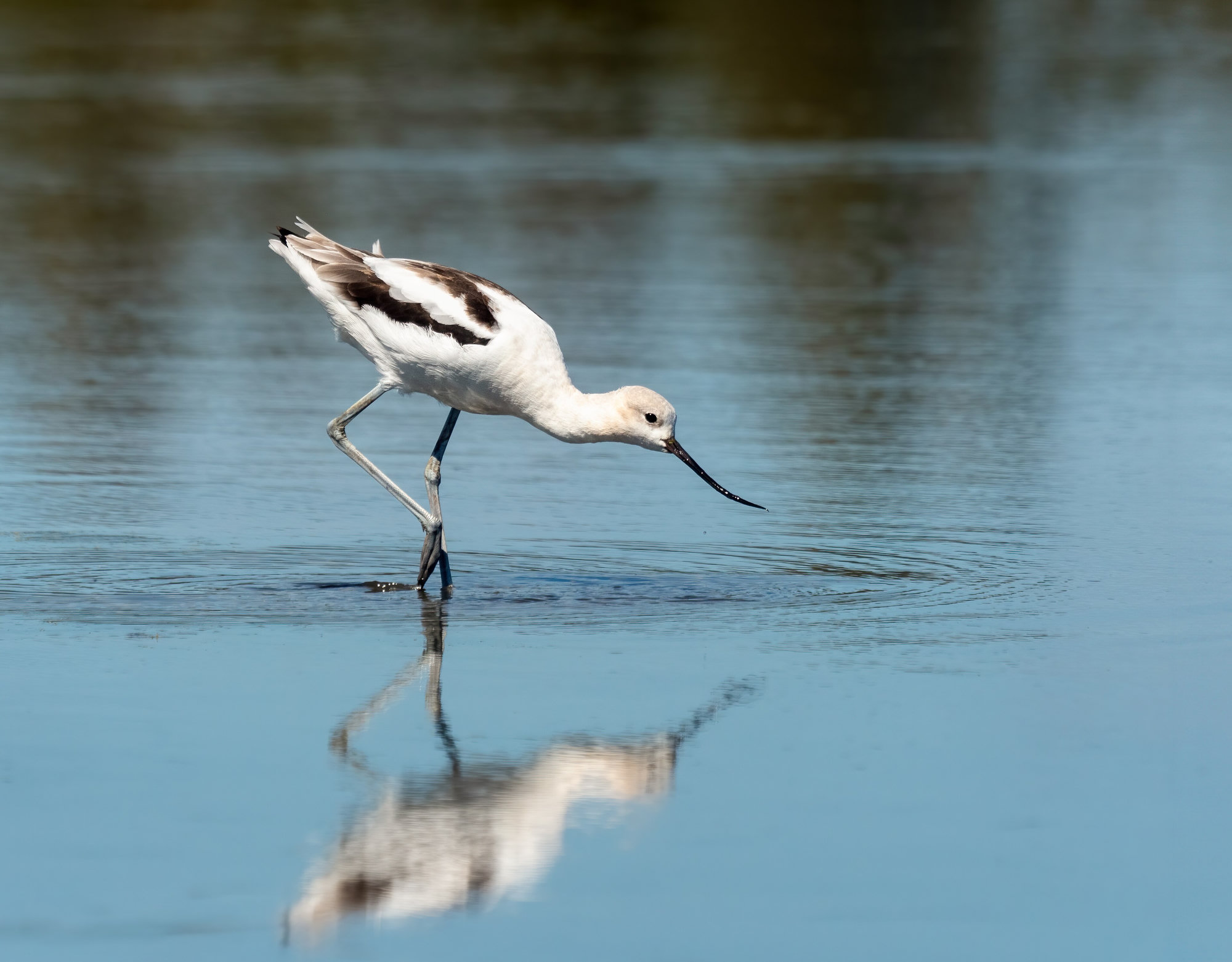
Photo Rhododendrites (opens in a new tab) / Wikimedia Commons, CC BY-SA 4.0 (opens in a new tab)
At a glance
- Size
- About 40 to 51 cm long
- Weight
- About 275 to 420 g
- Habitat
- Shallow coastal impoundments, mudflats and salt ponds
- Diet
- Aquatic insects, small crustaceans and seeds
- In Georgia
- An uncommon winter visitor on the coast
- Voice
- A loud "pleek"
- Rabies vector
- No
Identification
- Key marks
- Long, thin, upturned bill; black-and-white wings; long blue-grey legs; head and neck rusty in summer, grey in winter
- Told apart from
- Black-necked stilt, which has a straight bill and pink legs
- Told apart from
- Marbled godwit, which has a longer, slightly upturned pink-based bill and is brown
- Where to look
- Coastal impoundments and mudflats, November to March
Behaviour
Avocets feed by sweeping their bills back and forth through the water, catching prey by touch. Flocks sometimes feed together in lines.
Why they matter
The avocet's upturned bill and sweeping feeding style let it harvest small animals in water too murky to see through. It depends on shallow wetlands that are easily drained or polluted, and the coastal impoundments of the Southeast are important winter sites.
Reproduction and lifecycle
Nest — A scrape on open ground near water
Eggs — Usually four
Incubation — About 22 to 29 days
Chicks — Leave the nest within a day
Flight — At about four to five weeks
Lifespan — Wild birds over nine years are recorded
Living around people
- Disturbance by people and dogs on mudflats forces feeding flocks to leave.
Misconceptions
- The upturned bill is for digging. It is for sweeping through water and soft mud.
Related species
Seasonal activity
When this species is breeding, and when there are nests on the ground. Mowing during the shaded months is how most nests are found.
| Jan | Feb | Mar | Apr | May | Jun | Jul | Aug | Sep | Oct | Nov | Dec | |
|---|---|---|---|---|---|---|---|---|---|---|---|---|
| Breeding | Jan: no | Feb: no | Mar: no | Apr: no | May: no | Jun: no | Jul: no | Aug: no | Sep: no | Oct: no | Nov: no | Dec: no |
| Active nests | Jan: no | Feb: no | Mar: no | Apr: no | May: no | Jun: no | Jul: no | Aug: no | Sep: no | Oct: no | Nov: no | Dec: no |
| Notes | Wintering | Wintering | Migrating west and north | Nesting in the West | Nesting | Chicks | Young flying | Moving to wintering sites | Migration | Arriving on the coast | Wintering | Wintering |
Where it lives
Recorded in 68 states and provinces. Each one links to the other animals there, and to the rehabilitators licensed for them.
United States
- Alabama
- Arizona
- Arkansasbreeding
- California
- Coloradobreeding
- Delaware
- Floridain winter
- Georgiain winter
- Idahobreeding
- Illinoisbreeding
- Iowabreeding
- Kansasbreeding
- Louisiana
- Marylandbreeding
- Minnesotabreeding
- Mississippi
- Missouripassing through
- Montanabreeding
- Nebraskabreeding
- Nevadabreeding
- New Jerseybreeding
- New Mexicobreeding
- North Carolinain winter
- North Dakotabreeding
- Ohiobreeding
- Oklahomabreeding
- Oregonbreeding
- South Carolinain winter
- South Dakotabreeding
- Texas
- Utahbreeding
- Virginia
- Washingtonbreeding
- Wyomingbreeding
Mexico
- Aguascalientesbreeding
- Baja California
- Baja California Sur
- Campechein winter
- Chiapasin winter
- Chihuahua
- Coahuilain winter
- Colimain winter
- Durango
- Guanajuatoin winter
- Guerreroin winter
- Hidalgoin winter
- Jalisco
- Mexico City
- Michoacanin winter
- Morelosin winter
- Nayaritin winter
- Nuevo Leonin winter
- Oaxacain winter
- Pueblapassing through
- Queretaro
- San Luis Potosiin winter
- Sinaloain winter
- Sonorain winter
- State of Mexico
- Tamaulipasin winter
- Tlaxcalain winter
- Veracruzin winter
- Yucatan
- Zacatecasin winter
If you found one
Answer a few questions and you will get a specific answer for what you are looking at.
I found an animal