
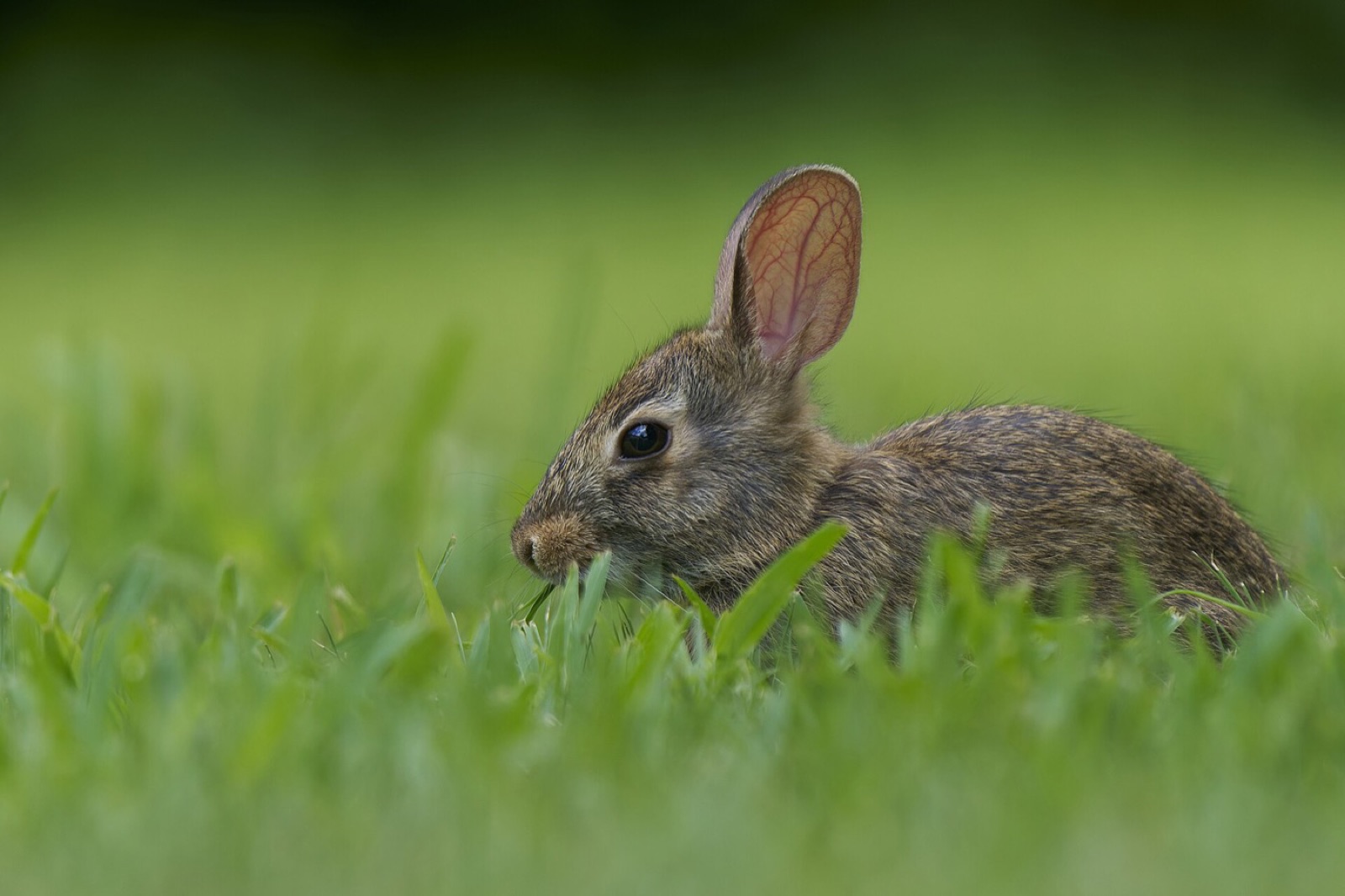
Photo Paul Danese (opens in a new tab), CC BY-SA 4.0 (opens in a new tab)
How to recognize a normal nest
A nest may be a shallow depression lined with grass and fur. Babies that are warm, quiet and tucked together are often doing exactly what they should be doing. Keep pets and lawn equipment away and give the mother a chance to return.
A cat or dog changes the situation
Any rabbit caught by a cat should be evaluated by a wildlife rehabilitator even when wounds look tiny. Cat teeth and claws can introduce bacteria through punctures that are easy to miss. Dogs can cause crushing or internal injury.
Do not try to raise them yourself
Wild rabbits are extremely stress-sensitive and have specialized nutritional needs. Improvised feeding can cause aspiration, digestive disease and poor development. A licensed rehabilitator is the right destination for genuinely injured or orphaned young.
What to do
- Mark the nest so family members avoid it without surrounding it with obstacles the mother cannot cross.
- Keep cats indoors and leash dogs near the nest.
- Do not mow directly over the nest.
- If a baby has been in a cat’s mouth or is visibly injured, contact a rehabilitator promptly.
- Do not give food, milk or water unless a rehabilitator instructs you to.
A quiet rabbit nest is usually a successful rabbit nest. The best gift we can give the family is temporary space—and rapid professional help only when an injury makes intervention necessary.