
Species
Yellow-breasted chat
Icteria virens
A big, loud, yellow-breasted songbird of thickets that whistles, chuckles and cackles like several birds at once.
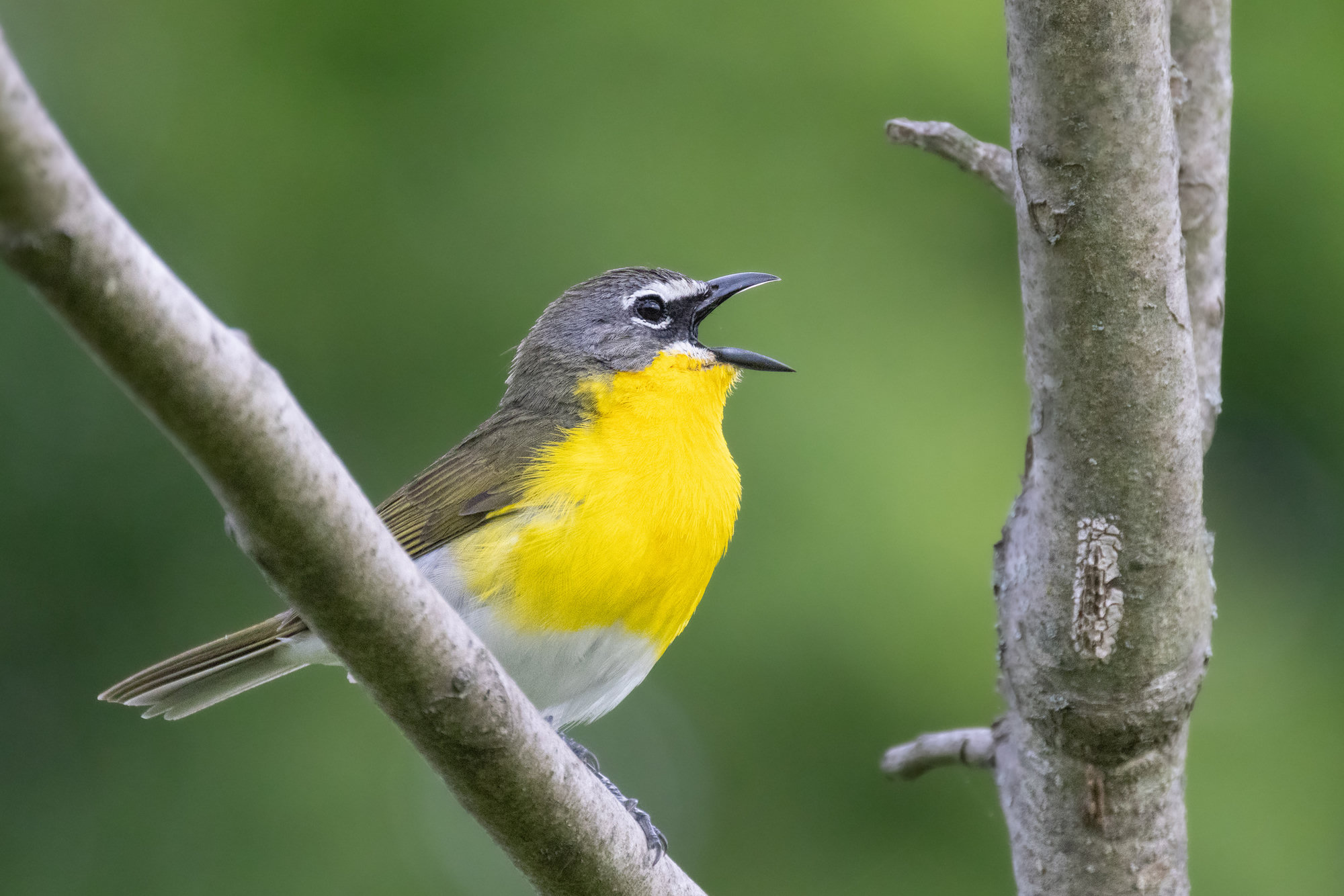
Photo Unknown photographer (opens in a new tab) / iNaturalist, CC0 1.0 (opens in a new tab)
At a glance
- Size
- About 17 to 19 cm long
- Weight
- About 20 to 34 g
- Habitat
- Dense thickets and overgrown fields
- Diet
- Insects and berries
- In Georgia
- A common summer resident, April to September
- Voice
- Whistles, cackles, chuckles and squawks, often at night
- Rabies vector
- No
Identification
- Key marks
- Olive back; bright yellow throat and breast; white spectacles; thick bill
- Told apart from
- Common yellowthroat, which is smaller with a black mask
- Where to look
- Dense thickets; listen for its strange song
Behaviour
Yellow-breasted chats sing from hidden perches and sometimes in display flights with dangling legs. They often sing at night.
Why they matter
The yellow-breasted chat was long classified as a warbler but is now placed in a family of its own. It depends on thick, shrubby habitat that is easily cleared.
Reproduction and lifecycle
Nest — A bulky cup in dense shrubs
Eggs — Usually three to five
Incubation — About 11 to 12 days
Chicks — Fed by both parents
Lifespan — Several years
Living around people
- Thickets left uncleared support chats.
Misconceptions
- A strange noise in a thicket at night is an animal in trouble. It may be a singing chat.
Related species
Seasonal activity
When this species is breeding, and when there are nests on the ground. Mowing during the shaded months is how most nests are found.
| Jan | Feb | Mar | Apr | May | Jun | Jul | Aug | Sep | Oct | Nov | Dec | |
|---|---|---|---|---|---|---|---|---|---|---|---|---|
| Breeding | Jan: no | Feb: no | Mar: no | Apr: no | May: no | Jun: no | Jul: no | Aug: no | Sep: no | Oct: no | Nov: no | Dec: no |
| Active nests | Jan: no | Feb: no | Mar: no | Apr: no | May: no | Jun: no | Jul: no | Aug: no | Sep: no | Oct: no | Nov: no | Dec: no |
| Notes | In Central America | In Central America | In Central America | Arriving | Nesting | Nesting | Young fledging | Present | Leaving | Last birds | In Central America | In Central America |
Where it lives
Recorded in 82 states and provinces. Each one links to the other animals there, and to the rehabilitators licensed for them.
United States
- Alabamabreeding
- Arizonabreeding
- Arkansasbreeding
- Californiabreeding
- Coloradobreeding
- Connecticutin winter
- Delawarebreeding
- District of Columbia
- Florida
- Georgiabreeding
- Idahobreeding
- Illinoisbreeding
- Indianabreeding
- Iowabreeding
- Kansasbreeding
- Kentuckybreeding
- Louisianabreeding
- Marylandbreeding
- Massachusettsin winter
- Michiganbreeding
- Minnesotabreeding
- Mississippibreeding
- Missouribreeding
- Montanabreeding
- Nebraskabreeding
- Nevadabreeding
- New Hampshirein winter
- New Jerseybreeding
- New Mexicobreeding
- New York
- North Carolinabreeding
- North Dakotabreeding
- Ohiobreeding
- Oklahomabreeding
- Oregonbreeding
- Pennsylvaniabreeding
- Rhode Islandin winter
- South Carolinabreeding
- South Dakotabreeding
- Tennesseebreeding
- Texasbreeding
- Utahbreeding
- Virginiabreeding
- Washingtonbreeding
- West Virginiabreeding
- Wisconsinbreeding
- Wyomingbreeding
Canada
Mexico
- Aguascalientesbreeding
- Baja Californiabreeding
- Baja California Sur
- Campechein winter
- Chiapasin winter
- Chihuahuabreeding
- Coahuilabreeding
- Colimain winter
- Durangobreeding
- Guanajuatobreeding
- Guerreroin winter
- Hidalgoin winter
- Jalisco
- Mexico Cityin winter
- Michoacan
- Morelosin winter
- Nayaritin winter
- Nuevo Leonbreeding
- Oaxacain winter
- Pueblain winter
- Queretarobreeding
- Quintana Rooin winter
- San Luis Potosiin winter
- Sinaloa
- Sonorabreeding
- State of Mexicobreeding
- Tabascoin winter
- Tamaulipasin winter
- Veracruzin winter
- Yucatanin winter
If you found one
Answer a few questions and you will get a specific answer for what you are looking at.
I found an animal