
Species
White-rumped sandpiper
Calidris fuscicollis
A long-winged sandpiper with a white band above the tail, passing through Georgia in late spring.
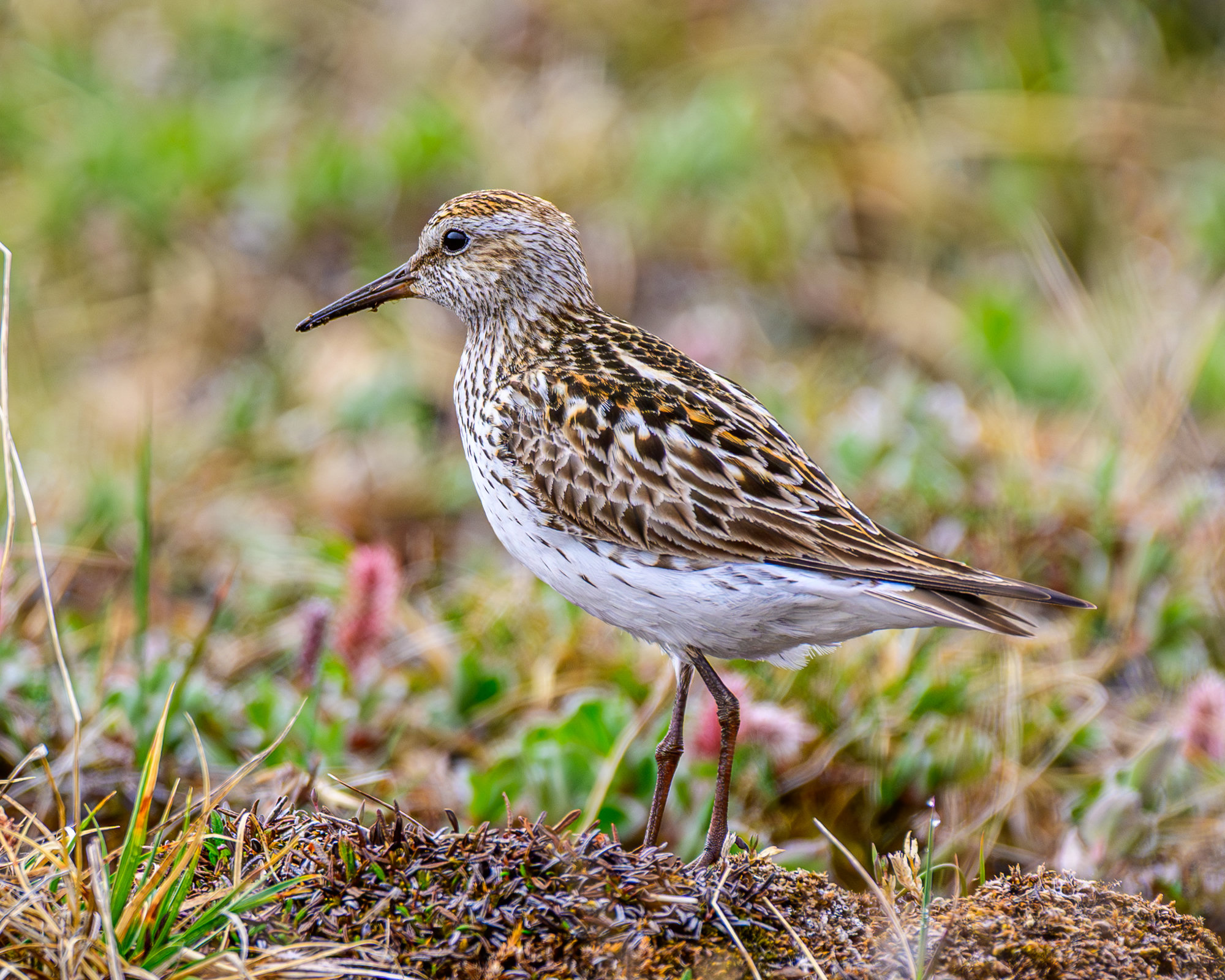
Photo Stephan Sprinz (opens in a new tab) / Wikimedia Commons, CC BY 4.0 (opens in a new tab)
At a glance
- Size
- About 15 to 18 cm long
- Weight
- About 40 to 60 g
- Habitat
- Mudflats, beaches and flooded fields
- Diet
- Insects, snails and worms
- In Georgia
- An uncommon migrant, mostly in May
- Voice
- A thin, mouse-like "jeet"
- Rabies vector
- No
Identification
- Key marks
- Long wings extending past the tail; white rump, obvious in flight; streaked breast and flanks
- Told apart from
- Baird's sandpiper, which lacks the white rump
- Told apart from
- Semipalmated sandpiper, which is smaller with shorter wings
- Where to look
- Mudflats and impoundments in late May
Behaviour
White-rumped sandpipers migrate late in spring, often passing through in the last weeks of May and early June on their way to the Arctic.
Why they matter
This sandpiper flies from the Arctic to southern South America, often crossing the Atlantic from the northeast coast. It relies on a few key stopover sites, and the loss of any of them could affect many birds.
Reproduction and lifecycle
Nest — A scrape on tundra
Eggs — Usually four
Incubation — About 22 days
Chicks — Leave the nest within a day
Flight — At about 16 to 17 days
Lifespan — Several years
Living around people
- Beaches and impoundments that stay undisturbed in May help late migrants.
Misconceptions
- Shorebirds in late May are too late to breed. White-rumped sandpipers time their Arctic arrival for the short summer.
Related species
Seasonal activity
When this species is breeding, and when there are nests on the ground. Mowing during the shaded months is how most nests are found.
| Jan | Feb | Mar | Apr | May | Jun | Jul | Aug | Sep | Oct | Nov | Dec | |
|---|---|---|---|---|---|---|---|---|---|---|---|---|
| Breeding | Jan: no | Feb: no | Mar: no | Apr: no | May: no | Jun: no | Jul: no | Aug: no | Sep: no | Oct: no | Nov: no | Dec: no |
| Active nests | Jan: no | Feb: no | Mar: no | Apr: no | May: no | Jun: no | Jul: no | Aug: no | Sep: no | Oct: no | Nov: no | Dec: no |
| Notes | In South America | In South America | In South America | Migrating north | Passing through Georgia | Nesting in the Arctic | Nesting | Leaving the Arctic | Crossing to South America | In South America | In South America | In South America |
Where it lives
Recorded in 58 states and provinces. Each one links to the other animals there, and to the rehabilitators licensed for them.
United States
- Alabamapassing through
- Alaskabreeding
- Arkansaspassing through
- Coloradopassing through
- Connecticutpassing through
- Delawarepassing through
- Floridapassing through
- Georgiapassing through
- Illinoispassing through
- Indianapassing through
- Iowapassing through
- Kansaspassing through
- Kentuckypassing through
- Louisianapassing through
- Mainepassing through
- Marylandpassing through
- Massachusettspassing through
- Michiganpassing through
- Minnesotapassing through
- Mississippipassing through
- Missouripassing through
- Montanapassing through
- Nebraskapassing through
- New Hampshirepassing through
- New Jerseypassing through
- New Mexicopassing through
- New Yorkpassing through
- North Carolinapassing through
- North Dakotapassing through
- Ohiopassing through
- Oklahomapassing through
- Pennsylvaniapassing through
- Rhode Islandpassing through
- South Carolinapassing through
- South Dakotapassing through
- Tennesseepassing through
- Texaspassing through
- Vermontpassing through
- Virginiapassing through
- West Virginiapassing through
- Wisconsinpassing through
- Wyomingpassing through
Canada
If you found one
Answer a few questions and you will get a specific answer for what you are looking at.
I found an animal