
Species
Semipalmated sandpiper
Calidris pusilla
A small grey-brown peep that pours through Georgia's mudflats in huge numbers on migration.
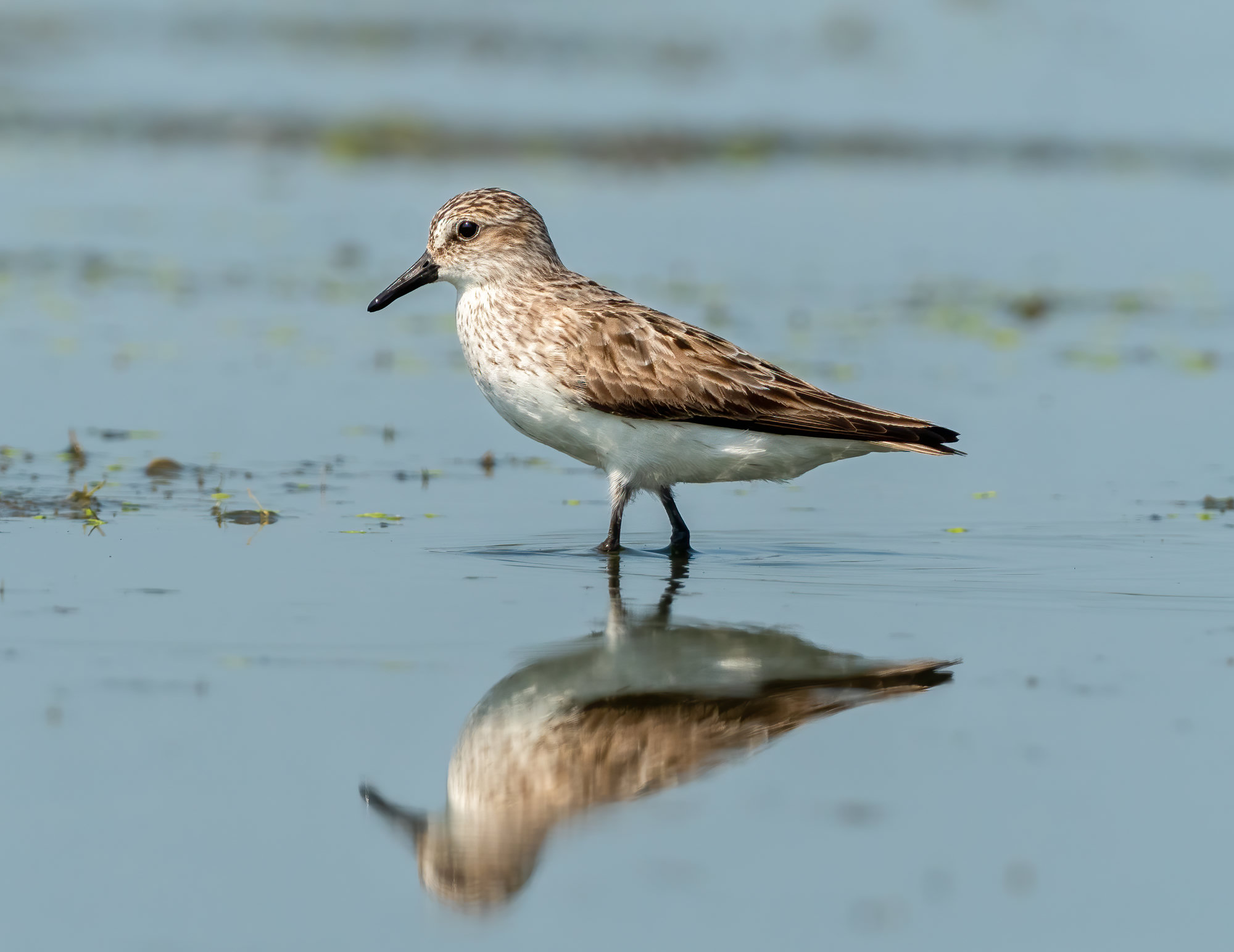
Photo Rhododendrites (opens in a new tab) / Wikimedia Commons, CC BY-SA 4.0 (opens in a new tab)
At a glance
- Size
- About 13 to 15 cm long
- Weight
- About 20 to 40 g
- Habitat
- Mudflats, beaches and impoundments
- Diet
- Tiny invertebrates and biofilm from the surface of mud
- In Georgia
- A common migrant, spring and autumn
- Voice
- A short, rough "cherk"
- Rabies vector
- No
Identification
- Key marks
- Small; grey-brown; short, straight black bill; black legs with small webs between the toes
- Told apart from
- Western sandpiper, which has a longer, droop-tipped bill
- Told apart from
- Least sandpiper, which has yellowish legs
- Where to look
- Mudflats and impoundments in May and August
Behaviour
Semipalmated sandpipers feed in flocks, probing and picking. They also lick up biofilm, a thin layer of microbes and mucus on the surface of the mud.
Why they matter
These sandpipers are among the most abundant shorebirds in the Americas. They have declined in some regions, and they depend heavily on a few rich stopover sites where they can double their weight before flying to South America.
Reproduction and lifecycle
Nest — A scrape on tundra
Eggs — Usually four
Incubation — About 20 days
Chicks — Leave the nest within a day
Flight — At about 14 to 19 days
Lifespan — Wild birds over twelve years are recorded
Living around people
- Flocks feeding on mudflats need undisturbed time to fatten before long flights.
Misconceptions
- Peeps are too small to matter. They are a major food source for falcons and fish, and move energy between continents.
Related species
Seasonal activity
When this species is breeding, and when there are nests on the ground. Mowing during the shaded months is how most nests are found.
| Jan | Feb | Mar | Apr | May | Jun | Jul | Aug | Sep | Oct | Nov | Dec | |
|---|---|---|---|---|---|---|---|---|---|---|---|---|
| Breeding | Jan: no | Feb: no | Mar: no | Apr: no | May: no | Jun: no | Jul: no | Aug: no | Sep: no | Oct: no | Nov: no | Dec: no |
| Active nests | Jan: no | Feb: no | Mar: no | Apr: no | May: no | Jun: no | Jul: no | Aug: no | Sep: no | Oct: no | Nov: no | Dec: no |
| Notes | In South America | In South America | In South America | Migrants arriving | Peak spring migration | Nesting in the Arctic | Adults returning | Migrants | Migrants | Last migrants | In South America | In South America |
Where it lives
Recorded in 67 states and provinces. Each one links to the other animals there, and to the rehabilitators licensed for them.
United States
- Alabamapassing through
- Alaskabreeding
- Arkansaspassing through
- Coloradopassing through
- Connecticutpassing through
- Delawarepassing through
- District of Columbiapassing through
- Floridapassing through
- Georgiapassing through
- Idahopassing through
- Illinoispassing through
- Indianapassing through
- Iowapassing through
- Kansaspassing through
- Kentuckypassing through
- Louisianapassing through
- Mainepassing through
- Marylandpassing through
- Massachusettspassing through
- Michiganpassing through
- Minnesotapassing through
- Mississippipassing through
- Missouripassing through
- Montanapassing through
- Nebraskapassing through
- New Hampshirepassing through
- New Jerseypassing through
- New Mexicopassing through
- New Yorkpassing through
- North Carolinapassing through
- North Dakotapassing through
- Ohiopassing through
- Oklahomapassing through
- Oregonpassing through
- Pennsylvaniapassing through
- Rhode Islandpassing through
- South Carolinapassing through
- South Dakotapassing through
- Tennesseepassing through
- Texaspassing through
- Utahpassing through
- Vermontpassing through
- Virginiapassing through
- Washingtonpassing through
- West Virginiapassing through
- Wisconsinpassing through
- Wyomingpassing through
Canada
If you found one
Answer a few questions and you will get a specific answer for what you are looking at.
I found an animal