
Species
Whimbrel
Numenius phaeopus
A large, brown curlew with a down-curved bill that probes Georgia's marshes for fiddler crabs.
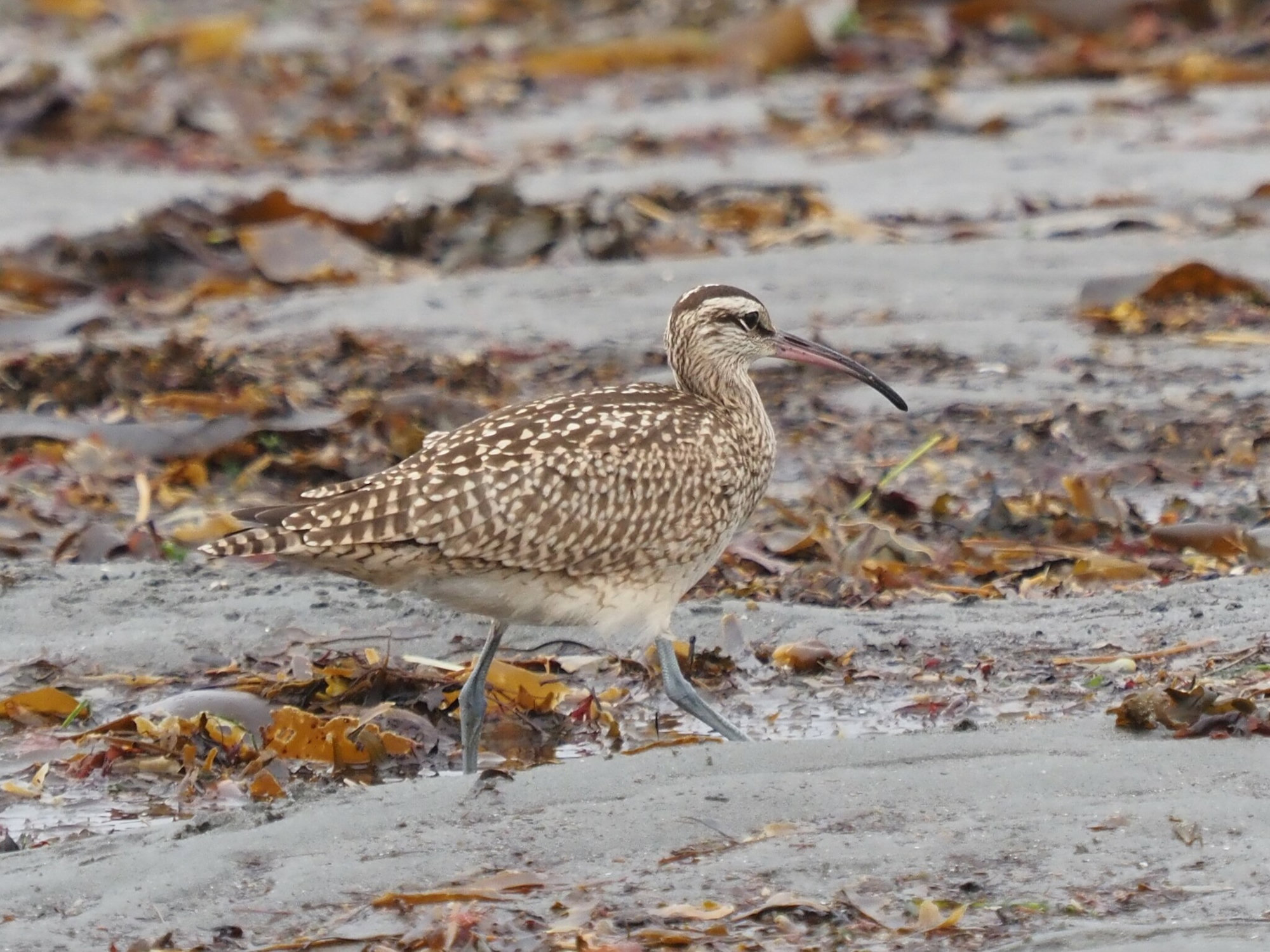
Photo Matt Muir (opens in a new tab) / iNaturalist, CC BY 4.0 (opens in a new tab)
At a glance
- Size
- About 37 to 47 cm long
- Weight
- About 310 to 490 g
- Habitat
- Salt marshes, mudflats and beaches
- Diet
- Fiddler crabs, marine worms, insects and berries
- In Georgia
- A common migrant on the coast; a few winter
- Voice
- A rapid, whistled "pip-pip-pip-pip"
- Rabies vector
- No
Identification
- Key marks
- Large, brown shorebird; long down-curved bill; boldly striped crown
- Told apart from
- Long-billed curlew, which has a much longer bill, a plain crown and cinnamon wings
- Told apart from
- Marbled godwit, whose bill is slightly upturned
- Where to look
- Salt marsh edges and mudflats in April, May and August
Behaviour
Whimbrels probe fiddler crab burrows and pull out the crabs, shaking off the legs before swallowing them. They migrate in flocks and some fly non-stop for thousands of kilometres.
Why they matter
Georgia's salt marshes are a major spring staging area: whimbrels fatten on fiddler crabs here before flying to the Arctic. Satellite-tracked birds have shown flights of more than 5,000 km without a stop, and hunting in the Caribbean still threatens them on migration.
Reproduction and lifecycle
Nest — A scrape on Arctic tundra
Eggs — Usually four
Incubation — About 22 to 28 days
Chicks — Leave the nest within a day
Flight — At about five to six weeks
Lifespan — Wild birds over nineteen years are recorded
Living around people
- Flocks roosting on marsh islands and beaches at high tide are easily flushed by boats and dogs.
Misconceptions
- Curlews are rare in the East. Whimbrels pass through Georgia every spring in large numbers.
Related species
Seasonal activity
When this species is breeding, and when there are nests on the ground. Mowing during the shaded months is how most nests are found.
| Jan | Feb | Mar | Apr | May | Jun | Jul | Aug | Sep | Oct | Nov | Dec | |
|---|---|---|---|---|---|---|---|---|---|---|---|---|
| Breeding | Jan: no | Feb: no | Mar: no | Apr: no | May: no | Jun: no | Jul: no | Aug: no | Sep: no | Oct: no | Nov: no | Dec: no |
| Active nests | Jan: no | Feb: no | Mar: no | Apr: no | May: no | Jun: no | Jul: no | Aug: no | Sep: no | Oct: no | Nov: no | Dec: no |
| Notes | A few wintering | A few wintering | Migrants arriving | Peak spring migration | Staging on the coast; leaving for the Arctic | Nesting in the Arctic | Adults returning | Migrants passing | Migrants passing | A few remain | A few wintering | A few wintering |
Where it lives
Recorded in 55 states and provinces. Each one links to the other animals there, and to the rehabilitators licensed for them.
United States
- Alabamapassing through
- Alaskabreeding
- Californiain winter
- Coloradopassing through
- Connecticutpassing through
- Delawarepassing through
- Floridain winter
- Georgiain winter
- Kansaspassing through
- Louisianapassing through
- Mainepassing through
- Marylandpassing through
- Massachusettspassing through
- Michiganpassing through
- Mississippiin winter
- New Hampshirepassing through
- New Jerseypassing through
- New Yorkpassing through
- North Carolinapassing through
- Oklahomapassing through
- Oregonpassing through
- Rhode Islandpassing through
- South Carolinapassing through
- Texaspassing through
- Utahpassing through
- Virginiapassing through
- Washingtonpassing through
Canada
Mexico
- Baja Californiain winter
- Baja California Surin winter
- Campechepassing through
- Chiapasin winter
- Colimain winter
- Guerreroin winter
- Jaliscoin winter
- Michoacanpassing through
- Nayaritin winter
- Oaxacain winter
- Quintana Rooin winter
- Sinaloain winter
- Sonorain winter
- Tamaulipaspassing through
- Veracruzin winter
- Yucatanin winter
If you found one
Answer a few questions and you will get a specific answer for what you are looking at.
I found an animal