
Species
Long-billed curlew
Numenius americanus
North America's largest shorebird, with a bill as long as a pencil, a rare winter sight on Georgia's coast.
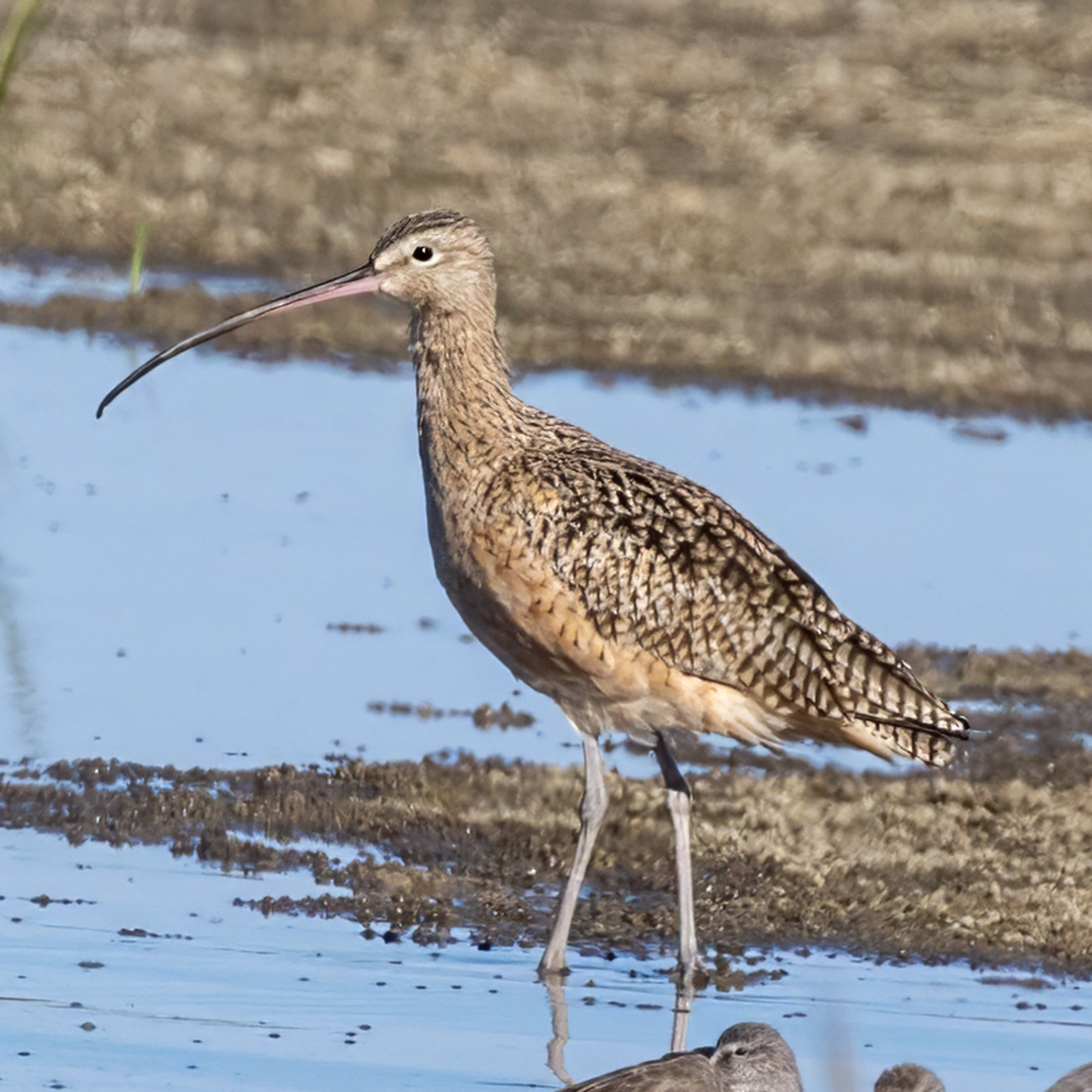
Photo Dan Vickers (opens in a new tab) / iNaturalist, CC BY 4.0 (opens in a new tab)
At a glance
- Size
- About 50 to 65 cm long, much of it bill
- Weight
- About 450 to 950 g
- Habitat
- Mudflats, beaches and salt marshes in winter
- Diet
- Crabs, shrimp, marine worms and insects
- In Georgia
- A rare but regular winter visitor on the coast
- Voice
- A loud, rising "cur-lee"
- Rabies vector
- No
Identification
- Key marks
- Huge, cinnamon-brown shorebird; extremely long down-curved bill; cinnamon underwings in flight; plain crown
- Told apart from
- Whimbrel, which is smaller with a shorter bill and a striped crown
- Where to look
- Sandbars and mudflats on the barrier islands in winter
Behaviour
Long-billed curlews probe deep burrows for crabs and shrimp, reaching prey no other shorebird can. They breed in western grasslands, where they eat grasshoppers.
Why they matter
The long-billed curlew's bill is the longest of any North American shorebird, a specialised tool for deep probing. It depends on grasslands in the West to breed, and the conversion of prairie to crops has reduced its numbers.
Reproduction and lifecycle
Nest — A scrape in short grass
Eggs — Usually four
Incubation — About 27 to 30 days
Chicks — Leave the nest within hours
Flight — At about six weeks
Lifespan — Wild birds over ten years are recorded
Living around people
- Resting flocks on sandbars at high tide need to be left undisturbed.
Misconceptions
- The bill is always the same length. Females have noticeably longer bills than males.
Related species
Seasonal activity
When this species is breeding, and when there are nests on the ground. Mowing during the shaded months is how most nests are found.
| Jan | Feb | Mar | Apr | May | Jun | Jul | Aug | Sep | Oct | Nov | Dec | |
|---|---|---|---|---|---|---|---|---|---|---|---|---|
| Breeding | Jan: no | Feb: no | Mar: no | Apr: no | May: no | Jun: no | Jul: no | Aug: no | Sep: no | Oct: no | Nov: no | Dec: no |
| Active nests | Jan: no | Feb: no | Mar: no | Apr: no | May: no | Jun: no | Jul: no | Aug: no | Sep: no | Oct: no | Nov: no | Dec: no |
| Notes | Wintering | Wintering | Leaving for western grasslands | Nesting in the West | Nesting | Chicks | Adults leaving breeding grounds | Moving to coasts | Migrating | Arriving | Wintering | Wintering |
Where it lives
Recorded in 44 states and provinces. Each one links to the other animals there, and to the rehabilitators licensed for them.
United States
Mexico
- Aguascalientesin winter
- Baja California
- Baja California Sur
- Chihuahuain winter
- Coahuilain winter
- Colimain winter
- Durangoin winter
- Guanajuatoin winter
- Guerreroin winter
- Jaliscoin winter
- Mexico Cityin winter
- Michoacanin winter
- Nayaritin winter
- Nuevo Leonin winter
- Oaxacain winter
- Queretaroin winter
- Sinaloa
- Sonora
- State of Mexicoin winter
- Tamaulipasin winter
- Veracruzin winter
- Yucatanin winter
If you found one
Answer a few questions and you will get a specific answer for what you are looking at.
I found an animal