
Species
Turkey vulture
Cathartes aura
A red-headed vulture that finds carrion by smell, rocking on uptilted wings over every Georgia highway.
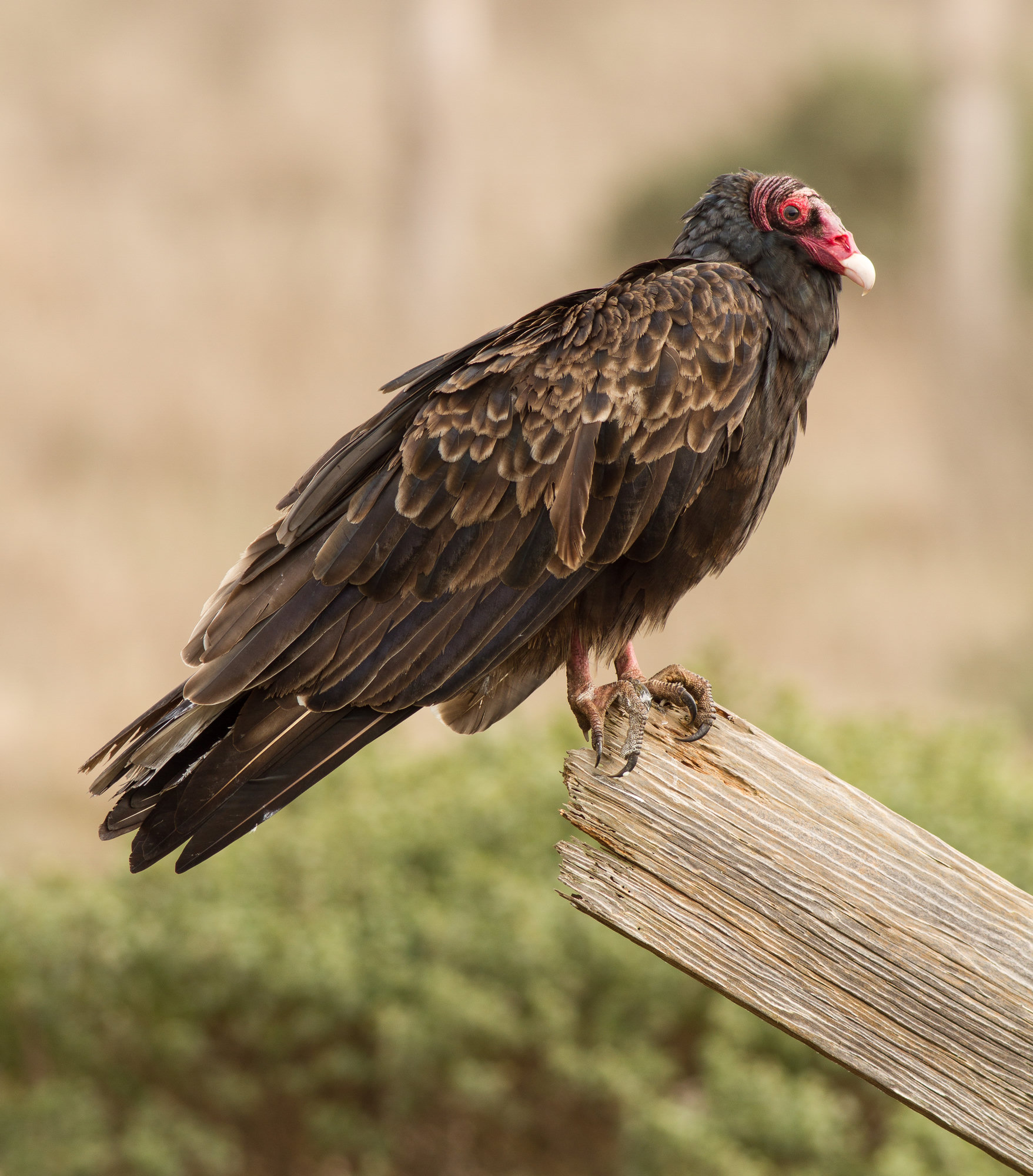
Photo Frank Schulenburg (opens in a new tab) / Wikimedia Commons, CC BY-SA 4.0 (opens in a new tab)
At a glance
- Size
- About 64 to 81 cm long; wingspan about 1.6 to 1.8 m
- Weight
- About 0.8 to 2.3 kg
- Habitat
- Open country, farms, woods and roadsides
- Diet
- Carrion
- In Georgia
- Common all year; more numerous in winter when northern birds arrive
- Voice
- Hisses and grunts
- Rabies vector
- No
Identification
- Key marks
- Dark brown-black; small, bare red head; wings held in a shallow V; silvery flight feathers giving a two-toned look from below; rocks as it soars
- Told apart from
- Black vulture, which has a grey head, short tail and flaps more
- Told apart from
- Bald eagle, which holds its wings flat and has a large head
- Where to look
- Soaring low over roads and fields
Behaviour
Turkey vultures have one of the best senses of smell of any bird, able to detect the gas given off by a carcass hidden under trees. They soar for hours with barely a wingbeat.
Why they matter
By finding carcasses by smell, turkey vultures clean up dead animals in woods and fields that other scavengers would miss. Their digestive system destroys dangerous bacteria, making them one of the most important disease-control animals there is.
Reproduction and lifecycle
Nest — No nest; eggs laid on bare ground in a cave, hollow log or abandoned building
Eggs — Usually two
Incubation — About 30 to 40 days
Chicks — Fed by both parents
Flight — At about 60 to 80 days
Lifespan — Wild birds over twenty years are recorded
Living around people
- Roosting vultures on towers and trees are harmless; they leave each morning to forage.
- Lead fragments in carcasses shot with lead ammunition poison vultures.
Misconceptions
- Vultures kill animals. Turkey vultures eat only animals that are already dead.
- A vulture spreading its wings is threatening. It is warming itself and drying its feathers in the sun.
Related species
Seasonal activity
When this species is breeding, and when there are nests on the ground. Mowing during the shaded months is how most nests are found.
| Jan | Feb | Mar | Apr | May | Jun | Jul | Aug | Sep | Oct | Nov | Dec | |
|---|---|---|---|---|---|---|---|---|---|---|---|---|
| Breeding | Jan: no | Feb: no | Mar: no | Apr: no | May: no | Jun: no | Jul: no | Aug: no | Sep: no | Oct: no | Nov: no | Dec: no |
| Active nests | Jan: no | Feb: no | Mar: no | Apr: no | May: no | Jun: no | Jul: no | Aug: no | Sep: no | Oct: no | Nov: no | Dec: no |
| Notes | Wintering birds join residents | Roosts | Pairs forming | Nesting | Chicks | Chicks | Young fledging | Young flying | Migrants passing | Migrants | Northern birds arriving | Roosts |
Where it lives
Recorded in 89 states and provinces. Each one links to the other animals there, and to the rehabilitators licensed for them.
United States
- Alabama
- Arizonabreeding
- Arkansas
- California
- Coloradobreeding
- Connecticut
- Delaware
- District of Columbia
- Florida
- Georgia
- Idahobreeding
- Illinoisbreeding
- Indiana
- Iowabreeding
- Kansasbreeding
- Kentucky
- Louisiana
- Mainebreeding
- Maryland
- Massachusettsbreeding
- Michiganbreeding
- Minnesotabreeding
- Mississippi
- Missouribreeding
- Montanabreeding
- Nebraskabreeding
- Nevadabreeding
- New Hampshirebreeding
- New Jersey
- New Mexicobreeding
- New Yorkbreeding
- North Carolina
- North Dakotabreeding
- Ohiobreeding
- Oklahoma
- Oregonbreeding
- Pennsylvania
- Rhode Island
- South Carolina
- South Dakotabreeding
- Tennessee
- Texas
- Utahbreeding
- Vermontbreeding
- Virginia
- Washingtonbreeding
- West Virginia
- Wisconsinbreeding
- Wyomingbreeding
Canada
Mexico
- Aguascalientes
- Baja California
- Baja California Sur
- Campeche
- Chiapas
- Chihuahua
- Coahuila
- Colima
- Durango
- Guanajuato
- Guerrero
- Hidalgo
- Jalisco
- Mexico Cityin winter
- Michoacan
- Morelos
- Nayarit
- Nuevo Leon
- Oaxaca
- Puebla
- Queretaro
- Quintana Roo
- San Luis Potosi
- Sinaloain winter
- Sonora
- State of Mexicoin winter
- Tabasco
- Tamaulipas
- Tlaxcalain winter
- Veracruz
- Yucatan
- Zacatecas
If you found one
Answer a few questions and you will get a specific answer for what you are looking at.
I found an animal