
Species
Black vulture
Coragyps atratus
A black, grey-headed vulture that soars in groups and cleans up carrion across Georgia.
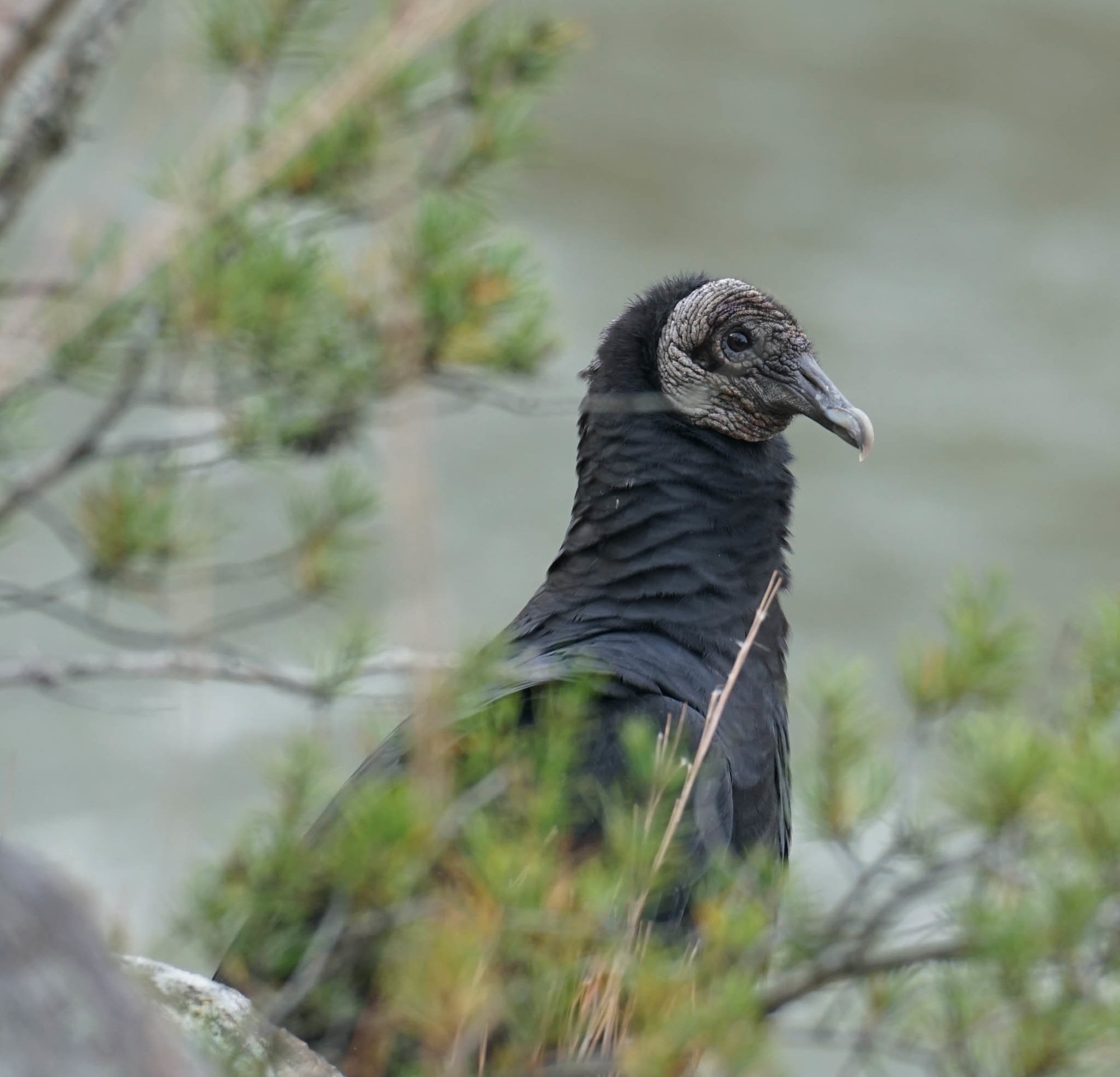
Photo Carrie Seltzer (opens in a new tab) / iNaturalist, CC BY 4.0 (opens in a new tab)
At a glance
- Size
- About 56 to 74 cm long; wingspan about 1.4 to 1.5 m
- Weight
- About 1.6 to 2.8 kg
- Habitat
- Open country, farms, roadsides and towns
- Diet
- Carrion; occasionally newborn or helpless animals
- In Georgia
- Common resident statewide
- Voice
- Hisses and grunts; no true song
- Rabies vector
- No
Identification
- Key marks
- All black with a bare, wrinkled grey head; short, square tail; white patches near the wingtips in flight; flaps quickly between glides
- Told apart from
- Turkey vulture, which has a red head, longer tail, two-toned wings and rocks as it soars
- Told apart from
- Wild turkey, which is bulkier with a fanned tail
- Where to look
- Soaring over roads and farms; roosting in groups on towers and dead trees
Behaviour
Black vultures find food largely by watching turkey vultures, which have a keener sense of smell, and often push them off carcasses by force of numbers. They roost communally and share information about food.
Why they matter
Vultures are nature's clean-up crew. Their stomach acid kills many disease-causing bacteria, including anthrax and botulism, so a carcass eaten by vultures is a carcass that no longer spreads disease. Black vultures are also unusually social, feeding family members and staying in long-term groups.
Reproduction and lifecycle
Nest — No nest; eggs laid on the ground in a hollow log, a cave or an abandoned building
Eggs — Usually two
Incubation — About 38 to 39 days
Chicks — Fed by both parents
Flight — At about 75 to 80 days
Lifespan — Wild birds over twenty-five years are recorded
Living around people
- Vultures that damage roofing or car trim are pulling at soft rubber and caulking; covering it or scaring birds away gently usually ends it.
- Black vultures are protected under federal law; they may not be harmed without a permit.
- A vulture on a road is feeding on roadkill; slowing down lets it get clear.
Misconceptions
- Vultures spread disease. They destroy it, removing carcasses before bacteria can spread.
- Vultures circle over dying animals. They soar on thermals looking for food, not waiting for anything to die.
Related species
Seasonal activity
When this species is breeding, and when there are nests on the ground. Mowing during the shaded months is how most nests are found.
| Jan | Feb | Mar | Apr | May | Jun | Jul | Aug | Sep | Oct | Nov | Dec | |
|---|---|---|---|---|---|---|---|---|---|---|---|---|
| Breeding | Jan: no | Feb: no | Mar: no | Apr: no | May: no | Jun: no | Jul: no | Aug: no | Sep: no | Oct: no | Nov: no | Dec: no |
| Active nests | Jan: no | Feb: no | Mar: no | Apr: no | May: no | Jun: no | Jul: no | Aug: no | Sep: no | Oct: no | Nov: no | Dec: no |
| Notes | Communal roosts | Pairs forming | Nesting | Nesting | Chicks | Chicks | Young fledging | Families together | Roosts | Roosts | Roosts | Roosts |
Where it lives
Recorded in 59 states and provinces. Each one links to the other animals there, and to the rehabilitators licensed for them.
United States
If you found one
Answer a few questions and you will get a specific answer for what you are looking at.
I found an animal